CGTN: Why China has become a hot summer destination

BEIJING, July 28 (Bernama-GLOBE NEWSWIRE) — CGTN published an article exploring the China Travel boom. As a growing number of global travelers head to China in search of cooler destinations, the article explores the country’s boom in inbound tourism this summer, and highlights how China’s expanding visa facilitation policies and foreigner-friendly services are driving this travel trend.

As extreme heat grips much of Europe, a new travel trend is taking shape. Increasingly, travelers are looking beyond their own borders in search of cooler summer destinations, and China is emerging as one of their top choices.

With its cool climate and picturesque landscape of green hills and clear waters, Liupanshui City, known as China’s “cool city” in southwest China’s Guizhou Province, has emerged as a favored destination for foreign travelers escaping the heat. During this summer vacation, more than 20 themed events, including music festivals and rural garden fairs, are taking place across the city, drawing visitors from around the world.

Touring the city this summer, Max Slonim, an American tourist, was impressed by the cool and comfortable weather. “Whenever you go to scenic and beautiful places, you can really experience nature and the peaceful atmosphere without huge crowds and long queues,” he said.

The broader momentum behind “China Travel” continues to build. During the first half of 2026, China recorded more than 22.91 million inbound visits, up 20.4% year on year. Traditional summer destinations such as Yunnan, Guizhou and Hunan provinces have topped international travelers’ summer wishlists.

Booming China Travel

In Zhangjiajie, a tourist city in central China’s Hunan Province known worldwide for its dreamlike landscape, the peak season for inbound visitors has arrived. Tourists from Europe, Southeast Asia and beyond venture into its UNESCO-listed sandstone mountains, where cool breezes and lush forests offer a natural retreat.

Benefiting from China’s 240-hour visa-free transit policy, the city has opened over 10 passenger air routes linking eight countries and regions. Fast-track immigration procedures and entry to major attractions with just a passport have made traveling in the city more seamless than ever for international visitors.

Since the beginning of July, family summer trips to the Zhangjiajie Grand Canyon Scenic Area have surged, with daily visits approaching 10,000 and inbound tourists accounting for over 50% of the total.

China’s cooler coastal destinations are also seeing rising popularity. Qinhuangdao, a seaside city in north China’s Hebei Province, has introduced a diverse lineup of summer activities, including sailing, speedboat rides, intangible cultural heritage performances and immersive VR experiences at the Great Wall Museum.

The city received 43,000 inbound visits during the first half of this year, up 50% year on year, while the average stay of overseas tourists doubled from seven days to fifteen.

The trend is especially noticeable among European travelers. European countries account for nearly 30% of China’s top 20 inbound source markets for this summer. Travel bookings have surged 275% year on year, while attraction ticket orders have increased by 20 times. Visitors from Britain, France and Germany alone account for nearly 42% of all European arrivals.

Why China?

Behind the tourism boom is China’s steadily expanding visa facilitation policy. China currently offers unilateral visa-free entry to nationals of 50 countries and has signed mutual visa exemption agreements with 29 countries. Meanwhile, nationals from 55 countries can now utilize the 240-hour visa-free transit program to enter China via 65 designated ports.

International accessibility has also improved significantly. Direct flights now connect overseas destinations with 160 Chinese cities, while more than three-quarters of inbound travelers now enter the country visa-free.

Meanwhile, travel services have become increasingly foreigner-friendly. Multilingual ticketing machines, AI-powered translation devices and customer support in English, French, Spanish and other languages are now widely available at tourist attractions and on major travel platforms.

Yet one detail repeatedly highlighted by foreign visitors is surprisingly simple: air conditioning. From airports and subway stations to shopping malls, hotels and tourist attractions, reliable cooling has become an essential part of China’s summer travel experience, supported by one of the world’s largest and most reliable power systems.

Across social media, videos of foreign travelers sharing their summer adventures in China have become windows through which global audiences are rediscovering the country. Increasingly, visitors are venturing beyond Beijing, Shanghai, Guangzhou and Shenzhen to explore ancient towns, mountain villages and lesser-known cities. What they are finding is more than just a cool place to escape the summer heat – they are discovering a China that is increasingly accessible, welcoming and vibrant.

CGTN
Digital cgtn@cgtn.com

SOURCE: China Global Television Network Corporation

Ancient Port, New Voyages: Ningbo’s Smart Manufacturing Expands Global Trade Footprint via Maritime Silk Road

NINGBO, China, July 7, 2026 /Xinhua-AsiaNet/–

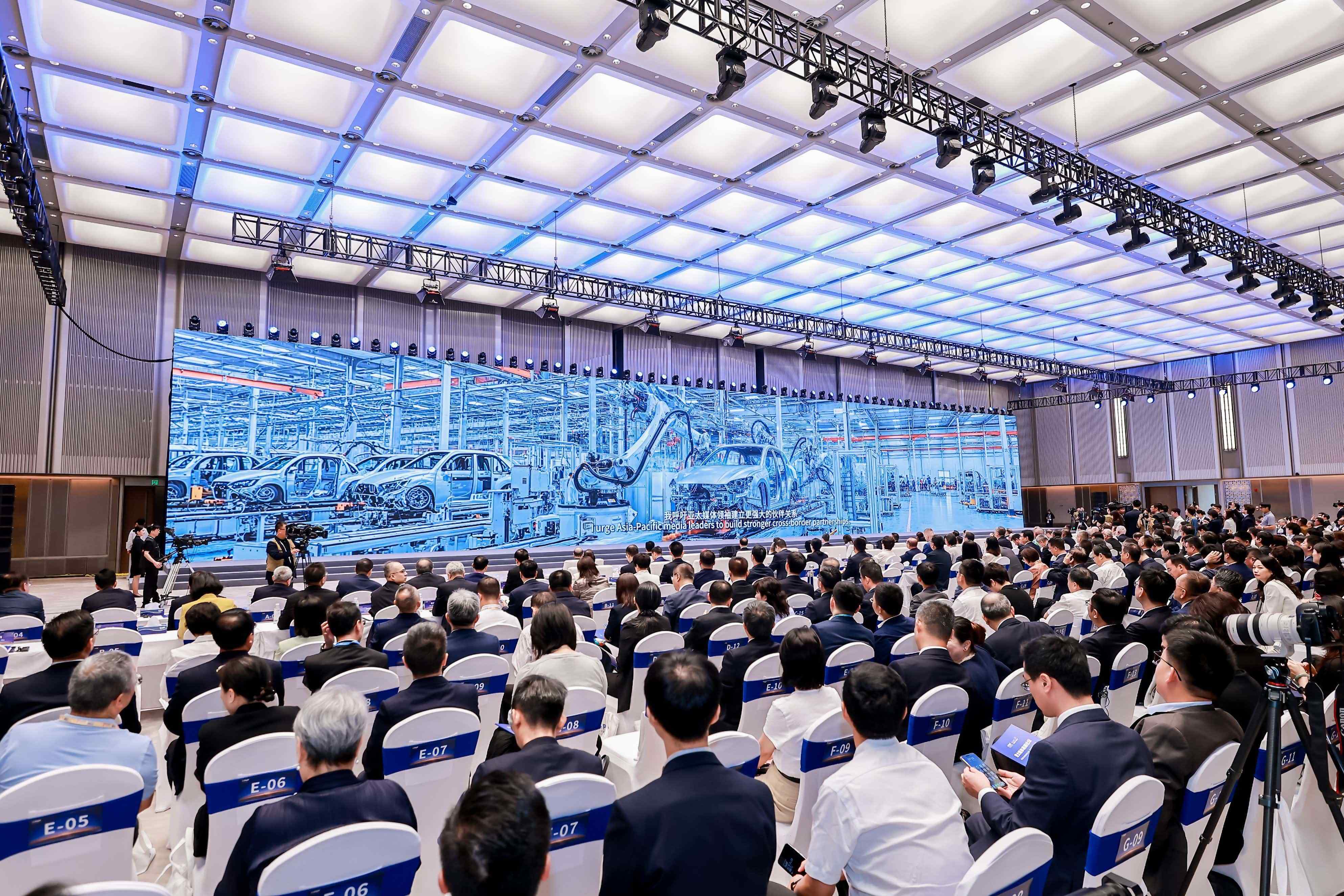
On July 4, 2026, the cultural exchange event Encounter & Insight: Dialogue Between Ningbo, China and Colombo, Sri Lanka  took place in Colombo. 

Separated by thousands of miles, the two millennia-old port cities reconnected, leveraging their ports as a bond and cultural exchanges as a cohesive force to hold in-depth talks on integrated port-city development and bilateral economic and trade connectivity.

This cross-Indian Ocean dialogue echoes the ancient Maritime Silk Road while charting a brand-new outbound development path. As a pivotal starting port of the ancient Maritime Silk Road, Ningbo is building a new global trade landscape powered by smart manufacturing.

A thousand years ago, merchant vessels from Mingzhou Port set sail southward loaded with Yue Kiln celadon porcelain, passing through Ceylon to deliver Oriental crafts across the Indian Ocean coasts. Precious gemstones and spices traveled the same sea route back to regions south of the Yangtze River, laying the groundwork for the earliest cultural exchange between the two ports through trade. Today, the cargo carried by giant cargo ships has undergone a dramatic transformation. Beyond traditional daily necessities, intelligent equipment, digital home appliances and industrial robots now dominate shipments.

Official statistics show that Ningbo’s exports of intelligent equipment, including mechanical arms and industrial robots, hit 440 million yuan in 2025, surging more than 40% year-on-year. From January to May this year, Ningbo’s exports of mechanical and electrical products maintained steady growth, reaching 247 billion yuan, a 4.1% year-on-year increase and accounting for 58.0% of the city’s total export volume. The new energy foreign trade sector saw explosive growth, with exports of new energy vehicles, lithium batteries, and photovoltaic products jumping 138.4% year-on-year, with electric vehicle exports skyrocketing 215.9%. Smart manufactured goods are continuously expanding the scope of Ningbo’s foreign trade.

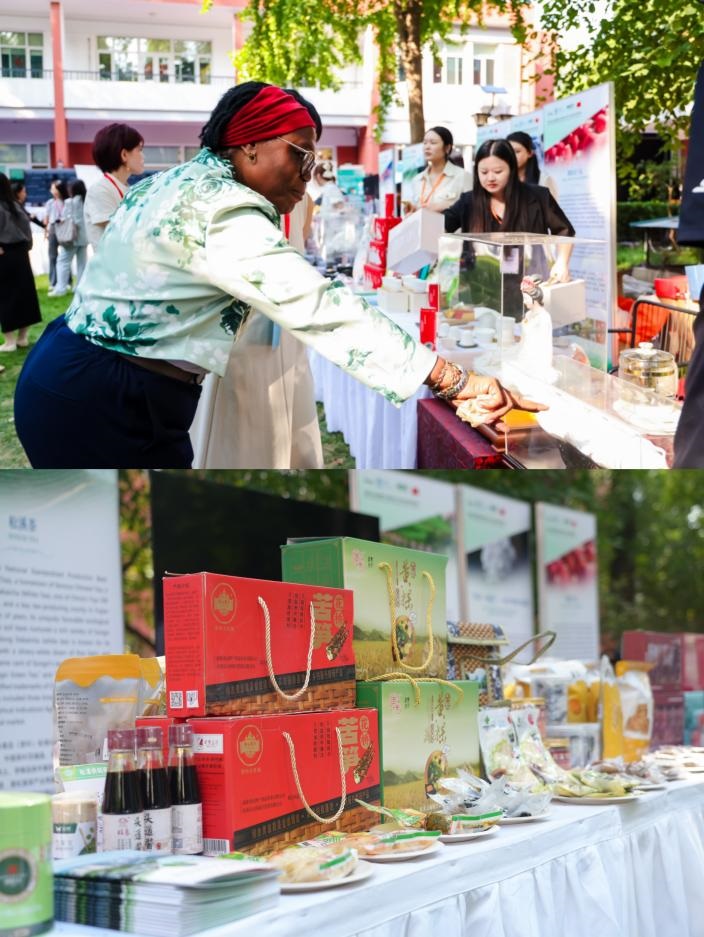
Complementing the Colombo forum, an exhibition highlights Ningbo’s outstanding going-global enterprises and their products, vividly illustrating the profound shift in Ningbo’s trade structure.

Alongside time-honored Maritime Silk Road staples such as celadon porcelain and silk, Ningbo’s smart manufactured products – including AI translation glasses, intelligent outdoor gear and digital small home appliances – occupy prominent display spaces across the venue. In Sri Lanka, Ningbo smart water meters are widely adopted nationwide, while handheld cooling fans and intelligent kitchen appliances have entered ordinary households.

Leveraging Colombo Port’s transshipment advantages, massive volumes of Ningbo smart manufactured goods are distributed onward to Europe, the Middle East and beyond. What Ningbo exports today is no longer mere commodities, but a complete outbound solution integrating technology, brand value and after-sales services.

Faced with mounting challenges including homogeneous global market competition and rising trade barriers, Ningbo’s manufacturing sector has abandoned the old model of low-cost OEM production, relying on intelligent transformation to consolidate its competitive edge in overseas markets.

Over more than a decade of digital transformation efforts, Ningbo has achieved full digital upgrading of all industrial enterprises above designated size. A large number of local factories have built unmanned black-light workshops and flexible production lines, escaping vicious price competition through continuous technological iteration. Represented by five specialized, sophisticated, distinctive and innovative enterprises dubbed Ningbo’s “Five Little Tigers” – famous for their core proprietary technologies, including highly sophisticated visual inspection equipment, heat-resistant materials, sun-proof coatings, puncture-proof materials and self-drilling fasteners – these niche manufacturers have developed differentiated technical routes and full-spectrum production capacity, cementing irreplaceable competitiveness for Ningbo smart manufacturing on global markets.

Beyond trade expansion, Ningbo has built a supporting cultural communication system to ensure “products go global, accompanied by local culture”.

The launch of Sri Lanka’s first “One-Meter Cultural Space” cultural station during the Colombo event marks a tangible milestone of Ningbo’s go-global initiative. Built on enterprises’ overseas outlets, these miniature cultural exhibition halls integrate intangible cultural heritage crafts, urban stories and smart products, enabling overseas clients to experience cutting-edge manufacturing while gaining insight into Ningbo’s profound cultural heritage.

During the twin-city story-sharing session, Ningbo entrepreneurs based in Sri Lanka and local designers blending Chinese and Sri Lankan aesthetics shared stories of bilateral exchanges. Economic and trade ties have evolved into a bond for people-to-people communication, bridging divides in cross-cultural trade.

From Tang-dynasty celadon porcelain sailing across the Indian Ocean to intelligent equipment shipping to every corner of the globe, Ningbo, the ancient Maritime Silk Road port, has preserved its enduring gene of openness. Where exchanges once relied purely on commodity trade, today smart manufacturing underpins a stable, diversified and high-value-added global trade network.

The Ningbo-Colombo dialogue stands as a vivid microcosm of this transformation: the port still links lands and seas, yet the core of its trade has undergone a full intelligent upgrade.

Rooted in its historical legacy as a key Maritime Silk Road hub, Ningbo has consolidated its industrial foundation through a decade of digital development, expanded global market reach via worldwide port networks, and softened trade cooperation through cultural exchanges. This brand-new outbound shipping route forged by smart manufacturing has not only reshaped the city’s foreign trade landscape, but also delivered a replicable port-city development model for Chinese manufacturing to go global.

Source: Ningbo International Communication Center

​From Ancient Delicacy to Global Trend: The Industrial Upgrade and Global Journey of Ningxia Goji Berries

Table

Ningxia Goji Berries

ZHONGWEI, China, June 16, 2026 /Xinhua-AsiaNet/–

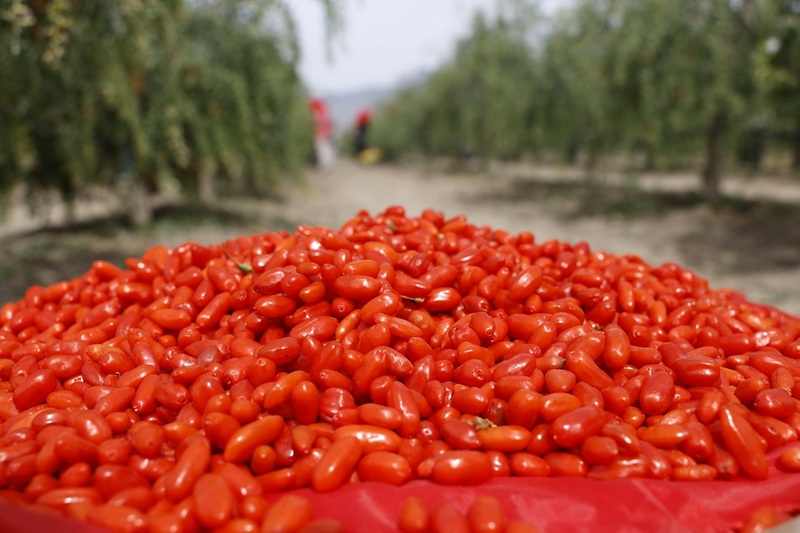
Lush plantations glitter across the sun-drenched Yellow River alluvial plain at an elevation of 1,100 meters on the eastern flank of the Helan Mountains. This is Zhongning County in the Ningxia Hui Autonomous Region, located in northwestern China. As the opening ceremony of the 9th Goji Berry Industry Expo officially kicks off here, farmers are busy harvesting the first goji berries of 2026.

While goji berries are widely cultivated across China, Ningxia goji berries stand out for their exceptional quality and have become the region’s most iconic specialty. As the core producing area of authentic Ningxia goji berries, also known as wolfberries, Zhongning enjoys over 3,000 hours of annual sunlight. The weakly alkaline soil, formed by the convergence of the Yellow River and Qingshui River, is rich in essential minerals and trace elements. These unique natural conditions have given birth to this distinctive “Magic Fruit.”

“Every single goji berry is hand-picked,” said Pan Tai’an, chairman of Ningxia Wolfberry Goji Industry Co., Ltd., a leading regional goji producer. “The goji trees blossom and bear fruit simultaneously, which means all berries must be harvested manually.”

“Thanks to Ningxia’s cool climate, pests and diseases are rare here. Still, we never use chemical fertilizers or pesticides. We only apply organic compost to guarantee the pure, natural quality of our goji berries,” he added.

From a Local Specialty to a Health and Lifestyle Trend

In China, Ningxia goji berries have been treasured as a medicinal and edible delicacy. It is the only goji variety officially listed for medicinal use in the Pharmacopoeia of the People’s Republic of China. The ancient Chinese medical masterpiece, the Shennong Ben Cao Jing (Classic of Materia Medica), documents their anti-aging properties. This profound cultural heritage has laid a solid foundation for Ningxia goji berries to enter international markets.

Today, this ancient red berry has gained unprecedented global popularity. Boasting powerful anti-aging benefits, high vitamin C content, and abundant antioxidants, Ningxia goji berries have become a trending “superfood” on international social media. Overseas consumers are willing to pay a premium for authentic Ningxia products, freeing the berry from its former identity as a niche, rustic specialty.

“Western researchers have long been studying the health benefits of goji berries, including immune enhancement, anti-tumor effects, and anti-aging properties. They call it a ‘superfood’ and extract its active ingredients for use in health supplements and cosmetics,” Pan Tai’an explains. “This inspired me to focus on deep processing, because that’s where the real value lies.”

For decades, the industry was held back by two major bottlenecks: the extreme perishability of fresh berries and underdeveloped deep-processing technology. To address these issues, the company invested six years in intensive R&D and successfully developed ambient-temperature preservation technology for goji puree. This pioneering breakthrough fills a technical gap and sets world-leading standards for the global goji industry.

To retain precious nutrients, fresh goji berries go through cleaning, pulping, sterilization and canning within two hours after harvest. This rigorous workflow best preserves key nutrients including goji polysaccharides, betaine and zeaxanthin to the greatest extent possible.

Powered by this core innovation, the company has produced over 100,000 tons of goji puree, with total sales exceeding 2 billion yuan (about 293 million U.S. dollars). More importantly, the technology has driven the construction of 50 high-standard production lines across Ningxia, marking a decisive shift – transforming the regional industry from raw material sales to high-value product manufacturing.

According to the latest data provided by the Goji Industry Development Center of the Ningxia Forestry and Grassland Administration, Ningxia’s goji marketing network covers more than 50 countries and regions spanning Southeast Asia, Europe, and the Americas. In 2025, Ningxia’s fresh goji berry output reached 200,000 tons, with the full industrial chain output value exceeding 21.3 billion yuan.

From Product Upgrade to a Global Cultural Brand

While technology-driven companies like Ningxia Wolfberry are deepening their presence in international supply chains, emerging players in the goji industry are reshaping the consumer perception of goji berries as “just a traditional medicinal herb.” As a leader in e-commerce, Ningxia Qilixiang Goji Co., Ltd. is dedicated to promoting this traditional tonic to the younger generation. Founded in 2009 by three university students with a startup fund of just 700 yuan from their living allowances, the company has now grown into a top-tier brand with annual sales exceeding 1 billion yuan.

To transform traditional wellness into a trendy lifestyle, Qilixiang has developed a variety of blended purees – such as goji-ginseng, red date-goji, and mulberry-goji – all paired with eye-catching packaging. Operating about 200 online stores, the company has consistently ranked first in e-commerce sales for goji products.

These Innovative, high-value-added products derived from goji berries – including goji puree, goji seed oil, and goji juice – are now enjoying immense global demand. Once viewed as a mysterious Chinese herbal remedy, Ningxia goji berries have now become part of daily life for middle-class families from New York to London, a favorite among Hollywood celebrities, and a common ingredient in premium restaurants worldwide.

The international reputation is built on rigorous quality control. To meet the highest global food safety standards for organic products, Ningxia goji companies adhere to the world’s most stringent regulations. For instance, Ningxia Wolfberry has held organic certifications from North America, the European Union and Japan for 21 consecutive years, earning a “green pass” to the global market. To date, its products have been exported to 33 countries and regions worldwide.

Today, Ningxia’s goji industry is no longer confined to production and sales; it is gradually embracing a diversified development model. With the establishment of goji art galleries, history museums, and experience centers, the industry is shifting from merely “selling products” to “selling scenery” and “selling culture,” growing into a multi-faceted and integrated economic driver.

The transformation of Ningxia goji berries reflects the progress and the rise of Chinese products and brands. It has evolved from a little-known northwest specialty and low-end raw material exporter into a global health trend and a modern, diversified industry fueled by technology, creativity, and culture. This journey mirrors the broader transformation of China’s traditional agriculture and the innovative drive of its real economy.

Source: Goji Industry Development Center of the Ningxia Forestry and Grassland Administration

CGTN: Head-of-state diplomacy anchors growing China-Russia partnership

Ahead of Russian President Vladimir Putin’s visit to China from May 19 to 20, CGTN has published an article examining the evolution of China-Russia relations at a historically significant moment.

The piece highlights how sustained head-of-state diplomacy has strengthened political mutual trust and how China and Russia have developed a model of major-country relations characterized by mutual respect, peaceful coexistence and win-win cooperation, offering a clear example of stability and continuity in a turbulent world.

BEIJING, May 18 (Bernama-GLOBE NEWSWIRE) — At the invitation of Chinese President Xi Jinping, Russian President Vladimir Putin will pay a state visit to China from May 19 to 20, a fresh demonstration of the close high-level exchanges that have become a distinctive feature of China-Russia relations in the new era.

Putin’s visit comes at a historically significant moment. This year marks the 25th anniversary of the signing of the China-Russia Treaty of Good-Neighborliness and Friendly Cooperation and the founding of the Shanghai Cooperation Organization (SCO), as well as the 30th anniversary of the establishment of the China-Russia comprehensive strategic partnership of coordination.

Over the past decade, head-of-state diplomacy has played a central role in steering bilateral ties through a rapidly changing global landscape. Since 2013, Xi and Putin have maintained frequent interactions. Xi has visited Russia 11 times, while Putin has traveled to China 13 times, underscoring the enduring strength and strategic nature of bilateral relation

Head-of-state diplomacy provides strategic guidance

“The frequency and depth of their interactions are rarely seen anywhere else in the world,” said Zhao Long, a research fellow at the Center for Russian and Central Asian Studies at the Shanghai Institutes for International Studies.

He noted that the two leaders have met more than 40 times over the past decade, and that head-of-state diplomacy has become a strong pillar of the high level of mutual trust and a key driving force behind practical cooperation across a wide range of sectors.

In March 2013, Russia became the first country Xi visited after taking office as Chinese president. In 2019, the two sides upgraded bilateral relations to a comprehensive strategic partnership of coordination for a new era, the highest level in the history of bilateral relations.

In 2025, Putin visited China to attend the SCO summit and commemorative events marking the 80th anniversary of the victory in the Chinese People’s War of Resistance against Japanese Aggression and the World Anti-Fascist War. On February 4 this year, Xi and Putin held a video meeting to discuss future development of bilateral ties and their coordination on international platforms.

Under the guidance of the two heads of state, China and Russia have continuously deepened political mutual trust and firmly supported each other on issues concerning their core interests, including sovereignty, security and development. The two sides have also strengthened coordination on major international platforms such as the United Nations, SCO, BRICS, APEC and the G20, jointly opposing unilateralism and contributing to build a multipolar world.

Xi has previously stated that China and Russia have explored a new path for neighboring major countries to get along with each other, characterized by non-alliance, non-confrontation, and not targeting any third party, setting an example of a new type of major-country relations.

Practical cooperation reaches new heights

With deepening political mutual trust, the two countries have achieved fruitful results through extensive practical cooperation across fields such as trade, energy, and culture.

Faced with global headwinds, the two countries’ economic and trade cooperation has continued to expand, with the two sides actively advancing the alignment between the Belt and Road Initiative (BRI) and the Eurasian Economic Union. More than 70% of China-Europe freight trains under the BRI pass through Russia en route to Europe, with the number of trips continuing to reach record highs.

China has remained Russia’s largest trading partner for 16 consecutive years. According to the latest data from China’s Ministry of Commerce, bilateral trade reached $227.9 billion in 2025, surpassing the $200 billion mark for the third consecutive year. In the first quarter of this year, bilateral trade totaled $61.2 billion, up 14.7% year on year.

People-to-people exchanges have also continued to flourish. The two countries have jointly organized a range of exchange programs over the years, including language years, tourism years, youth exchange years and cultural years.

During the 2024-2025 China-Russia Years of Culture, the two countries held a series of cultural exchange activities. The original Chinese dance drama Wing Chun was performed at Moscow’s Bolshoi Theatre, while performances in China by Russia’s Mariinsky Theatre Orchestra and the Bolshoi Ballet were met with overwhelming demand. In 2025, China and Russia also introduced a mutual visa-free policy, triggering a tourism boom between the two countries.

From deepening political mutual trust to expanding practical cooperation and growing people-to-people exchanges, China and Russia have continued to strengthen their bilateral friendship.

Against a backdrop of growing global uncertainty, the upcoming meeting between the two heads of state is expected to further advance bilateral ties, deliver greater benefits to the two peoples, and contribute more stability and positive momentum to a changing world.

https://news.cgtn.com/news/2026-05-17/Head-of-state-diplomacy-anchors-growing-China-Russia-partnership-1NdoTiyrmVi/p.html


Contact:
CGTN Digital
cgtn@cgtn.com 

SOURCE: China Global Television Network Corporation

XIONG’AN AI FORUM SHOWCASES BEIJING COLLABORATION PUSH

KUALA LUMPUR, April 2 (Bernama) — The Xiong’an “Artificial Intelligence+” Industry Ecosystem Integration Development Forum, a parallel event of the 2026 ZGC Forum, brought together more than 400 global artificial intelligence (AI) experts, industry leaders and investors in Xiong’an New Area to explore the next phase of AI-driven growth and Beijing-Xiong’an collaboration.

Held under the theme of “Beijing-Xiong’an Intelligent Innovation and Ecosystem Integration”, the forum outlined Xiong’an’s evolving AI industry landscape and introduced a suite of policy measures aimed at supporting enterprises across the full innovation cycle—from research and development to real-world application deployment.

Key outcomes included the release of collaborative innovation achievements between Beijing and Xiong’an, major application scenarios, and an “Open Competition Mechanism to Select the Best Candidates” list, according to a statement.

Together, these initiatives are designed to accelerate industrial coordination through technology breakthroughs, scenario-based applications and demonstrable results.

Several major projects were also launched, including joint Beijing-Xiong’an science and technology initiatives, investment projects backed by the Xiong’an Fund, new enterprise entries into Xiong’an Zhongguancun Park, and the rollout of key innovation platforms.

In addition, authorities officially introduced the “Hundred Models Competition”, aimed at attracting high-quality AI models and solutions while fostering innovation through competitive selection and talent aggregation.

During keynote sessions, leading academics and researchers highlighted global AI trends, theoretical advancements and China’s research progress, underscoring Xiong’an’s growing role as a hub for intelligent integration and innovation.

As the only host city outside Beijing for a 2026 ZGC Forum parallel event, Xiong’an is accelerating the development of a full AI innovation chain spanning research and development, incubation and industrial clustering.

Looking ahead, the continued integration of Beijing and Xiong’an is expected to strengthen the broader Beijing-Tianjin-Hebei innovation corridor and drive regional economic growth through AI-led transformation.

— BERNAMA