THE A2 MILK COMPANY PRESENTS INFANT FORMULA, DIGESTIVE HEALTH RESEARCH AT NUTRITION 2026

KUALA LUMPUR, July 29 (Bernama) — The a2 Milk Company, a dairy nutrition company, has announced new clinical and preclinical research examining infant growth and safety, protein utilisation and gastrointestinal biomarkers, and digestive tolerance associated with A1- and A2-type beta-casein proteins.

Presented at NUTRITION 2026, the annual meeting of the American Society for Nutrition, the research included studies conducted by The a2 Milk Company as well as company-funded research by investigators from Purdue University and Nova Southeastern University.

The company presented results from a randomised, double-blind controlled trial evaluating infant formula made with milk free from A1-type beta-casein protein (A1PF) in healthy term infants.

The Growth Monitoring Study, which was required by the United States Food and Drug Administration (FDA) for new infant formulas, found that infants fed the A1PF formula experienced normal growth throughout the 16-week study period, meeting the FDA’s predefined non-inferiority criteria compared with a commercially available infant formula.

Additional analyses showed that infants receiving the A1PF formula recorded about six per cent greater average weight gain, around 6.6 per cent greater length gain, and higher weight-for-age and length-for-age z-scores at 16 weeks.

A separate preclinical study presented by The a2 Milk Company Senior Global Research Manager, Kirsty Armstrong, examined the protein component of A1PF infant formula using the Association of Official Analytical Collaboration (AOAC INTERNATIONAL) Protein Efficiency Ratio (PER) Official Method 960.48.

Key findings included higher adjusted PER, elevated antioxidant status, reduced gastrointestinal inflammatory markers, improved intestinal barrier function markers, and increased lactase gene and protein expression.

The company said the findings suggest that A1PF milk in infant formula may support improved protein quality and a more favourable gastrointestinal environment for nutrient utilisation, although further research is needed to determine the clinical significance of these findings.

Researchers from Purdue University also investigated the role of A1- and A2-type beta-casein in digestion and metabolism, while Nova Southeastern University examined how naturally occurring differences in milk proteins may influence inflammation in the gut and brain, contributing to ongoing research into the links between nutrition, inflammation, digestive health and cognitive function.

— BERNAMA

KFSHRC ACHIEVES WORLD’S FIRST SINGLE-PORT ROBOTIC LIVER TRANSPLANT

KUALA LUMPUR, July 22 (Bernama) — King Faisal Specialist Hospital and Research Centre (KFSHRC) has performed the world’s first liver transplant using a single-port robotic system in a six-year-old boy suffering from recurrent acute liver failure.

The transplant was made possible after the child’s father donated the left lobe of his liver. The procedure was completed successfully, with the child showing good early recovery, the liver graft functioning well and no complications observed.

According to KFSHRC in a statement, the patient had Wolcott-Rallison syndrome, a rare inherited disorder that causes early-onset diabetes and recurrent episodes of acute liver failure, placing him at repeated, life-threatening risk.

The transplant addressed the disease’s most serious complication, offering the boy a chance at a more stable life while easing the medical and emotional burden on his family. He will continue to receive follow-up care for his underlying genetic condition and diabetes.

A single-port robotic system allows surgeons to introduce precision surgical instruments and a high-definition 3D camera through one small incision, unlike conventional multi-port robotic surgery, which requires several access points.

Working through this single port, surgeons carried out the most delicate stages of the transplant inside the child’s body, where the confined surgical field required extremely precise handling of blood vessels and bile ducts. The approach helped reduce surgical impact, ease pain, and shorten recovery time and hospital stay.

This milestone builds on a pioneering path KFSHRC began in 2023 with the world’s first fully robotic liver transplant, which has since grown into an integrated programme with 165 cases performed to date, supported by experience from more than 1,700 robotic living-donor liver resections.

This accumulated expertise reflects the hospital’s ability to turn landmark achievements into advanced clinical programmes that change the course of entire families’ lives, expanding the use of robotics in highly complex transplant surgery and strengthening Saudi Arabia’s position in medical innovation and healthcare excellence.

Ranked first in the Middle East and Africa and 12th globally among the world’s top 250 academic medical centres for 2026, KFSHRC was also recognised as the most valuable healthcare brand in Saudi Arabia and the Middle East for 2026 by Brand Finance. It was also listed by Newsweek among the World’s Best Hospitals, World’s Best Smart Hospitals and World’s Best Specialised Hospitals for 2026.

— BERNAMA

Vivani Medical Enters into Agreement with Novo Nordisk to Evaluate NPM-139, a Miniature, Ultra Long-Acting Semaglutide Implant for Chronic Weight Management

Novo Nordisk will conduct a non-exclusive internal evaluation of semaglutide implants prepared by Vivani 

ALAMEDA, Calif., July 8 (Bernama-GLOBE NEWSWIRE) — Vivani Medical, Inc. (Nasdaq: VANI) (“Vivani” or the “Company”), an innovative, biopharmaceutical company developing novel, ultra long-acting drug implants, today announced the signing of a new agreement with Novo Nordisk to enable Novo Nordisk to evaluate NPM-139, the Company’s semaglutide drug implant. NPM-139, which utilizes Vivani’s NanoPortal™ platform technology, is under development for chronic weight management. There are no exclusivity provisions for NPM-139, or Vivani’s proprietary NanoPortal technology associated with this agreement. 

Adam Mendelsohn, Ph.D., Vivani President and CEO, stated: “The new agreement announced today supporting our semaglutide implant program in chronic weight management demonstrates Novo Nordisk’s interest in evaluating our technology and its lead semaglutide application. This agreement reinforces our confidence regarding the market opportunity for our GLP-1 implants under development. We believe that our NanoPortal implants under development, including NPM-139, could address a growing segment of patients who would prefer a convenient once- or twice-yearly treatment option and the peace of mind that treatment could be stopped at any time if that became necessary.”

Separately, Vivani expects to initiate a Phase 1, randomized, first-in-human study evaluating the NPM-139 semaglutide implant, with Wegovy® injections as an active comparator, in mid-2026. The study’s objectives are to characterize the safety, pharmacokinetics, and tolerability of NPM-139 to support the initiation of a Phase 2 dose-ranging study pending successful results of the Phase 1 study.

About Vivani Medical, Inc.

Leveraging its proprietary NanoPortal™ platform, Vivani develops biopharmaceutical implants designed to deliver drug molecules steadily over extended periods of time with the goal of guaranteeing adherence and improving patient tolerance to their medication. Vivani is developing a portfolio of GLP-1 based implants for metabolic diseases including obesity and type 2 diabetes. These NanoPortal implants are designed to provide patients with the opportunity to realize the full potential benefit of their medication by avoiding the numerous challenges associated with the daily or weekly administration of orals and injectables, including tolerability issues and loss of efficacy. Medication non-adherence occurs when patients do not take their medication as prescribed. This affects an alarming number of patients, approximately 50%, including those taking daily pills. For more information, please visit: www.vivani.com.

Forward-Looking Statements

This press release contains certain “forward-looking statements” within the meaning of the “safe harbor” provisions of the U.S. Private Securities Litigation Reform Act of 1995. Forward-looking statements can be identified by words such as: “target,” “believe,” “expect,” “will,” “may,” “anticipate,” “estimate,” “would,” “positioned,” “future,” and other similar expressions that are used in this press release, including statements regarding Vivani’s business, products in development, including the therapeutic potential thereof, the planned development thereof, and its technology, strategy, cash position and financial runway. Forward-looking statements are neither historical facts nor assurances of future performance. Instead, they are based only on Vivani’s current beliefs, expectations, and assumptions. Because forward-looking statements relate to the future, they are subject to inherent uncertainties, risks and changes in circumstances that are difficult to predict and many of which are outside of Vivani’s control. These statements involve risks and uncertainties that could cause actual results to differ materially from those reflected in such statements, including, without limitation, risks of unexpected costs or delays; and risks and uncertainties associated with the development and commercialization of products and product candidates that may impact or alter anticipated business plans, strategies and objectives. Actual results and outcomes may differ materially from those indicated in the forward-looking statements. Therefore, you should not rely on any of these forward-looking statements. The foregoing sets forth many, but not all, of the factors that could cause actual results to differ from our expectations in any forward-looking statement. There may be additional risks that the Company considers immaterial, or which are unknown. A further list and description of risks and uncertainties are more fully described in periodic filings with the U.S. Securities and Exchange Commission including the factors described in Vivani’s most recent Quarterly Report on Form 10-Q filed with the SEC on May 13, 2026, as updated by future filings with the SEC. Any forward-looking statement made by Vivani in this press release is based only on information currently available to the Company and speaks only as of the date on which it is made. The Company undertakes no obligation to publicly update any forward-looking statement, whether written or oral, that may be made from time to time, whether as a result of added information, future developments or otherwise, except as required by law.

Company Contact:
Donald Dwyer
Chief Business Officer
info@vivani.com (415) 506-8462

Investor and Media Relations Contact:
Jami Taylor
Investor and Media Relations Advisor
investors@vivani.com (415) 506-8462

A photo accompanying this announcement is available at https://www.globenewswire.com/NewsRoom/AttachmentNg/f2d15b13-32f3-42ba-afed-e1cea67006b1

SOURCE: Vivani Medical, Inc.

​From Ancient Delicacy to Global Trend: The Industrial Upgrade and Global Journey of Ningxia Goji Berries

Table

Ningxia Goji Berries

ZHONGWEI, China, June 16, 2026 /Xinhua-AsiaNet/–

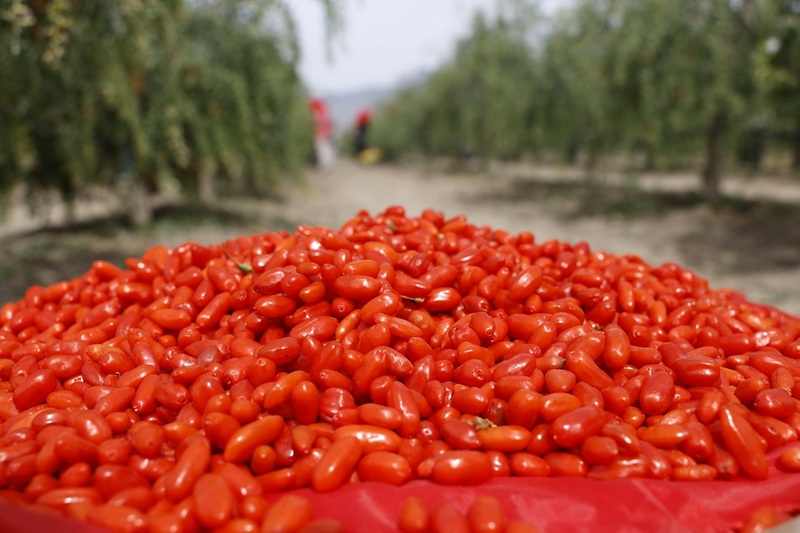
Lush plantations glitter across the sun-drenched Yellow River alluvial plain at an elevation of 1,100 meters on the eastern flank of the Helan Mountains. This is Zhongning County in the Ningxia Hui Autonomous Region, located in northwestern China. As the opening ceremony of the 9th Goji Berry Industry Expo officially kicks off here, farmers are busy harvesting the first goji berries of 2026.

While goji berries are widely cultivated across China, Ningxia goji berries stand out for their exceptional quality and have become the region’s most iconic specialty. As the core producing area of authentic Ningxia goji berries, also known as wolfberries, Zhongning enjoys over 3,000 hours of annual sunlight. The weakly alkaline soil, formed by the convergence of the Yellow River and Qingshui River, is rich in essential minerals and trace elements. These unique natural conditions have given birth to this distinctive “Magic Fruit.”

“Every single goji berry is hand-picked,” said Pan Tai’an, chairman of Ningxia Wolfberry Goji Industry Co., Ltd., a leading regional goji producer. “The goji trees blossom and bear fruit simultaneously, which means all berries must be harvested manually.”

“Thanks to Ningxia’s cool climate, pests and diseases are rare here. Still, we never use chemical fertilizers or pesticides. We only apply organic compost to guarantee the pure, natural quality of our goji berries,” he added.

From a Local Specialty to a Health and Lifestyle Trend

In China, Ningxia goji berries have been treasured as a medicinal and edible delicacy. It is the only goji variety officially listed for medicinal use in the Pharmacopoeia of the People’s Republic of China. The ancient Chinese medical masterpiece, the Shennong Ben Cao Jing (Classic of Materia Medica), documents their anti-aging properties. This profound cultural heritage has laid a solid foundation for Ningxia goji berries to enter international markets.

Today, this ancient red berry has gained unprecedented global popularity. Boasting powerful anti-aging benefits, high vitamin C content, and abundant antioxidants, Ningxia goji berries have become a trending “superfood” on international social media. Overseas consumers are willing to pay a premium for authentic Ningxia products, freeing the berry from its former identity as a niche, rustic specialty.

“Western researchers have long been studying the health benefits of goji berries, including immune enhancement, anti-tumor effects, and anti-aging properties. They call it a ‘superfood’ and extract its active ingredients for use in health supplements and cosmetics,” Pan Tai’an explains. “This inspired me to focus on deep processing, because that’s where the real value lies.”

For decades, the industry was held back by two major bottlenecks: the extreme perishability of fresh berries and underdeveloped deep-processing technology. To address these issues, the company invested six years in intensive R&D and successfully developed ambient-temperature preservation technology for goji puree. This pioneering breakthrough fills a technical gap and sets world-leading standards for the global goji industry.

To retain precious nutrients, fresh goji berries go through cleaning, pulping, sterilization and canning within two hours after harvest. This rigorous workflow best preserves key nutrients including goji polysaccharides, betaine and zeaxanthin to the greatest extent possible.

Powered by this core innovation, the company has produced over 100,000 tons of goji puree, with total sales exceeding 2 billion yuan (about 293 million U.S. dollars). More importantly, the technology has driven the construction of 50 high-standard production lines across Ningxia, marking a decisive shift – transforming the regional industry from raw material sales to high-value product manufacturing.

According to the latest data provided by the Goji Industry Development Center of the Ningxia Forestry and Grassland Administration, Ningxia’s goji marketing network covers more than 50 countries and regions spanning Southeast Asia, Europe, and the Americas. In 2025, Ningxia’s fresh goji berry output reached 200,000 tons, with the full industrial chain output value exceeding 21.3 billion yuan.

From Product Upgrade to a Global Cultural Brand

While technology-driven companies like Ningxia Wolfberry are deepening their presence in international supply chains, emerging players in the goji industry are reshaping the consumer perception of goji berries as “just a traditional medicinal herb.” As a leader in e-commerce, Ningxia Qilixiang Goji Co., Ltd. is dedicated to promoting this traditional tonic to the younger generation. Founded in 2009 by three university students with a startup fund of just 700 yuan from their living allowances, the company has now grown into a top-tier brand with annual sales exceeding 1 billion yuan.

To transform traditional wellness into a trendy lifestyle, Qilixiang has developed a variety of blended purees – such as goji-ginseng, red date-goji, and mulberry-goji – all paired with eye-catching packaging. Operating about 200 online stores, the company has consistently ranked first in e-commerce sales for goji products.

These Innovative, high-value-added products derived from goji berries – including goji puree, goji seed oil, and goji juice – are now enjoying immense global demand. Once viewed as a mysterious Chinese herbal remedy, Ningxia goji berries have now become part of daily life for middle-class families from New York to London, a favorite among Hollywood celebrities, and a common ingredient in premium restaurants worldwide.

The international reputation is built on rigorous quality control. To meet the highest global food safety standards for organic products, Ningxia goji companies adhere to the world’s most stringent regulations. For instance, Ningxia Wolfberry has held organic certifications from North America, the European Union and Japan for 21 consecutive years, earning a “green pass” to the global market. To date, its products have been exported to 33 countries and regions worldwide.

Today, Ningxia’s goji industry is no longer confined to production and sales; it is gradually embracing a diversified development model. With the establishment of goji art galleries, history museums, and experience centers, the industry is shifting from merely “selling products” to “selling scenery” and “selling culture,” growing into a multi-faceted and integrated economic driver.

The transformation of Ningxia goji berries reflects the progress and the rise of Chinese products and brands. It has evolved from a little-known northwest specialty and low-end raw material exporter into a global health trend and a modern, diversified industry fueled by technology, creativity, and culture. This journey mirrors the broader transformation of China’s traditional agriculture and the innovative drive of its real economy.

Source: Goji Industry Development Center of the Ningxia Forestry and Grassland Administration

EAACI CHAMPIONS VISION ZERO TO REDUCE ALLERGY, ASTHMA BURDEN

KUALA LUMPUR, June 12 (Bernama) — The European Academy of Allergy and Clinical Immunology (EAACI) is calling for a new global health ambition through Vision Zero, a future free from the burden of allergy and asthma.

As allergic diseases continue to affect hundreds of millions of people worldwide and place growing pressure on healthcare systems, this vision will serve as the central theme of the four-day EAACI Annual Congress 2026 in Istanbul, Türkiye, beginning June 12.

The congress will bring together thousands of clinicians, researchers and healthcare professionals to discuss the latest scientific advances and the future of allergy and asthma care, according to EAACI in a statement.

“Vision Zero reflects our determination to move beyond disease management and towards disease prevention and burden reduction. Through collaboration across research, clinical practice and public health, we can work towards a future where allergy and asthma no longer limit the lives of millions,” said EAACI President, María Torres.

EAACI believes scientific innovation, prevention strategies and coordinated policy action can significantly reduce the impact of allergic and respiratory diseases on individuals, families and societies rather than accepting them as an inevitable and growing public health challenge.

The congress will showcase emerging research and clinical developments in immunotherapy, environmental and genetic factors, digital health technologies, precision medicine and preventive approaches. Discussions will also address health equity and the need to ensure that advances in allergy and asthma care are accessible to patients worldwide.

Allergic diseases are among the most common chronic conditions globally, and their burden extends beyond healthcare to affect education, productivity, quality of life and mental wellbeing.

Against this backdrop, EAACI’s Vision Zero initiative seeks to encourage long-term thinking about what is possible when scientific discovery is matched by effective implementation and policy support. The congress is expected to bring together experts worldwide to accelerate progress towards substantially reducing the burden of allergy and asthma.

— BERNAMA