HIT CO-HOSTS CLIMATE LEADERSHIP CONFERENCE, JOINTLY LAUNCHES INITIATIVE

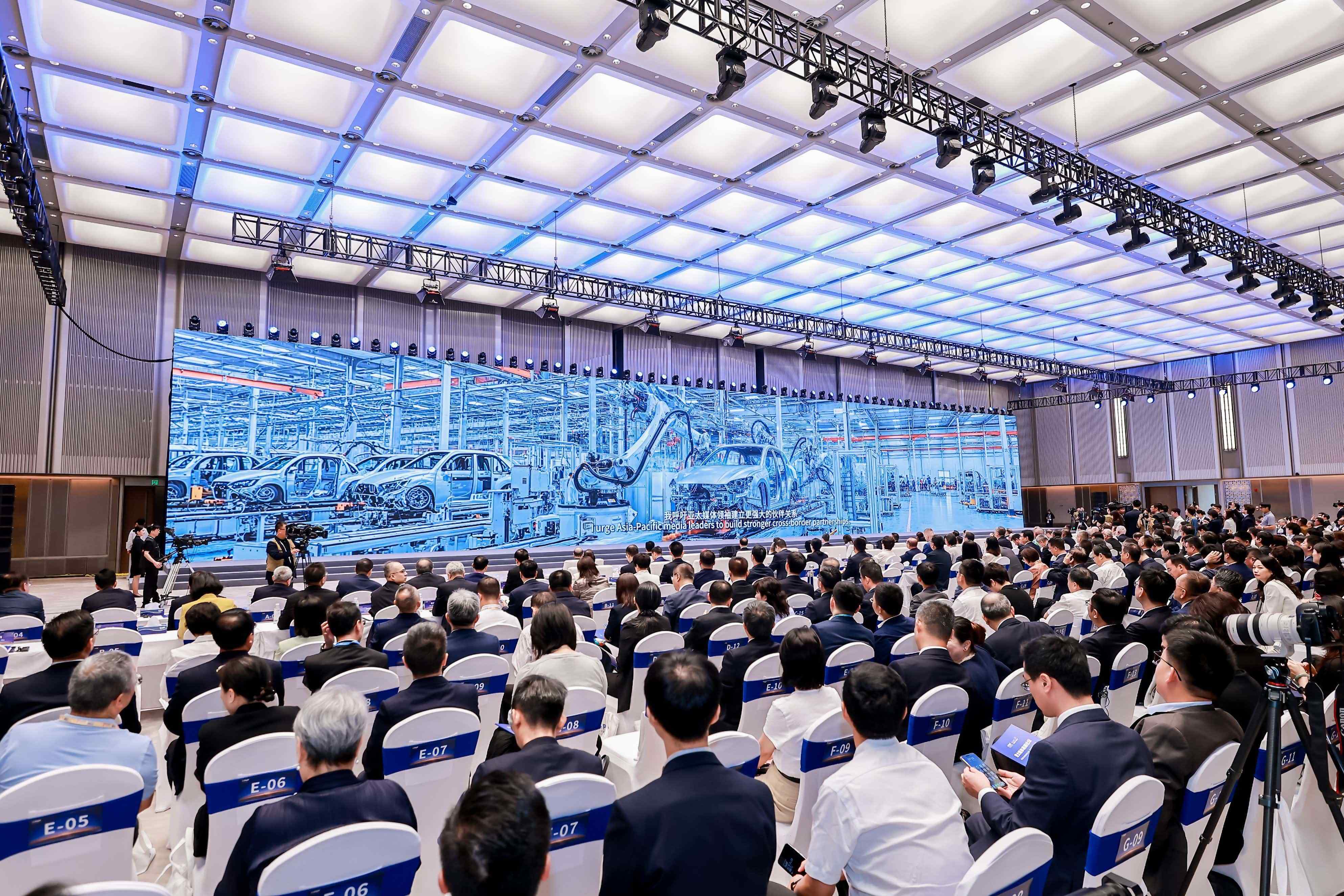
KUALA LUMPUR, July 27 (Bernama) — The second International Conference on Climate Leadership, held in Harbin from July 18 to 20, gathered more than 300 experts and scholars from 111 universities and research institutions across 23 countries and regions.

According to a statement, the three-day conference was co-hosted by the Business School, Harbin Institute of Technology (HIT), the Bartlett School of Sustainable Construction, UCL, and the Chinese Economic Association UK/Europe.

With representatives from international organisations such as the United Nations Development Programme (UNDP), businesses, and leading academic journals, participants explored cutting-edge developments and global practices in climate leadership, contributing Chinese wisdom and solutions to global climate governance.

The Climate Leadership Initiative, jointly proposed by HIT and UNDP, was officially launched at the conference, highlighting the role of science, technology, and business disciplines in connecting climate technology innovation, business practices, and governance decision-making.

It calls for stronger collaboration among business schools, science and engineering faculties, research institutions, and enterprises, marking HIT’s significant step in leveraging its unique disciplinary strengths to help Chinese universities shift from participants to leaders in global climate governance.

In addition, the conference also featured a world-class academic lineup, with keynote speakers including fellows of the Royal Society of Canada, the Academy of the Social Sciences in Australia, the European Academy of Sciences, and the Royal Society of Edinburgh.

Distinguished experts also included a former deputy director of the Regional Cooperation Division at the United Nations Environment Programme (UNEP), an executive council member of the China Energy Research Society, and an assistant resident representative of UNDP in China.

Editors-in-chief from leading journals also gathered at the Journal Editors Session to discuss emerging trends, while five international organisations, namely UNDP, UNEP, WWF, WRI and CBI, participated extensively. UNDP also organised its first dedicated joint session, highlighting the conference’s international influence.

As a leading university integrating science, technology, and business education, HIT has built an international platform for collaboration. Through co-hosting the conference and launching the Climate Leadership Initiative, HIT demonstrated that Chinese universities can serve not only as participants, but also as agenda setters and drivers in global climate governance.

— BERNAMA

Accertify’s Q2 Global Air Travel Fraud Report Finds Fraud Pressure Intensifying Across Middle East and Africa

Analysis of nearly 133 million airline booking transactions finds bookings departing from Cairo carried the world’s highest fraud rate this quarter, while departure cities across the United States and Australia posted among the lowest fraud rates

ITASCA, Ill., July 16 (Bernama-BUSINESS WIRE) — Accertify, a leading fraud decisioning provider whose Predictive Yes Platform helps merchants say yes to more good customers, more revenue, and more growth, today announced the release of its Global Air Travel Fraud Report: Q2 2026, a quarterly analysis examining how fraud pressure varies across global airline markets based on departure city at time of booking.

Based on analysis of 132.9 million airline booking transactions processed between April and June 2026, the report evaluates prevented fraud rates across 537 departure cities that each processed at least 10,000 transactions during the quarter, providing airlines with a data-driven view of where Accertify’s Predictive Yes platform intervened most frequently at booking.

The Q2 findings reveal that fraud pressure continues to vary significantly by market, with the most notable shift occurring across the Middle East and Africa. The region’s average prevented fraud rate more than doubled quarter over quarter, from 0.95% to 2.03% — the highest of any region analyzed, against a global average of 0.29% — while bookings departing from Cairo, Accra, Tunis, and Casablanca posted the four highest fraud rates worldwide (Source: Accertify client data, Q2 2026). Meanwhile, departure cities across the United States and Australia continued to register some of the world’s lowest booking-stage fraud rates, reflecting the more mature fraud-prevention practices commonly found in those markets.

Key findings from the Accertify Q2 2026 Global Air Travel Fraud Report include:

  • Middle East and Africa recorded the highest average fraud rate of any region. The region’s average prevented fraud rate reached 2.03%, up from 0.95% in Q1 and well above the global average of 0.29%, with bookings departing from Cairo, Accra, Tunis, and Casablanca recording the four highest fraud rates worldwide.
  • Cairo reached the highest fraud rate in the world this quarter. The fraud rate on bookings departing from Cairo rose from 1.43% in Q1 to 6.57% in Q2 — moving it from 15th to the highest globally in a single quarter.
  • The United States and Australia reflected some of the world’s lowest fraud rates. Both remained well below the global average of 0.29%, with bookings departing from U.S. cities averaging 0.07% and bookings departing from Australia and Pacific cities averaging 0.08%.
  • East Asia posted the largest proportional improvement of any region. Its average prevented fraud rate nearly halved year over year, falling 43% from 0.20% to 0.11% — a steeper percentage decline than any other region, though Latin America + the Caribbean’s rate fell by more in absolute terms (0.91% to 0.69%).
  • Quarter-over-quarter rankings provide new insight into changing fraud patterns. For the first time, the report tracks how individual departure cities move within the global rankings from one quarter to the next, providing airlines with additional context into where fraud pressure is accelerating or easing over time.

The report underscores that fraud pressure is highly localized, often varying significantly between departure cities within the same region. By examining prevented fraud at the point of booking, airlines can better benchmark their own performance, identify emerging areas of elevated risk, and adapt fraud prevention strategies as booking patterns evolve.

Note on methodology: Fraud rate figures reflect prevented fraud – bookings denied for a fraud reason before travel occurred – denoted by departure city, the point of booking. Regional and global averages are calculated as the mean of each qualifying departure city’s individual fraud rate.

The Global Air Travel Fraud Report: Q2 2026 is hosted on Accertify’s website at https://www.accertify.com/q2-2026-global-air-travel-fraud-report/.

About Accertify

Accertify enables commerce by doing one thing extraordinarily well: pinpointing fraud. The company’s Predictive Yes Platform helps businesses say yes to more – more good customers, more revenue, and more growth – without getting burned. It’s a precise, confident, data-backed yes, made possible by joining signals across the entire customer lifecycle through unmatched data volume, layered AI-powered models, and a consortium approach that protects clients from bad actors spotted anywhere in the network while unlocking business with good actors verified anywhere in the network. With more than 10 billion transactions and over $1 trillion in commerce processed in 2025 alone, Accertify delivers the intelligence and precision that fraud and payments teams need to say yes confidently and enable growth. That’s the More Yes difference. Learn more at accertify.com.

View source version on businesswire.com: https://www.businesswire.com/news/home/20260715427770/en/

Contact

Media Contact
Tylor Tourville
T2 PR
tylor@t2pr.agency

Source : Accertify

Ancient Port, New Voyages: Ningbo’s Smart Manufacturing Expands Global Trade Footprint via Maritime Silk Road

NINGBO, China, July 7, 2026 /Xinhua-AsiaNet/–

On July 4, 2026, the cultural exchange event Encounter & Insight: Dialogue Between Ningbo, China and Colombo, Sri Lanka  took place in Colombo. 

Separated by thousands of miles, the two millennia-old port cities reconnected, leveraging their ports as a bond and cultural exchanges as a cohesive force to hold in-depth talks on integrated port-city development and bilateral economic and trade connectivity.

This cross-Indian Ocean dialogue echoes the ancient Maritime Silk Road while charting a brand-new outbound development path. As a pivotal starting port of the ancient Maritime Silk Road, Ningbo is building a new global trade landscape powered by smart manufacturing.

A thousand years ago, merchant vessels from Mingzhou Port set sail southward loaded with Yue Kiln celadon porcelain, passing through Ceylon to deliver Oriental crafts across the Indian Ocean coasts. Precious gemstones and spices traveled the same sea route back to regions south of the Yangtze River, laying the groundwork for the earliest cultural exchange between the two ports through trade. Today, the cargo carried by giant cargo ships has undergone a dramatic transformation. Beyond traditional daily necessities, intelligent equipment, digital home appliances and industrial robots now dominate shipments.

Official statistics show that Ningbo’s exports of intelligent equipment, including mechanical arms and industrial robots, hit 440 million yuan in 2025, surging more than 40% year-on-year. From January to May this year, Ningbo’s exports of mechanical and electrical products maintained steady growth, reaching 247 billion yuan, a 4.1% year-on-year increase and accounting for 58.0% of the city’s total export volume. The new energy foreign trade sector saw explosive growth, with exports of new energy vehicles, lithium batteries, and photovoltaic products jumping 138.4% year-on-year, with electric vehicle exports skyrocketing 215.9%. Smart manufactured goods are continuously expanding the scope of Ningbo’s foreign trade.

Complementing the Colombo forum, an exhibition highlights Ningbo’s outstanding going-global enterprises and their products, vividly illustrating the profound shift in Ningbo’s trade structure.

Alongside time-honored Maritime Silk Road staples such as celadon porcelain and silk, Ningbo’s smart manufactured products – including AI translation glasses, intelligent outdoor gear and digital small home appliances – occupy prominent display spaces across the venue. In Sri Lanka, Ningbo smart water meters are widely adopted nationwide, while handheld cooling fans and intelligent kitchen appliances have entered ordinary households.

Leveraging Colombo Port’s transshipment advantages, massive volumes of Ningbo smart manufactured goods are distributed onward to Europe, the Middle East and beyond. What Ningbo exports today is no longer mere commodities, but a complete outbound solution integrating technology, brand value and after-sales services.

Faced with mounting challenges including homogeneous global market competition and rising trade barriers, Ningbo’s manufacturing sector has abandoned the old model of low-cost OEM production, relying on intelligent transformation to consolidate its competitive edge in overseas markets.

Over more than a decade of digital transformation efforts, Ningbo has achieved full digital upgrading of all industrial enterprises above designated size. A large number of local factories have built unmanned black-light workshops and flexible production lines, escaping vicious price competition through continuous technological iteration. Represented by five specialized, sophisticated, distinctive and innovative enterprises dubbed Ningbo’s “Five Little Tigers” – famous for their core proprietary technologies, including highly sophisticated visual inspection equipment, heat-resistant materials, sun-proof coatings, puncture-proof materials and self-drilling fasteners – these niche manufacturers have developed differentiated technical routes and full-spectrum production capacity, cementing irreplaceable competitiveness for Ningbo smart manufacturing on global markets.

Beyond trade expansion, Ningbo has built a supporting cultural communication system to ensure “products go global, accompanied by local culture”.

The launch of Sri Lanka’s first “One-Meter Cultural Space” cultural station during the Colombo event marks a tangible milestone of Ningbo’s go-global initiative. Built on enterprises’ overseas outlets, these miniature cultural exhibition halls integrate intangible cultural heritage crafts, urban stories and smart products, enabling overseas clients to experience cutting-edge manufacturing while gaining insight into Ningbo’s profound cultural heritage.

During the twin-city story-sharing session, Ningbo entrepreneurs based in Sri Lanka and local designers blending Chinese and Sri Lankan aesthetics shared stories of bilateral exchanges. Economic and trade ties have evolved into a bond for people-to-people communication, bridging divides in cross-cultural trade.

From Tang-dynasty celadon porcelain sailing across the Indian Ocean to intelligent equipment shipping to every corner of the globe, Ningbo, the ancient Maritime Silk Road port, has preserved its enduring gene of openness. Where exchanges once relied purely on commodity trade, today smart manufacturing underpins a stable, diversified and high-value-added global trade network.

The Ningbo-Colombo dialogue stands as a vivid microcosm of this transformation: the port still links lands and seas, yet the core of its trade has undergone a full intelligent upgrade.

Rooted in its historical legacy as a key Maritime Silk Road hub, Ningbo has consolidated its industrial foundation through a decade of digital development, expanded global market reach via worldwide port networks, and softened trade cooperation through cultural exchanges. This brand-new outbound shipping route forged by smart manufacturing has not only reshaped the city’s foreign trade landscape, but also delivered a replicable port-city development model for Chinese manufacturing to go global.

Source: Ningbo International Communication Center

CGTN: Head-of-state diplomacy anchors growing China-Russia partnership

Ahead of Russian President Vladimir Putin’s visit to China from May 19 to 20, CGTN has published an article examining the evolution of China-Russia relations at a historically significant moment.

The piece highlights how sustained head-of-state diplomacy has strengthened political mutual trust and how China and Russia have developed a model of major-country relations characterized by mutual respect, peaceful coexistence and win-win cooperation, offering a clear example of stability and continuity in a turbulent world.

BEIJING, May 18 (Bernama-GLOBE NEWSWIRE) — At the invitation of Chinese President Xi Jinping, Russian President Vladimir Putin will pay a state visit to China from May 19 to 20, a fresh demonstration of the close high-level exchanges that have become a distinctive feature of China-Russia relations in the new era.

Putin’s visit comes at a historically significant moment. This year marks the 25th anniversary of the signing of the China-Russia Treaty of Good-Neighborliness and Friendly Cooperation and the founding of the Shanghai Cooperation Organization (SCO), as well as the 30th anniversary of the establishment of the China-Russia comprehensive strategic partnership of coordination.

Over the past decade, head-of-state diplomacy has played a central role in steering bilateral ties through a rapidly changing global landscape. Since 2013, Xi and Putin have maintained frequent interactions. Xi has visited Russia 11 times, while Putin has traveled to China 13 times, underscoring the enduring strength and strategic nature of bilateral relation

Head-of-state diplomacy provides strategic guidance

“The frequency and depth of their interactions are rarely seen anywhere else in the world,” said Zhao Long, a research fellow at the Center for Russian and Central Asian Studies at the Shanghai Institutes for International Studies.

He noted that the two leaders have met more than 40 times over the past decade, and that head-of-state diplomacy has become a strong pillar of the high level of mutual trust and a key driving force behind practical cooperation across a wide range of sectors.

In March 2013, Russia became the first country Xi visited after taking office as Chinese president. In 2019, the two sides upgraded bilateral relations to a comprehensive strategic partnership of coordination for a new era, the highest level in the history of bilateral relations.

In 2025, Putin visited China to attend the SCO summit and commemorative events marking the 80th anniversary of the victory in the Chinese People’s War of Resistance against Japanese Aggression and the World Anti-Fascist War. On February 4 this year, Xi and Putin held a video meeting to discuss future development of bilateral ties and their coordination on international platforms.

Under the guidance of the two heads of state, China and Russia have continuously deepened political mutual trust and firmly supported each other on issues concerning their core interests, including sovereignty, security and development. The two sides have also strengthened coordination on major international platforms such as the United Nations, SCO, BRICS, APEC and the G20, jointly opposing unilateralism and contributing to build a multipolar world.

Xi has previously stated that China and Russia have explored a new path for neighboring major countries to get along with each other, characterized by non-alliance, non-confrontation, and not targeting any third party, setting an example of a new type of major-country relations.

Practical cooperation reaches new heights

With deepening political mutual trust, the two countries have achieved fruitful results through extensive practical cooperation across fields such as trade, energy, and culture.

Faced with global headwinds, the two countries’ economic and trade cooperation has continued to expand, with the two sides actively advancing the alignment between the Belt and Road Initiative (BRI) and the Eurasian Economic Union. More than 70% of China-Europe freight trains under the BRI pass through Russia en route to Europe, with the number of trips continuing to reach record highs.

China has remained Russia’s largest trading partner for 16 consecutive years. According to the latest data from China’s Ministry of Commerce, bilateral trade reached $227.9 billion in 2025, surpassing the $200 billion mark for the third consecutive year. In the first quarter of this year, bilateral trade totaled $61.2 billion, up 14.7% year on year.

People-to-people exchanges have also continued to flourish. The two countries have jointly organized a range of exchange programs over the years, including language years, tourism years, youth exchange years and cultural years.

During the 2024-2025 China-Russia Years of Culture, the two countries held a series of cultural exchange activities. The original Chinese dance drama Wing Chun was performed at Moscow’s Bolshoi Theatre, while performances in China by Russia’s Mariinsky Theatre Orchestra and the Bolshoi Ballet were met with overwhelming demand. In 2025, China and Russia also introduced a mutual visa-free policy, triggering a tourism boom between the two countries.

From deepening political mutual trust to expanding practical cooperation and growing people-to-people exchanges, China and Russia have continued to strengthen their bilateral friendship.

Against a backdrop of growing global uncertainty, the upcoming meeting between the two heads of state is expected to further advance bilateral ties, deliver greater benefits to the two peoples, and contribute more stability and positive momentum to a changing world.

https://news.cgtn.com/news/2026-05-17/Head-of-state-diplomacy-anchors-growing-China-Russia-partnership-1NdoTiyrmVi/p.html


Contact:
CGTN Digital
cgtn@cgtn.com 

SOURCE: China Global Television Network Corporation

Call for Nominations: 2026 Global Citizen Award

LONDON, April 8 (Bernama-GLOBE NEWSWIRE) — Leading international residence and citizenship planning firm Henley & Partners, in partnership with Andan Foundation, a Swiss non-profit humanitarian organization, is pleased to announce the call for nominations for the 2026 Global Citizen Award.

Created in 2014, the Global Citizen Award is a tribute that honors remarkable individuals working to advance any one of the global challenges affecting humanity today – challenges that transcend national boundaries and cannot be resolved by any one country acting alone.

The 2026 laureate will be selected by a distinguished, independent committee and honored at the Global Citizen Award ceremony which forms part of the annual Henley & Partners Global Citizenship Conference.

Henley & Partners Chairman and Founder of the Andan Foundation, Dr Christian H. Kaelin, says the awardee’s work needs to demonstrate a positive impact on the lives of vulnerable social groups, particularly with a connection to migration-related issues. “The Global Citizen Award is open worldwide to those working in a field with a direct link to the issues they are looking to affect. The committee is looking for remarkable and inspirational individuals who demonstrate vision, courage, and innovation in driving global change, and whose actions and outlook contribute to a more just, peaceful, connected, and tolerant world.”

The selection process is based on a majority decision of the Award Committee. The award itself consists of a bespoke sculptural medal designed by leading Italian artist Antonio Nocera, an award certificate signed by the Chairman of the Global Citizen Award Committee, and a monetary prize of USD 20,000, which goes towards supporting the awardee’s humanitarian efforts. In addition, Henley & Partners commits to working closely with the awardee for a period of one year, raising awareness of their work and supporting the selected project through the firm’s network of more than 70 offices worldwide.

Since its inception, the Global Citizen Award has honored many remarkable individuals, including German entrepreneur Harald Höppner, who set up the refugee humanitarian aid project Sea Watch, Dr. Imtiaz Sooliman, Founder of the Gift of the Givers Foundation, Africa’s largest disaster relief organization and Monique Morrow, Co-Founder of The Humanized Internet, a digital identity project that aims to bring hope to the estimated 1.1 billion individuals in the world who cannot prove their legal identity.

Diep Vuong, Co-Founder and President of the Pacific Links Foundation, was awarded for her work in Southeast Asia campaigning for the rights of those enslaved by human trafficking, while Prof. Dr. Padraig O’Malley received his Global Citizen Award in recognition of his work on conflict resolution and reconciliation in Northern Ireland, South Africa, and Iraq. Zannah Bukar Mustapha was honoured for the psychological, educational, spiritual and other developmental support he provided to the children and widows affected by the insurgency in north-eastern Nigeria, and Mohamed Nasheed, former President of the Maldives and the current Secretary-General of the Climate Vulnerable Forum, was acknowledged for his pioneering work as a human rights activist and advocate for climate action. Most recently, Professor Spyridon Flogaitis was presented with the 2025 Global Citizen Award for his work in advancing public law, legal education, and institutional reform, and for strengthening governance and access to justice in regions facing democratic fragility.

Reflecting on the award’s legacy and impact, Dr. Kaelin explains that the ideals of global citizenship have always been central to Henley & Partners. Through its collaboration with the Andan Foundation, the firm extends vital support to individuals displaced by conflict, war, and climate-related crises. “Every Global Citizen Award laureate has inspired us with their courage in tackling challenges that many consider insurmountable,” he says. “The issues we face today extend far beyond local communities or national borders. Now, more than ever, it is vital to support those who are making a real difference in the lives of vulnerable people around the world.”

Nominations close on Wednesday, 6 May 2026. You can submit your nomination online here or send it to gca@henleyglobal.com.

Media Contact:
Sarah Nicklin
Group Head of Public Relations & Communications
sarah.nicklin@henleyglobal.com
Mobile: +27 72 464 8965

SOURCE: HENLEY & PARTNERS GROUP HOLDINGS LTD