CGTN: Head-of-state diplomacy anchors growing China-Russia partnership

Ahead of Russian President Vladimir Putin’s visit to China from May 19 to 20, CGTN has published an article examining the evolution of China-Russia relations at a historically significant moment.

The piece highlights how sustained head-of-state diplomacy has strengthened political mutual trust and how China and Russia have developed a model of major-country relations characterized by mutual respect, peaceful coexistence and win-win cooperation, offering a clear example of stability and continuity in a turbulent world.

BEIJING, May 18 (Bernama-GLOBE NEWSWIRE) — At the invitation of Chinese President Xi Jinping, Russian President Vladimir Putin will pay a state visit to China from May 19 to 20, a fresh demonstration of the close high-level exchanges that have become a distinctive feature of China-Russia relations in the new era.

Putin’s visit comes at a historically significant moment. This year marks the 25th anniversary of the signing of the China-Russia Treaty of Good-Neighborliness and Friendly Cooperation and the founding of the Shanghai Cooperation Organization (SCO), as well as the 30th anniversary of the establishment of the China-Russia comprehensive strategic partnership of coordination.

Over the past decade, head-of-state diplomacy has played a central role in steering bilateral ties through a rapidly changing global landscape. Since 2013, Xi and Putin have maintained frequent interactions. Xi has visited Russia 11 times, while Putin has traveled to China 13 times, underscoring the enduring strength and strategic nature of bilateral relation

Head-of-state diplomacy provides strategic guidance

“The frequency and depth of their interactions are rarely seen anywhere else in the world,” said Zhao Long, a research fellow at the Center for Russian and Central Asian Studies at the Shanghai Institutes for International Studies.

He noted that the two leaders have met more than 40 times over the past decade, and that head-of-state diplomacy has become a strong pillar of the high level of mutual trust and a key driving force behind practical cooperation across a wide range of sectors.

In March 2013, Russia became the first country Xi visited after taking office as Chinese president. In 2019, the two sides upgraded bilateral relations to a comprehensive strategic partnership of coordination for a new era, the highest level in the history of bilateral relations.

In 2025, Putin visited China to attend the SCO summit and commemorative events marking the 80th anniversary of the victory in the Chinese People’s War of Resistance against Japanese Aggression and the World Anti-Fascist War. On February 4 this year, Xi and Putin held a video meeting to discuss future development of bilateral ties and their coordination on international platforms.

Under the guidance of the two heads of state, China and Russia have continuously deepened political mutual trust and firmly supported each other on issues concerning their core interests, including sovereignty, security and development. The two sides have also strengthened coordination on major international platforms such as the United Nations, SCO, BRICS, APEC and the G20, jointly opposing unilateralism and contributing to build a multipolar world.

Xi has previously stated that China and Russia have explored a new path for neighboring major countries to get along with each other, characterized by non-alliance, non-confrontation, and not targeting any third party, setting an example of a new type of major-country relations.

Practical cooperation reaches new heights

With deepening political mutual trust, the two countries have achieved fruitful results through extensive practical cooperation across fields such as trade, energy, and culture.

Faced with global headwinds, the two countries’ economic and trade cooperation has continued to expand, with the two sides actively advancing the alignment between the Belt and Road Initiative (BRI) and the Eurasian Economic Union. More than 70% of China-Europe freight trains under the BRI pass through Russia en route to Europe, with the number of trips continuing to reach record highs.

China has remained Russia’s largest trading partner for 16 consecutive years. According to the latest data from China’s Ministry of Commerce, bilateral trade reached $227.9 billion in 2025, surpassing the $200 billion mark for the third consecutive year. In the first quarter of this year, bilateral trade totaled $61.2 billion, up 14.7% year on year.

People-to-people exchanges have also continued to flourish. The two countries have jointly organized a range of exchange programs over the years, including language years, tourism years, youth exchange years and cultural years.

During the 2024-2025 China-Russia Years of Culture, the two countries held a series of cultural exchange activities. The original Chinese dance drama Wing Chun was performed at Moscow’s Bolshoi Theatre, while performances in China by Russia’s Mariinsky Theatre Orchestra and the Bolshoi Ballet were met with overwhelming demand. In 2025, China and Russia also introduced a mutual visa-free policy, triggering a tourism boom between the two countries.

From deepening political mutual trust to expanding practical cooperation and growing people-to-people exchanges, China and Russia have continued to strengthen their bilateral friendship.

Against a backdrop of growing global uncertainty, the upcoming meeting between the two heads of state is expected to further advance bilateral ties, deliver greater benefits to the two peoples, and contribute more stability and positive momentum to a changing world.

https://news.cgtn.com/news/2026-05-17/Head-of-state-diplomacy-anchors-growing-China-Russia-partnership-1NdoTiyrmVi/p.html


Contact:
CGTN Digital
cgtn@cgtn.com 

SOURCE: China Global Television Network Corporation
XIONG’AN AI FORUM SHOWCASES BEIJING COLLABORATION PUSH

KUALA LUMPUR, April 2 (Bernama) — The Xiong’an “Artificial Intelligence+” Industry Ecosystem Integration Development Forum, a parallel event of the 2026 ZGC Forum, brought together more than 400 global artificial intelligence (AI) experts, industry leaders and investors in Xiong’an New Area to explore the next phase of AI-driven growth and Beijing-Xiong’an collaboration.

Held under the theme of “Beijing-Xiong’an Intelligent Innovation and Ecosystem Integration”, the forum outlined Xiong’an’s evolving AI industry landscape and introduced a suite of policy measures aimed at supporting enterprises across the full innovation cycle—from research and development to real-world application deployment.

Key outcomes included the release of collaborative innovation achievements between Beijing and Xiong’an, major application scenarios, and an “Open Competition Mechanism to Select the Best Candidates” list, according to a statement.

Together, these initiatives are designed to accelerate industrial coordination through technology breakthroughs, scenario-based applications and demonstrable results.

Several major projects were also launched, including joint Beijing-Xiong’an science and technology initiatives, investment projects backed by the Xiong’an Fund, new enterprise entries into Xiong’an Zhongguancun Park, and the rollout of key innovation platforms.

In addition, authorities officially introduced the “Hundred Models Competition”, aimed at attracting high-quality AI models and solutions while fostering innovation through competitive selection and talent aggregation.

During keynote sessions, leading academics and researchers highlighted global AI trends, theoretical advancements and China’s research progress, underscoring Xiong’an’s growing role as a hub for intelligent integration and innovation.

As the only host city outside Beijing for a 2026 ZGC Forum parallel event, Xiong’an is accelerating the development of a full AI innovation chain spanning research and development, incubation and industrial clustering.

Looking ahead, the continued integration of Beijing and Xiong’an is expected to strengthen the broader Beijing-Tianjin-Hebei innovation corridor and drive regional economic growth through AI-led transformation.

— BERNAMA

Shanghai records growing tourist arrivals, spending during Spring Festival holiday

During the Spring Festival holiday, Shanghai launched more than 2,570 featured cultural and tourism activities.

SHANGHAI, Feb. 26, 2026 /Xinhua-AsiaNet/–

During the nine-day Year of the Horse Spring Festival holiday, Shanghai launched more than 2,570 featured cultural and tourism activities to promote travel to the bustling city, fueling a robust boom in Spring Festival cultural and tourism consumption as both visitor numbers and consumption in the cultural and tourism market saw steady growth.

Big data from Shanghai Municipal Administration of Culture and Tourism shows the city received a total of 21.6721 million visitor arrivals, an 8.36% year-on-year increase. Total tourism consumption reached 25.614 billion yuan, surging 20.90% from the previous year.

The average room occupancy rate of local hotels and guesthouses rose to 50.60%, up 3.10 percentage points year-on-year.

The promotion campaign leveraged the outcomes of the first high-level competition to introduce Shanghai’s tourism and integrated the city’s cultural, tourism, commerce, sports and exhibition resources.

Product innovation and transformation drove Shanghai’s Spring Festival cultural and tourism development this year, spawning a new trend of spending the Chinese New Year in the city.

Shanghai’s cultural and tourism authorities rolled out over 130 in-depth Spring Festival tour routes under three themes, which became bestsellers on OTAs via live-stream sales on major platforms. Inbound tourists from niche markets like Greece and Slovenia doubled, experiencing the unique charm of Jiangnan and Shanghai culture immersively.

Shanghai also created premium IPs such as the themed tour routes. With joint efforts of multiple departments, 353 themed activities were launched on the “Hu Xiaoyou” smart travel service platform. At the same time, science popularization and industrial tourism also gained traction, making Shanghai the top choice for enjoying the Spring Festival elsewhere besides the hometown.

Key cultural and commercial landmarks, including West Bund GATE M, Panlong Ancient Town and Zhangyuan Garden, held Spring Festival fairs and garden parties, creating new urban Chinese New Year rituals. For the first time, Shanghai hosted large-scale concerts during the holiday, with Richie Jen’s and Capper’s concerts drawing numerous fans from across the country.

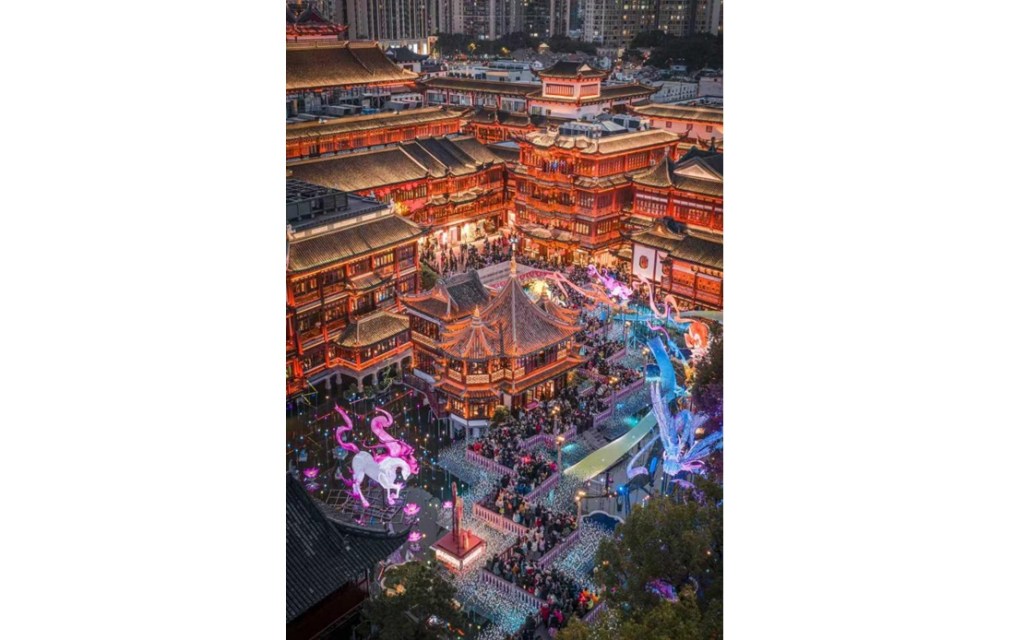
The blend of Shanghai-style Chinese New Year vibes and trendy Chinese cultural elements boosted the festive folk atmosphere in the city. Centering on experiencing the vibe of ordinary life, Shanghai launched a city-wide lantern show campaign. The lantern shows at Yuyuan Garden and the Inlet lit up the city’s nights with stunning light displays.

Intangible cultural heritage fairs and master chefs’ kitchens were set up in urban cultural and tourism complexes and suburban ancient towns. Some high-end hotels have integrated intangible cultural heritage into one-stop stays that integrate accommodation, dining, and travel experiences. Local traditional delicacies such as Shanghai cuisine and Nanxiang steamed buns offered visitors authentic Chinese New Year flavors.

Looking forward, Shanghai will further integrate cultural and tourism resources, pursue continuous product innovation, boost the upgrading of cultural and tourism consumption, and let more people feel the hospitality and vitality of Shanghai’s cultural and tourism industry.

Source: Shanghai Municipal Administration of Culture and Tourism

Thai vocational education representatives visit Guangxi Financial Vocational College, jointly discussing a new blueprint for vocational education

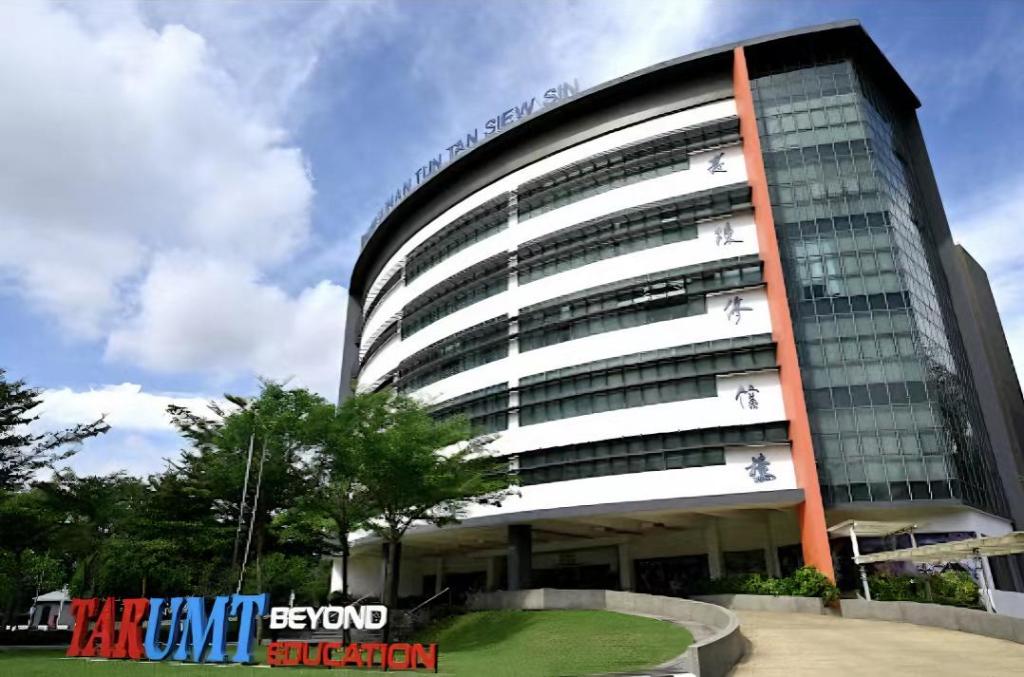
Teaching Building of the Digital Economy Modern Craftsman College at the Kuala Lumpur Campus of Tunku Abdul Rahman University of Technology, Malaysia

NANNING, China, Nov. 10, 2025 /Xinhua-AsiaNet/ — 

Recently, Minister Tanapat Saengchan of the Vocational Education Commission of Thailand visited Guangxi Financial Vocational College. This exchange is an important opportunity to deepen cooperation between the two sides, and it is expected that through pragmatic communication, in-depth collaboration in the field of vocational education between the two countries will be promoted.

Guangxi Financial Vocational College adheres to building a highland for open cooperation and innovation in vocational education in Guangxi facing ASEAN, actively explores new models of integration of production and education, helps the high-quality economic development of the ASEAN region, and constantly polishes the golden brand of “Modern Craftsmen” in international exchanges and cooperation.

Four-Party Collaboration Between Schools and Enterprises to Enhance the Ability of Vocational Education to Serve Industries

Focusing on the construction of the “China-Malaysia Digital Economy Modern Craftsman College”, the school has established a regular communication mechanism with Malaysian national universities and enterprises, forming a “school-school-enterprise-enterprise” co-construction model. It has jointly built a “1+1+N” production-education integration innovation and development carrier with “one industry community, one modern craftsman college, and N demonstration enterprises and branch colleges” as the core. Relying on the background of the digital economy industry, it serves the overseas expansion of products of Chinese enterprises and increases the output value of enterprises by about 13 million yuan.

Co-construction of Overseas Platforms to Promote In-depth Collaboration in China-ASEAN Vocational Education

The school has successively established foreign exchange projects such as the China-ASEAN Business Technology Innovation and Vocational Education Cooperation Center (Indonesia), Cooperation Center (Cambodia), and the overseas “Silk Road Finance College”, forming an all-round and sustainable pattern of vocational education exchanges. Relying on the intellectual resources of the “Zhongguancun Artificial Intelligence Large Model Industry Agglomeration Area” in Tsinghua Science Park, it has built 1 overseas digital intelligence center, 2 exchange centers, 3 technical service platforms, and 2 cross-border production-education integration bases. It accurately meets the technical and talent needs of enterprises in ASEAN countries and further promotes China-ASEAN vocational education collaboration.

Cross-border Ecological Integration to Empower the Training of “Modern Craftsmen”

With the help of the Modern Craftsman College project, schools and enterprises have built an international talent training matrix integrating “teaching, training, competitions, research, conferences, and exhibitions”. It has co-constructed and shared 6 standards, 4 international courses, 1 bilingual textbook, and 8 international training resource packages, and developed 6 teaching equipment. It has carried out 49 domestic and foreign skill training sessions, covering 8,251 participants. It has held 2 international skill competitions for ASEAN, attracting 303 teams from 7 countries to compete. The school also held the “2024 China (Guangxi)-ASEAN Vocational Education Development Exchange Conference”, jointly carried out research projects and exhibition activities with universities and enterprises in ASEAN countries, explored the “AI+X” compound talent training model, transported high-quality applied talents for the development of Guangxi’s digital economy and China-ASEAN artificial intelligence industry cooperation, and wrote a new chapter in vocational education serving the local economy.

Source: Guangxi Financial Vocational College

Record water tariff increases finally end, but Europe emerges a new leader

OXFORD, England, Sept 29 (Bernama-GLOBE NEWSWIRE) — Global Water Intelligence (GWI)’s annual Tariff Survey, published on 24th September, found that average global water tariff growth from 2024 to 2025 was 6.2%, putting an end to the record increases seen in the high-inflation post-pandemic years.

Where tariffs are increasing however, the decision is more frequently driven by the needs for long-term investments rather than operational cost recovery, which was driving early post-pandemic increases. 

Unusually, Europe is at the forefront of this year’s tariff increase, with new legislation and investments in climate change resilience driving higher-than-usual increases. Two countries join Europe at the top of the increase table, Turkey and Kazakhstan, with both countries taking seven of the ten spots for top increases in 2025.

In Kazakhstan, the authorities took the plunge with a shift to volumetric tariffs to meet investment needs in ageing infrastructure and resilience. Despite the large increase, tariffs remain low in absolute terms however.

Elsewhere in Asia, where GWI has surveyed 172 cities from 40 countries and territories, growth is sluggish. A few notable increases in India are far from enough to lift the country’s standing in the tariff ranking: South Asia remains by far the cheapest region in the world. 

In Latin America and sub-Saharan Africa, after sustained growth over the past few years, growth is relatively subdued this year, with notable exceptions such as South Africa and Argentina. As for North America, tariff growth is stable, underpinned in many cities by increases in stormwater charges to cope with more extreme weather events.

Become a GWI Member today to access the full dataset, including detailed tariff profiles for 641 cities in 200 countries, in-depth articles, plus all previous tariff survey data dating back to 2011: http://www.globalwaterintel.com.

About Global Water Intelligence

Global Water Intelligence is the leading market intelligence and events company serving the international water industry. Over the last 25 years we have built our business around being a trusted interface between our clients and their markets, providing our customers with high-level intelligence that enables them to make the most informed strategic decisions for their business. We cover municipal markets and every industrial vertical as well as technology, finance and economics.

CONTACT: Emilie Filou
COMPANY: Global Water Intelligence
PHONE: 01865 204208
EMAIL: sales@globalwaterintel.com
WEB: https://www.globalwaterintel.com

SOURCE: Global Water Intelligence