Legacy of Flying Tigers honored with new exhibition in south China

NANNING, China, Sept. 9, 2025 /Xinhua-AsiaNet/–

A guest at the permanent exhibition honoring the Flying Tigers in the Liuzhou Military Museum in south China’s Guangxi Zhuang Autonomous Region. 

A permanent exhibition honoring the Flying Tigers — the American volunteer pilots who fought alongside Chinese forces against Japanese aggressors during World War II — opened on Sunday in Liuzhou, south China’s Guangxi Zhuang Autonomous Region.

Housed in the Liuzhou Military Museum, the exhibition brings together more than 1,000 artifacts — from flight suits and arm patches to letters and diaries, many of which were donated by people in China and the United States.

Liuzhou was a key transportation hub and military stronghold in southern China during the war. In 1942, the Flying Tigers came to the city and was stationed in a local airport. From there, American pilots flew missions against Japanese invaders, leaving behind historical sites, images and stories of locals risking their lives to rescue downed airmen.

Describing the history as one “with remarkable friendship and mutual sacrifice at its heart,” Jeffrey Greene, chairman of the Sino-American Aviation Heritage Foundation, said at the opening ceremony that the peoples of China and the United States had developed a remarkable relationship during the darkest days of WWII.

“This history has become more than a bridge between two nations. It is a timeless testament to the power of solidarity,” Greene said.

Also at the ceremony, Yang Wanming, president of the Chinese People’s Association for Friendship with Foreign Countries, noted that more than 80 years ago, China and the United States chose to fight together for justice and peace.

“This history shows that people from different countries can overcome their differences and unite in the face of common challenges,” Yang said, adding that the younger generations from both countries will carry forward the spirit of the Flying Tigers.

The exhibition will be open to the public free of charge long term, featuring five themed sections presenting the stories of how the American pilots fought side-by-side with Chinese soldiers and civilians during the war.

Source : Liuzhou Military Museum

–BERNAMA
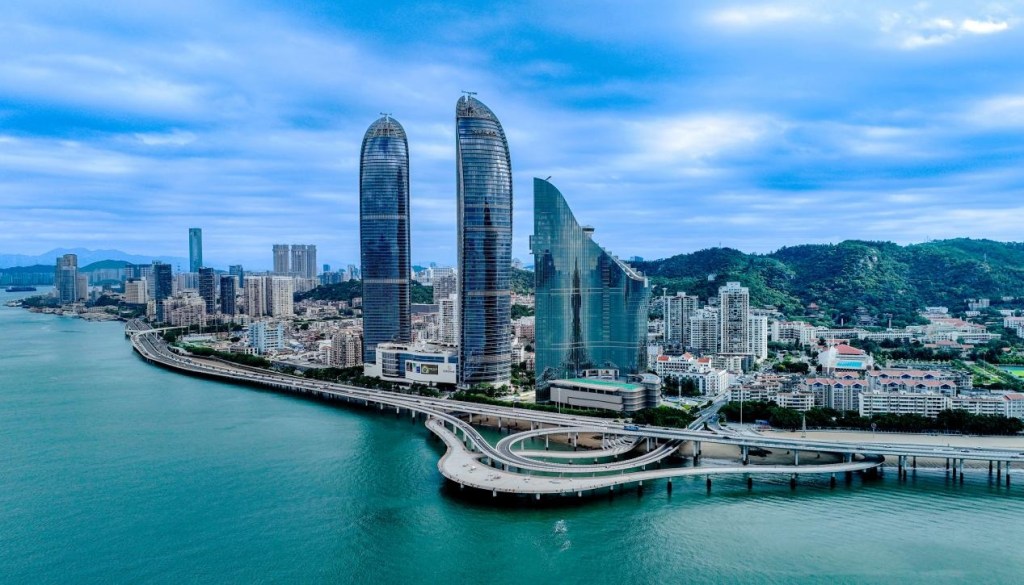
The 25th China International Fair for Investment & Trade will be held in Xiamen, Fujian, on September 8-11

Xiamen, Fujian Province — the host city of the CIFIT — is a modern and international city with both high quality and striking visual appeal.

XIAMEN, China, Sept. 2, 2025 /Xinhua-AsiaNet/–

The 25th China International Fair for Investment & Trade (CIFIT), themed “Join Hands with China, Invest in the Future,” will be held in Xiamen, Fujian, from September 8 to 11. 

This year’s CIFIT focuses on three major sectors — “Invest in China,” “Chinese Investment,” and “International Investment.” It will feature an exhibition area of about 120,000 m 2  and host over 70 specialized investment activities and more than 100 specialized roadshows.

The “Invest in China” section comprises various events. Nearly 100 executives from the headquarters and regional branches of multinational companies in the fields of energy, chemicals, agriculture, pharmaceuticals, and intelligent manufacturing, as well as representatives from sovereign wealth funds and international investment institutions, have confirmed their attendance. Additionally, over 100 “hidden champion” enterprises from Europe and Asia will participate.

The “China Investment” section is divided into three areas: China Outbound Investment, Overseas Comprehensive Services, and Silk Road Maritime. These zones will showcase the cooperation achievements and signature projects of Chinese enterprises worldwide. The Ministry of Commerce will organize multiple chambers of commerce to release China’s Outbound Investment Activity Index for the first time. This year’s CIFIT will also host an economic and trade exchange conference between Chinese provinces and U.S. states.

To date, delegations from more than 110 countries, regions, and international organizations have registered to attend CIFIT, and 51 countries and regions will set up exhibition booths. As the guest of honor, the United Kingdom plans to send a delegation of nearly 200 representatives from governments, businesses, and associations.

As the only major national-level investment exhibition in China, CIFIT is committed to building three platforms: two-way investment promotion, authoritative information release, and investment trend discussion. Since its inception, it has facilitated the signing of more than 30,000 projects, emerging as one of the world’s most influential international investment events.

Source: The Organizing Committee of CIFIT

GUIGANG’S 15TH LOTUS CULTURE SERIES BLOOMS, DRIVING TOURISM, SMART CULTURAL GROWTH

KUALA LUMPUR, Aug 18 (Bernama) — Guigang, Guangxi in China, has officially launched the 15th Lotus Culture Series, a multi-month celebration that blends tradition, culture, and technology to fuel the city’s booming tourism sector.

Running from July to October, the event will feature theatrical performances, poetry contests, and the selection of “Top Lotus-Viewing Spots”, all aimed at deepening visitor engagement and cultural pride.

Endowed with exceptional ecological strengths, Guigang is building an ecotourism destination serving the Guangdong-Hong Kong-Macau Greater Bay Area and ASEAN, with its “Three Mountains, One Gorge, One Culture” as the core.

Currently, the city boasts 52 national A-level tourist attractions, 37 rural tourist areas rated four-star or above, and 17 themed tourism camps, while its brand “Camping Paradise, Carefree Guigang” is gaining increasing acclaim.

According to the Publicity Department of Guigang City in a statement, Guigang welcomed over 32 million tourists in the first half of 2025, generating 30.121 billion Chinese yuan in tourism revenue, up 12.88 per cent and 13.87 per cent year on year, respectively. (100 Chinese yuan = RM58.82)

To extend its reach, the city is leveraging performances and events to boost urban development, which include the Guangxi division of the “Village Basketball Association”, the “Douyin Football Carnival”, the “Gangren Gangye Concert”, along with the hosting of the 15th National Games Basketball Qualifiers, highlighting its reputation as a “City of Sports, Capital of Leisure”.

The Douyin event alone earned 1.83 billion online exposures, pushing Guigang into the top three of Douyin’s city search rankings. These events generated significant spikes in hotel stays and local consumption, demonstrating a clear “event-driven, extended-stay” tourism pattern.

To sustain this momentum, Guigang is stepping up its three-year intensive campaign for the cultural and tourism industry, signing 22 new projects worth 2.401 billion Chinese yuan and accelerating 42 key cultural and tourism projects in the first half of 2025.

The city is also pushing forward with “culture-tourism + AI” integration, recently launching an artificial intelligence (AI)-powered interpretation system at the Pingnan County Museum.

With the Lotus Series in full bloom, Guigang once again embraces its millennium-old heritage as the “Lotus City”—inviting the world to explore its vibrant mix of natural beauty, cultural depth, and technological innovation.

— BERNAMA

GUANGXI DRIVES AI-POWERED TRADE, INNOVATION WITH ASEAN

KUALA LUMPUR, June 4 (Bernama) — In a vivid display of how artificial intelligence (AI) is reshaping regional trade, Vietnamese truckers equipped with AI-powered tools recently navigated through the Friendship Pass in Guangxi Zhuang Autonomous Region, China’s busiest land port with Association of Southeast Asian Nations (ASEAN), streamlining their cross-border journey with real-time navigation and safety features.

Just a few kilometres away, Southeast Asian livestreamers at an e-commerce park were generating speech data for an AI language corpus, part of efforts to enhance machine translation across ASEAN languages.

As China and ASEAN strengthen economic ties, AI is playing an increasingly central role, transforming logistics, communications, and collaboration. At the Guangxi Pingxiang Comprehensive Bonded Area, smart AI cameras now handle cargo inspections—cutting manpower needs and boosting efficiency.

This trend is echoed across the region. In Nanning, a digital risk management hub monitors thousands of trucks and drivers, using facial recognition to detect fatigue and issuing real-time safety alerts.

Guangxi’s integration of AI does not stop at logistics. The region is actively developing AI tools tailored to ASEAN markets, including drones for air-ground inspections and digital certificate platforms for safer cross-border trade.

Guangxi Daring Technology Co Ltd has introduced an advanced AI translation model optimised for Southeast Asian languages like Vietnamese, offering high accuracy with reduced computational load.

In 2025, China ramped up efforts to build an AI-driven partnership with ASEAN, with these innovations forming part of a broader vision, according to a statement.

Notably, Guangxi and Laos launched the first China-Laos AI Innovation Cooperation Center, aiming to strengthen Laos’s technological base, while Guangxi partnered with Malaysia’s MYEG to roll out a China-Malaysia AI centre, including a digital ID system enabling seamless services and transactions for citizens of both nations.

Guangxi is also investing heavily in AI infrastructure. The Wuxiang Cloud Valley AI Industrial Park in Nanning focuses on computing power, algorithm research, and AI application in sectors like agriculture and consumer goods and aims to provide AI leasing services to ASEAN countries, fostering shared technological growth.

Looking to the future, Guangxi aspires to become the AI nerve centre for the ASEAN region. Projects like the China-ASEAN AI Innovation Cooperation Center in Nanning aim to attract global talent and foster AI adoption in industries ranging from education to tourism.

According to local officials, the region is targeting an AI industry output exceeding 100 billion Chinese yuan (about US$13.9 billion) by 2027, solidifying its position as a cornerstone of China-ASEAN technological collaboration. (US$1=RM4.23)

— BERNAMA

HKTB VIDEO SERIES SHOWCASES HONG KONG’S OUTDOOR WONDERS

KUALA LUMPUR, March 19 (Bernama) — The Hong Kong Tourism Board (HKTB) has launched a new video series, titled “Four Corners of Hong Kong”, featuring four captivating short films that take viewers on a journey to the city’s four corners, namely north, south, east and west, showcasing the city’s breathtaking landscapes and rich ecotourism experiences.

The series also showcases Hong Kong’s diverse scenery that offers an irresistible invitation for visitors to experience the city’s extraordinary natural beauty, with the first full video of the four-part series having been released on the Discover Hong Kong YouTube channel.

The first video takes viewers into the splendour of Hong Kong UNESCO Global Geopark and features awe-inspiring geological wonders such as the rhyolitic hexagonal rock columns, which were crafted over millions of years by nature’s hand.

HKTB in a statement said the remaining three episodes will come one after another throughout the coming fortnight, and the video will also be released on the HKTB’s Xiaohongshu, Douyin and Weibo platforms.

The videos transport viewers on an epic, fun-filled adventure in four spectacular corners of Hong Kong, climbing mountains and diving into the sea, travelling east to Sai Kung, south to Po Toi Island, Stanley, and Ap Lei Chau, west to Lantau Island, and north to Robin’s Nest Country Park.

Each location has its own special charm and offers a distinct outdoor experience, demonstrating the diverse appeal and boundless potential of ecotourism in Hong Kong.

HKTB has also teamed up with celebrities from Thailand and Taiwan who bring a sprinkle of stardust to carry the video campaign to a wider audience. The videos, imbued with the unique charisma of the celebrities, are tailored to captivate worldwide audiences via compelling storytelling and mesmerising landscapes.

In addition, HKTB is also ramping up its efforts to promote outdoor activities and trail-running events to overseas visitors following the runaway success of the TransLantau by UTMB and Hong Kong 100 Ultra Marathon races last year.

Looking ahead, with initiatives targeting key markets, including Mainland China, Southeast Asia, the United Kingdom, and India, HKTB aims to position Hong Kong as a premier destination for adventure and green tourism.

— BERNAMA