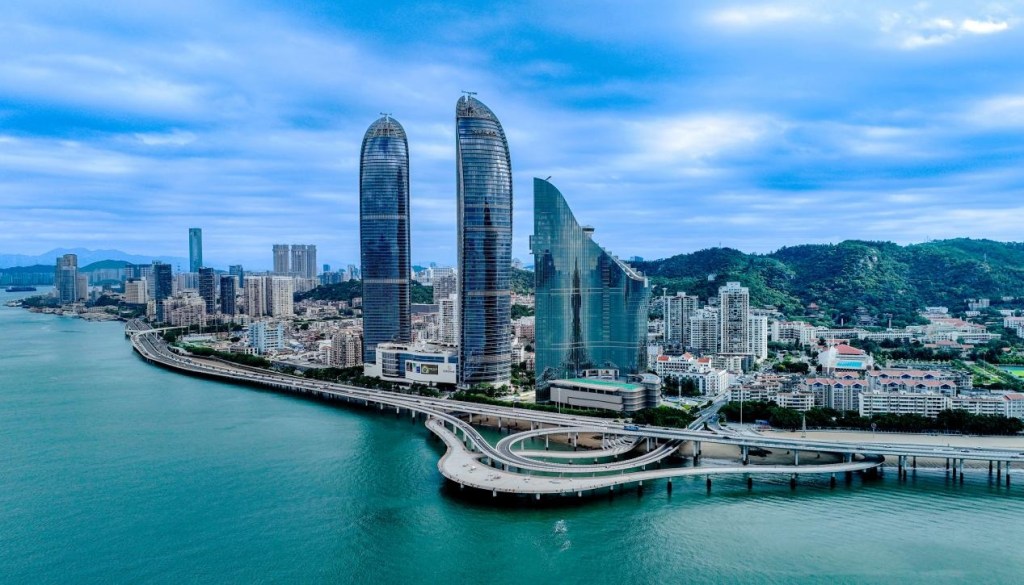
GUANGXI DRIVES AI-POWERED TRADE, INNOVATION WITH ASEAN

KUALA LUMPUR, June 4 (Bernama) — In a vivid display of how artificial intelligence (AI) is reshaping regional trade, Vietnamese truckers equipped with AI-powered tools recently navigated through the Friendship Pass in Guangxi Zhuang Autonomous Region, China’s busiest land port with Association of Southeast Asian Nations (ASEAN), streamlining their cross-border journey with real-time navigation and safety features.

Just a few kilometres away, Southeast Asian livestreamers at an e-commerce park were generating speech data for an AI language corpus, part of efforts to enhance machine translation across ASEAN languages.

As China and ASEAN strengthen economic ties, AI is playing an increasingly central role, transforming logistics, communications, and collaboration. At the Guangxi Pingxiang Comprehensive Bonded Area, smart AI cameras now handle cargo inspections—cutting manpower needs and boosting efficiency.

This trend is echoed across the region. In Nanning, a digital risk management hub monitors thousands of trucks and drivers, using facial recognition to detect fatigue and issuing real-time safety alerts.

Guangxi’s integration of AI does not stop at logistics. The region is actively developing AI tools tailored to ASEAN markets, including drones for air-ground inspections and digital certificate platforms for safer cross-border trade.

Guangxi Daring Technology Co Ltd has introduced an advanced AI translation model optimised for Southeast Asian languages like Vietnamese, offering high accuracy with reduced computational load.

In 2025, China ramped up efforts to build an AI-driven partnership with ASEAN, with these innovations forming part of a broader vision, according to a statement.

Notably, Guangxi and Laos launched the first China-Laos AI Innovation Cooperation Center, aiming to strengthen Laos’s technological base, while Guangxi partnered with Malaysia’s MYEG to roll out a China-Malaysia AI centre, including a digital ID system enabling seamless services and transactions for citizens of both nations.

Guangxi is also investing heavily in AI infrastructure. The Wuxiang Cloud Valley AI Industrial Park in Nanning focuses on computing power, algorithm research, and AI application in sectors like agriculture and consumer goods and aims to provide AI leasing services to ASEAN countries, fostering shared technological growth.

Looking to the future, Guangxi aspires to become the AI nerve centre for the ASEAN region. Projects like the China-ASEAN AI Innovation Cooperation Center in Nanning aim to attract global talent and foster AI adoption in industries ranging from education to tourism.

According to local officials, the region is targeting an AI industry output exceeding 100 billion Chinese yuan (about US$13.9 billion) by 2027, solidifying its position as a cornerstone of China-ASEAN technological collaboration. (US$1=RM4.23)

— BERNAMA

Mary Kay Inc. Awards 10 Grants to Young Innovators at 2025 Regeneron International Science and Engineering Fair

Kristin Dasaro, Director, Package Engineering and Sustainability at Mary Kay, greets Brazilian cancer researcher, Carolina de Araujo Pereira da Silva, who received back-to-back awards from Mary Kay for innovative findings in the malignancy of tumors. (Photo Credit: Mary Kay Inc.)

DALLAS, May 29 (Bernama-BUSINESS WIRE) — Mary Kay Inc., a global advocate for furthering young women’s education and encouraging youth to follow their STEM dreams, returned for a second year as a Special Awards Organization at the Regeneron International Science and Engineering Fair (Regeneron ISEF) in Columbus, Ohio. Ten grants totaling nearly $10,000 were awarded to standout high school-aged students excelling in innovative projects spanning topics from finding cures for cancers affecting women to sustainable packaging innovation and protecting our planet’s most valuable resources.

This press release features multimedia. View the full release here: 
https://www.businesswire.com/news/home/20250528325390/en/

Each year, the event convenes nearly 2,000 participants representing more than 60 countries, with a total award pool offering over $9 million in awards and scholarships and invitations to corporate and academic events with elite global leaders in STEM.

Celebrating its 75th year, ISEF, a program of Society for Science, is the world’s largest pre-college global STEM competition. Through a global network of local, regional, and national science fairs, millions of students are encouraged to explore their passion for scientific inquiry. Each spring, a group of these students is selected as finalists and offered the opportunity to compete for approximately $9 million in awards and scholarships at the annual Regeneron ISEF.

“The ingenuity, passion, and innovation demonstrated by these young STEM leaders are awe-inspiring,” said Carrissa Dowdy, Manager of Product Formulation at Mary Kay. “Their work has the potential to transform industries, drive sustainable advancements, and accelerate major breakthroughs in fields like cancer research, material science, and environmental engineering. Mary Kay is proud to stand behind them as they shape the future of STEM.”

MEET THE STUDENT STEM LEADERS

1.Pragathi Kasani-Akula (GA, USA) Multi-Color Magneto-Fluorescent Nanoarchitectures for the Targeted Identification of Exosomes of Triple Negative Breast Cancer

2.Grace Liu (NY, USA) Evaluating Gender Disparities Due to Decision-Making Under Uncertainty in Entrepreneurship: A Panel Data Analysis

3.Alina Albeik (VA, USA) Implications of Resveratrol on Memory Retention in Dugesia tigrina

4.Kaili Tseng and Leila Gheysar (CA, USA) Bombyx mori Antimicrobial Peptides: A Novel and Sustainable Catalyst for Cancer Cell Growth Inhibition and Death

5.Elisabeth Fischermann and Tom Kressbach (Bavaria, Germany) On the Hunt for Free Radicals With a Blue Light Reaction

6.Ela Doruk Korkmaz (Istanbul, Turkey) Investigation of Potential Anti-Cancer Impacts of Coffee Bean-Derived Exosomes Through Anti-Proliferative and Apoptosis Inducing Effects on Melanoma Skin Cancer Cells via Mitogen-Activated Protein Kinase Signaling Pathway

7.Carolina de Araujo Pereira da Silva* (Rio de Janeiro, Brazil) Salinomycin as a Molecular Trojan Horse for Targeting Mn-Induced Malignancy in Aggressive Tumors

8.Sofia Nunes (Maranhao, Brazil) Formulation of Low-Cost Artificial Skin for Cellular Regeneration and Severe Burns Treatment

9.Margareth Ac-ac (Negros Oriental, Philippines) SKIMP: Artificial Intelligence- Convolutional Neural Network (CNN) Portable Skin Cancer Detection Device With Skin Cancer Notifier Python-Based Program

10.Kamila Rotger-Costas and Miranda Sanz-Alvarez (Guaynabo and Caguas, Puerto Rico) EcoReishiFlex: An Innovative Sustainable Biodegradable Plastic Alternative Made From Ganoderma lucidum (Reishi Fungi) Polysaccharides

*Carolina de Araujo Pereira da Silva is a two-time Mary Kay Young Women in STEM grant recipient for her outstanding contributions to the cancer research field. Her 2024 prize money was utilized toward furthering her presented project – Rock the Metals! Investigating Manganese as a Trigger of Malignancy and Metal Transporters as Targets in Cancer Treatment which elevated her 2025 award-winning submission.

About Mary Kay

One of the original glass ceiling breakers, Mary Kay Ash founded her dream beauty brand in Texas in 1963 with one goal: to enrich women’s lives. That dream has blossomed into a global company with millions of independent sales force members in more than 40 markets. For over 60 years, the Mary Kay opportunity has empowered women to define their own futures through education, mentorship, advocacy, and innovation. Mary Kay is dedicated to investing in the science behind beauty and manufacturing cutting-edge skincare, color cosmetics, nutritional supplements, and fragrances. Mary Kay believes in preserving our planet for future generations, protecting women impacted by cancer and domestic abuse, and encouraging youth to follow their dreams. Learn more at marykayglobal.com. Find us on FacebookInstagram, and LinkedIn, or follow us on X.

View source version on businesswire.com: 
https://www.businesswire.com/news/home/20250528325390/en/

Contacts

Mary Kay Inc. Corporate Communications
newsroom.marykay.com
972.687.5332 or media@mkcorp.com 

Source: Mary Kay Inc.

–BERNAMA

Aggregating World Heritage Resources to Drive High-Quality Development of Fujian’s Cultural Tourism

NANPING, China, Apr. 14, 2025 /Xinhua-AsiaNet/–

Wuyi National Park

With the theme of “Cultivating Cultural Tourism as the Pillar Industry”, the 2025 Fujian Provincial Conference on the Development of Cultural and Tourism Economy will be held in Nanping City, Fujian Province, from April 17th to 19th.

Shortly before the conference opens, under the guidance of the Fujian Provincial Department of Culture and Tourism, six major 5A-level scenic areas — Mt. Wuyi Scenic Area, Kulangsu Tourist Area, Fujian Tulou (Yongding) Scenic Area, Fujian Tulou (Nanjing) Scenic Area, Taining Scenic Tourist Area, and Quanzhou Mt. Qingyuan Scenic Area — jointly initiated the establishment of the Fujian’s World Heritage 5A Scenic Area Alliance. This initiative lays a solid foundation for Fujian to integrate its world heritage resources, further promoting the province’s goal of becoming a world-renowned tourist destination. It also marks a significant step forward in the province’s pursuit of coordinated and high-quality cultural tourism development.

Mt. Wuyi, as the only World Cultural and Natural Heritage Site and National Park in Fujian Province, is also the distinguished symbol of Nanping, the host of this conference. In recent years, Nanping City has leveraged the strategic value of Mt. Wuyi National Park to enhance its “Greater Wuyi Cultural and Tourism Circle” brand and promote the development of the “Mt. Wuyi Protection and Development Belt”. The city has pioneered the construction of China’s first national park scenic road system and developed a range of themed tourism products, including biodiversity education tours and Danxia landscape photography experiences. These efforts have contributed to the creation of a “Nanping Model” that harmonizes ecological preservation with cultural and tourism development.

In addition, utilizing the resources of Mt. Wuyi National Park, Fujian Province has actively engaged in international cooperation in areas such as cultural tourism, environmental conservation, and biodiversity research with countries along the Belt and Road Initiative, harvesting significant outcomes.

World Heritage Sites are treasures shared by all humanity. Fujian continues to make exemplary use of these resources to create a “go phenomenal” effect for its cultural tourism, and generate higher appeal to an international audience. From Quanzhou, the “World Heritage City” known for its Maritime Silk Road heritage, to Kulangsu, the “Island of Music” decorated with diverse global architecture; from the Fujian Tulou, which embodies the wisdom and ingenuity of the local people, to the spectacular natural landscapes of Taining Danxia and the dual heritage status of Mt. Wuyi.

Source: Organizing Committee of the 2025 Fujian Provincial Conference on the Development of Cultural and Tourism Economy

–BERNAMA

SERUAN GLOBAL UNTUK PENYERAHAN REKA BENTUK LOGO TAMADUN SHU PURBA SECARA RASMI DILANCARKAN

Seruan Global untuk Penyerahan Reka Bentuk Logo Tamadun Shu Purba

CHENGDU, China, 24 Mac (Bernama-BUSINESS WIRE) — Di tengah arus sejarah yang luas, Sanxingdui dan Jinsha bersinar seperti “bintang kembar” dalam gugusan gemilang tamadun Shu Purba, memancarkan keindahan yang menawan. Pada 20 Mac, Pentadbiran Warisan Budaya Wilayah Sichuan telah melancarkan seruan global untuk penyerahan reka bentuk Logo Tamadun Shu Purba, menjemput individu dan organisasi untuk mengambil bahagian. Acara ini akan berlangsung hingga 10 Mei.

Inisiatif ini bertujuan untuk mencari logo yang bukan sahaja mencerminkan nilai budaya dan keunikan Tamadun Shu Purba tetapi juga mampu menghidupkan kembali warisan bersejarah ini dalam era moden.

Penyertaan perlu memenuhi kriteria tertentu: reka bentuk harus menggabungkan elemen dari tapak arkeologi Sanxingdui dan Jinsha, menonjolkan nilai budaya serta kepentingan sejarahnya. Ia juga perlu menampilkan perspektif global, menggambarkan keindahan seni budaya China, serta menyerlahkan daya tarikan unik rantau Ba-Shu. Reka bentuk mestilah selaras dengan tema, kreatif, inovatif, menarik perhatian, mudah dikenali, dan mempunyai nilai seni yang tinggi. Setiap penyertaan perlu disertakan dengan fail imej dan fail sumber, bersama keterangan bertulis antara 300 hingga 800 patah perkataan. Semua penyertaan hendaklah dihantar melalui e-mel ke alamat rasmi acara: submit@visitancientshu.com.

Sebagai penghargaan, pemenang utama akan menerima hadiah wang tunai sebanyak RMB 50,000. Dua pemenang tempat kedua akan menerima RMB 10,000 setiap seorang, tiga pemenang tempat ketiga akan menerima RMB 5,000 setiap seorang, manakala sepuluh hadiah kecemerlangan bernilai RMB 2,000 setiap satu turut disediakan.

Dengan pelancaran ini, Tamadun Shu Purba bakal diberi nafas baharu dalam dunia moden. Seorang wakil penganjur menyatakan bahawa acara ini bertujuan membina jambatan antara masa lalu dan masa kini, menghubungkan Tamadun Shu Purba dengan dunia moden serta memberi peluang kepada lebih ramai orang untuk mengenali, menghargai dan memelihara khazanah budaya yang berharga ini. Untuk maklumat lanjut, sila layari laman web rasmi Tamadun Shu Purba www.visitancientshu.com.

Teks bahasa sumber asal pengumuman ini adalah versi rasmi yang sahih. Terjemahan yang disediakan hanya sebagai penyesuaian sahaja, dan hendaklah di silang-rujuk dengan teks bahasa sumber, yang satu-satunya versi teks dengan kesan undang-undang.

Galeri Multimedia/Foto Sedia Ada:
https://www.businesswire.com/news/home/20250320223656/en

Hubungi

Pentadbiran Warisan Budaya Wilayah Sichuan
Pihak Hubungan: Jean Huang
E-mel: submit@visitancientshu.com
Telefon: +8628 8663 7325
laman web: www.visitancientshu.com

Sumber: Sichuan Provincial Cultural Heritage Administration

TIME FOR ASSURERS TO ACT FOR THE BENEFIT OF POLICY OWNERS

KUALA LUMPUR, March 24 (Bernama) —

Introduction

Despite calls to engage insurers privately and not moot their points through media, APHM continues airing its concerns publicly. The general public couldn’t care less about this issue. These are private matters between APHM and Insurers. As mentioned in the same article, the relationship between private hospitals and insurers is best described as symbiotic. APHM must find solutions that flourish this relationship rather than be parasitic.  

APHM proposes the formation of a joint working committee between the association and Assurers to review billing structures and ensure fair pricing of healthcare services. It is a good start, but it needs to focus its energy on the core matter, the burdening hospital charges that cause assurers to increase their prices. The billing structure and so-called fair pricing don’t solve the current problems. It is more of an academic exercise. 

APHM’s public statements call for assurers to keep cashless medical products while using patient care as a smoke screen. It is a ruse to maintain its top and bottom line, and its sincerity can be seen when it issued a statement rejecting Assurer’s proposal for private hospitals to freeze costs for three years and also for the Health Ministry to regulate the pricing of pharmaceuticals or medication during the period assurers facing premium pricing caps. 
Public Education
Since APHM is only interested in making public statements to try to arouse policyholders’ sentiments to protect their cash flow and profit margins, it is time for assurers to take steps to protect policy owners’ interests. The public is concerned about rising health premiums. They don’t understand the reasons behind it.   

Therefore, assurers need to expand their role in public education on how assurers develop their product prices. Most of the cost goes toward paying claims, distribution costs, and maintaining statutory reserves. Assurers must demonstrate how much premium is allocated to companies as their pretax profits for every ringgit of premium received. 

Public education goes a long way and will make the public understand the financial burden caused by APHM members.

Cheaper, Scalable & Customized Direct Products
Policy owners deserve access to cheaper health assurance products. Insurers can consider two critical modifiable parameters: direct distribution without going through agents and selling the product on a reimbursement basis. Distribution through agents is costly. Technology today allows companies to educate customers on product features with ease. Product distribution has greater depth today.  

Assurers can develop tier products that cover the treatment of medical risks for specific age groups. The young have a lesser risk of admission due to chronic illnesses. The sum cover can be lowered since the cost of treatment for acute illnesses and injuries is low. Employees can buy a small sum for the employed category to cover health top-up products, where the primary claim should be against the employer’s paid assurance. The top-up is used only when the primary product limits are exhausted. 

The second strategy would be reintroducing reimbursement-based products. It has dual key advantages. First, the policy owners are responsible for controlling hospital bill expenses. Coupled with BNM directives of Co-payment, policy owners would question their hospital charges. Introducing Co-pay reimbursement products is within the assurer’s rights. We cannot blame APHMs for making public statements and calling for assurers to keep cashless medical products as they know it significantly impacts their earnings. 

The third strategy is for assurers to revisit and expand the strategy they introduced in early 2000, where they formed a consortium that markets national health assurance products instead of individual company products. An industry-wide product allows the consolidation of claim data to determine the true industry burning costs. More importantly, consolidating policy owners’ data enables the industry to spread costs and introduce cheaper products. Individual assurance companies only need to focus on distribution and customer service. The focus would be on customer service. This approach would be the seed of the National Health Assurance under the assurance industry-driven National Healthcare Financing System. 

Under this approach, the competition among the assurance companies is no longer on pricing. The law of large numbers dictates and has an impact on price. However, if private hospitals continue to have the unchecked freedom to determine the charges, the proposed measures will only temporarily reprieve policy owners.   

Conclusion
In the best interest of policy owners & to protect them against increasing premiums, re-introducing reimbursement health products would be the best approach. Policy owners themselves must take the role of questioning hospital charges, which directly impacts health assurance premiums. 

Assurers must develop products that limit the benefit payment according to age, gender, pre-existing conditions and risk exposure. A young person who enjoys employer insurance coverage does not need an RM1000,000 sum of cover. Having high annual and lifetime limits promotes “medical inflation”. 

Assurers must get their act together as an industry, focus on their policy owners, ignore APHM public statements and develop a structured public education program explaining how assurers’ price their products.

21-3-2025  

Dr Mohamed Rafick Khan 
Reassurer and Assurance Industry Consultant

Dr. Mohamed Rafick is a trained physician with 12 years of experience in military medical services and over 22 years of experience in the assurance industry. He retired as the CEO of a multinational reinsurance company in 2019. Currently, he remains active as an independent international assurance industry consultant.

SOURCE: Dr Mohamed Rafick Khan 
Reassurer and Assurance Industry Consultant

FOR MORE INFORMATION, PLEASE CONTACT:
Name: Dr Rafick 
Tel: 012 2218956
Email: drrafick@gmail.com

–BERNAMA