GUANGXI DRIVES AI-POWERED TRADE, INNOVATION WITH ASEAN

KUALA LUMPUR, June 4 (Bernama) — In a vivid display of how artificial intelligence (AI) is reshaping regional trade, Vietnamese truckers equipped with AI-powered tools recently navigated through the Friendship Pass in Guangxi Zhuang Autonomous Region, China’s busiest land port with Association of Southeast Asian Nations (ASEAN), streamlining their cross-border journey with real-time navigation and safety features.

Just a few kilometres away, Southeast Asian livestreamers at an e-commerce park were generating speech data for an AI language corpus, part of efforts to enhance machine translation across ASEAN languages.

As China and ASEAN strengthen economic ties, AI is playing an increasingly central role, transforming logistics, communications, and collaboration. At the Guangxi Pingxiang Comprehensive Bonded Area, smart AI cameras now handle cargo inspections—cutting manpower needs and boosting efficiency.

This trend is echoed across the region. In Nanning, a digital risk management hub monitors thousands of trucks and drivers, using facial recognition to detect fatigue and issuing real-time safety alerts.

Guangxi’s integration of AI does not stop at logistics. The region is actively developing AI tools tailored to ASEAN markets, including drones for air-ground inspections and digital certificate platforms for safer cross-border trade.

Guangxi Daring Technology Co Ltd has introduced an advanced AI translation model optimised for Southeast Asian languages like Vietnamese, offering high accuracy with reduced computational load.

In 2025, China ramped up efforts to build an AI-driven partnership with ASEAN, with these innovations forming part of a broader vision, according to a statement.

Notably, Guangxi and Laos launched the first China-Laos AI Innovation Cooperation Center, aiming to strengthen Laos’s technological base, while Guangxi partnered with Malaysia’s MYEG to roll out a China-Malaysia AI centre, including a digital ID system enabling seamless services and transactions for citizens of both nations.

Guangxi is also investing heavily in AI infrastructure. The Wuxiang Cloud Valley AI Industrial Park in Nanning focuses on computing power, algorithm research, and AI application in sectors like agriculture and consumer goods and aims to provide AI leasing services to ASEAN countries, fostering shared technological growth.

Looking to the future, Guangxi aspires to become the AI nerve centre for the ASEAN region. Projects like the China-ASEAN AI Innovation Cooperation Center in Nanning aim to attract global talent and foster AI adoption in industries ranging from education to tourism.

According to local officials, the region is targeting an AI industry output exceeding 100 billion Chinese yuan (about US$13.9 billion) by 2027, solidifying its position as a cornerstone of China-ASEAN technological collaboration. (US$1=RM4.23)

— BERNAMA

HKTB VIDEO SERIES SHOWCASES HONG KONG’S OUTDOOR WONDERS

KUALA LUMPUR, March 19 (Bernama) — The Hong Kong Tourism Board (HKTB) has launched a new video series, titled “Four Corners of Hong Kong”, featuring four captivating short films that take viewers on a journey to the city’s four corners, namely north, south, east and west, showcasing the city’s breathtaking landscapes and rich ecotourism experiences.

The series also showcases Hong Kong’s diverse scenery that offers an irresistible invitation for visitors to experience the city’s extraordinary natural beauty, with the first full video of the four-part series having been released on the Discover Hong Kong YouTube channel.

The first video takes viewers into the splendour of Hong Kong UNESCO Global Geopark and features awe-inspiring geological wonders such as the rhyolitic hexagonal rock columns, which were crafted over millions of years by nature’s hand.

HKTB in a statement said the remaining three episodes will come one after another throughout the coming fortnight, and the video will also be released on the HKTB’s Xiaohongshu, Douyin and Weibo platforms.

The videos transport viewers on an epic, fun-filled adventure in four spectacular corners of Hong Kong, climbing mountains and diving into the sea, travelling east to Sai Kung, south to Po Toi Island, Stanley, and Ap Lei Chau, west to Lantau Island, and north to Robin’s Nest Country Park.

Each location has its own special charm and offers a distinct outdoor experience, demonstrating the diverse appeal and boundless potential of ecotourism in Hong Kong.

HKTB has also teamed up with celebrities from Thailand and Taiwan who bring a sprinkle of stardust to carry the video campaign to a wider audience. The videos, imbued with the unique charisma of the celebrities, are tailored to captivate worldwide audiences via compelling storytelling and mesmerising landscapes.

In addition, HKTB is also ramping up its efforts to promote outdoor activities and trail-running events to overseas visitors following the runaway success of the TransLantau by UTMB and Hong Kong 100 Ultra Marathon races last year.

Looking ahead, with initiatives targeting key markets, including Mainland China, Southeast Asia, the United Kingdom, and India, HKTB aims to position Hong Kong as a premier destination for adventure and green tourism.

— BERNAMA

HONG KONG-TAIPEI IS 2024 WORLD’S BUSIEST INTERNATIONAL AIRLINE ROUTE, SAYS OAG

KUALA LUMPUR, Dec 18 (Bernama) — The Hong Kong (HKG) to Taipei (TPE) route has been revealed as the world’s busiest international route in 2024, according to a latest analysis by OAG.

OAG in a statement said the Hong Kong (HKG)-Taipei (TPE) route is among the top 10 that has seen the biggest growth, reaching 6.8 million seats and a 48 per cent capacity increase between 2023 and 2024, pushing it up from third place last year.

Powered by OAG’s Global Airline Schedules Data, the analysis provides an overview of route performance and trends, both internationally and domestically.

According to the analysis, Asia Pacific continues to dominate the annual rankings, with seven of the top 10 international busiest routes and nine of the top 10 domestic routes.

The analysis also reveals that Cairo (CAI)-Jeddah (JED) follows in second spot with 5.5 million seats, one of two routes operating in the Middle East that have entered the top 10 since 2019, which has experienced 68 per cent growth in five years. Dubai (DBX)-Riyadh (RUH) holds the sixth position with 4.3 million seats and 37 per cent capacity growth since 2019.

Other international routes seeing impressive year-on-year growth are Seoul Incheon (ICN)-Tokyo Narita (NRT), which jumps from fifth to third spot with 30 per cent capacity growth, and Bangkok (BKK)-Hong Kong (HKG), which returns to the top 10 at seventh after placing 11th in 2023.

For the busiest international route in Europe and in North America, New York (JFK)-London Heathrow (LHR) takes the top spot, while Cairo (CAI)-Jeddah (JED) leads in both Africa and the Middle East, and Orlando (MCO)-San Juan (SJU) is the top route in Latin America.

OAG is a data platform for the global travel industry offering an industry-first single source for supply, demand, and pricing data.

— BERNAMA

FOREIGN STUDENTS VISIT MARTIAL ARTS SCHOOL IN CHINA’S TIANJIN

TIANJIN, China, Nov. 25, 2024 /Xinhua-AsiaNet/–

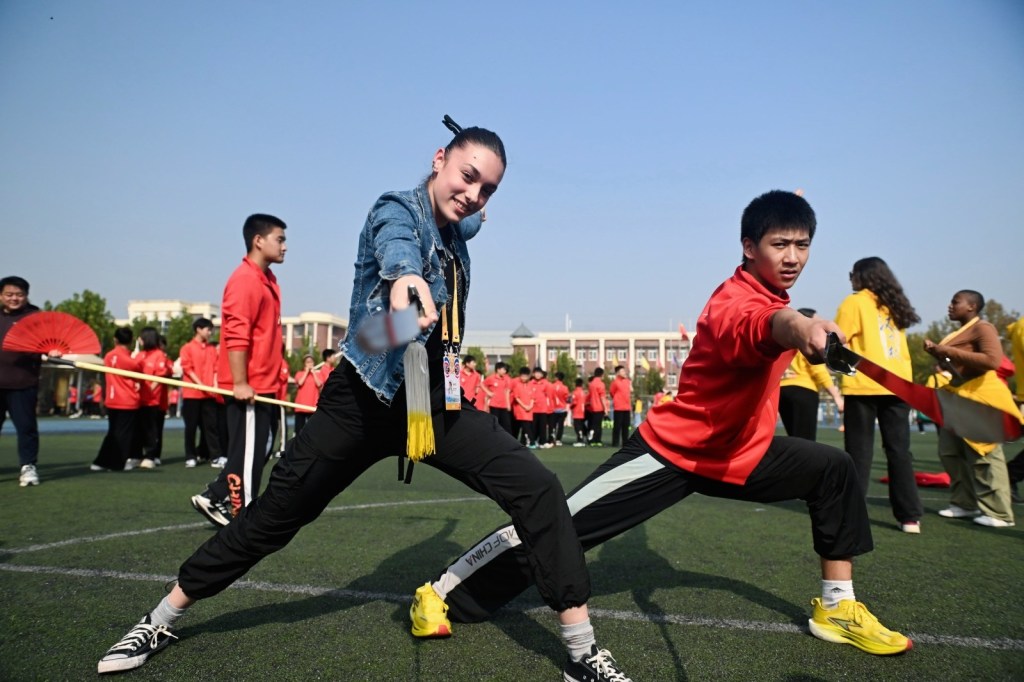
Foreign students visit martial arts school in China’s Tianjin.

Recently, the Publicity Department of Xiqing District organized a tour, guiding more than a hundred foreign contestants who participated in the Chinese Bridge series of Chinese proficiency competitions around the Tianjin Huoyuanjia School in Jingwu Town, Xiqing District, north China’s Tianjin Municipality, where they experienced the charm of Chinese traditional martial arts culture.

The Tianjin Huoyuanjia School has a profound cultural heritage, with its roots in the Chin Woo Athletic Association, which in turn traces its origins back to Huo Yuanjia, a patriotic martial arts master.

In 1910, Huo, along with others, co-founded the Chin Woo Athletic Association, which has now been established for 114 years. The association initially advocated mastering both martial arts and being literate, and strengthening the nation through physical fitness, which made up the essence and defining characteristics of the early Chin Woo culture.

Over the past century, the association has not only seen a steady increase in its membership, but also a growing expansion of its influence. It has transcended national boundaries, spreading from China to other countries and from Asia to the rest of the world, with branches now established across all five continents, totaling 83 Chin Woo associations. The popularity of the association has become a unique cultural phenomenon within the global cultural community, beloved and pursued by people from various countries.

The Jingwu Town in Xiqing District said it will continue to leverage the Tianjin Huoyuanjia School, an international cultural exchange base for overseas Chinese, as a platform to strengthen the exploration and inheritance of Chinese culture.

By promoting Chinese martial arts and Chin Woo culture, the town aims to allow more international friends to learn about and experience the profound Chinese cultural heritage, share first-hand stories about the real China, and expand the reach of fine traditional Chinese culture.

Source: The Publicity Department of Xiqing District

Caption: Foreign students visit martial arts school in China’s Tianjin.

–BERNAMA

GLOBAL MAYORS EXCHANGE IDEAS ON SUSTAINABLE URBAN DEVELOPMENT IN HANGZHOU

KUALA LUMPUR, Oct 1 (Bernama) — Mayors and representatives from 24 cities in 15 countries and regions recently attended the Global Mayors Dialogue · Hangzhou and the ninth Hangzhou International Sister City Mayors Conference in Hangzhou.

According to the people’s government of Hangzhou in a statement, mayors from both domestic and international cities engaged in in-depth dialogues, sharing advanced experiences in urban governance and contributing their wisdom to promote global urban sustainable development.

Leveraging its rich historical and cultural heritage and thriving digital economy, Hangzhou showcases how an ancient yet modern city can coexist harmoniously, leading the way in global urban sustainable development trends.

The city’s mayor, Yao Gaoyuan vividly depicts Hangzhou’s characteristics as being suitable for living, business, and tourism, in addition to also sharing the exploration and practices of the city in areas such as digital innovation and urban governance, ecological civilisation and urban sustainable development, as well as cultural heritage and humanistic exchanges.

Furthermore, digital empowerment has boosted urban governance in Hangzhou, making the city smarter and its governance more efficient.

By constructing a digital city brain and utilising technologies such as cloud computing, big data, and advanced modelling, the city has achieved real-time monitoring and efficient scheduling of urban traffic that enable precise traffic guidance and effectively improve the intelligence and precision of urban governance.

Hangzhou is equally dedicated and sparing no effort when it comes to the preservation and inheritance of cultural heritage. Its economic development goes hand in hand with the preservation and prosperity of its culture, never losing sight of the city’s cultural essence.

As a city with a rich historical and cultural heritage, Hangzhou boasts three world cultural heritage sites. In 2011, the West Lake cultural landscape was inscribed on the list, while in 2014 and 2019, the Grand Canal of China and the Liangzhu Archaeological Site also earned the prestigious honour, respectively.

This year marks the 45th anniversary of Hangzhou’s establishment of its first international sister city relationship, and so far, Hangzhou has established friendly relations with 31 international sister cities and maintained friendly exchanges with 42 cities worldwide.

The eastern Chinese city looks forward to contributing more of its wisdom and solutions for the sustainable development of global cities and continuing to write a new chapter of brilliance in the future.

— BERNAMA