UAE’S TII PROBE SET TO MAKE HISTORIC ASTEROID LANDING

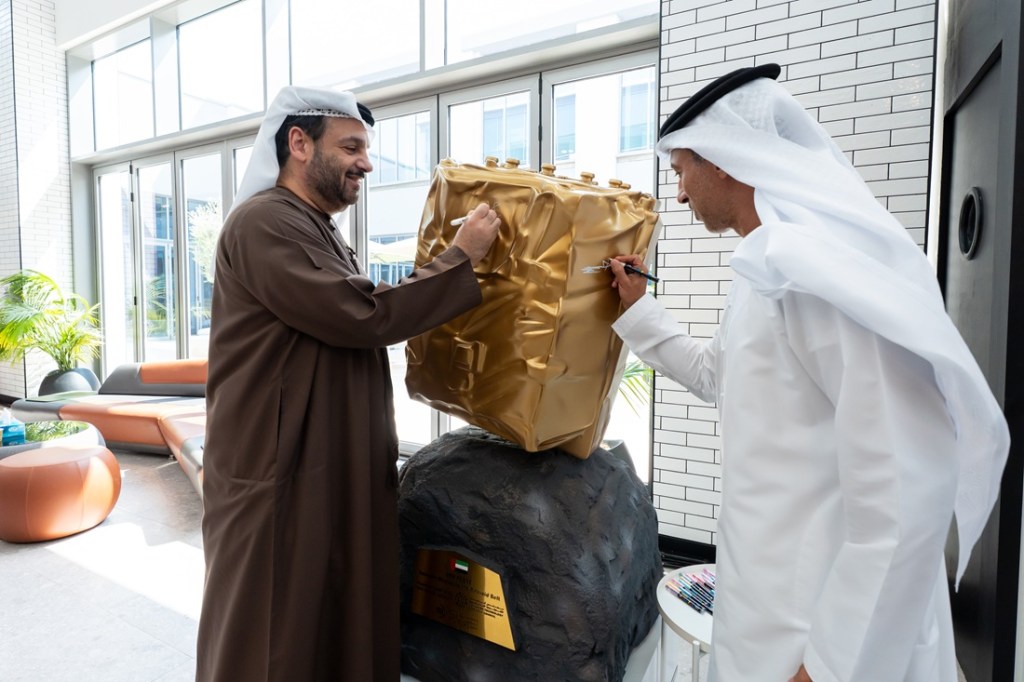
KUALA LUMPUR, Oct 5 (Bernama) — The Technology Innovation Institute (TII) has revealed the United Arab Emirates (UAE)-built probe for the Emirates Mission to the Asteroid Belt (EMA).

In a statement, TII said the probe will soon travel to Colorado, United States, for final integration with the MBR Explorer spacecraft ahead of its planned 2028 launch.

In a historic first, TII’s probe will image two planets and seven asteroids — flying past six asteroids in the main belt before culminating in a rendezvous with and landing on the seventh, 269 Justitia. If successful, the landing will make Justitia only the seventh asteroid in history to be reached on the surface by the probe.

“Our teams at TII have developed a system designed to withstand extreme conditions, operate with exceptional precision, and deliver meaningful science billions of kilometres from Earth.

“The mission reflects not only the calibre of our talent, but also the depth of scientific and engineering capability the UAE has built to contribute to some of the world’s most ambitious space missions,” said TII Chief Executive Officer, Dr Najwa Aaraj in a statement.

Designed, built and tested end-to-end in Abu Dhabi by TII’s Propulsion and Space Research Center, in collaboration with the UAE Space Agency, HEX20, Khalifa University and UAE University’s National Space Science and Technology Center, the TII-built probe is the mission’s only deployable payload.

It will separate from MBR Explorer to make contact with Justitia’s surface at the furthest point of the mission and operate fully autonomously in deep space, capturing close-range images and excavating the asteroid’s surface to provide new insights into its composition and physical characteristics.

The MBR Explorer spacecraft will travel approximately five billion kilometres over eight years, using gravity-assist manoeuvres at Venus, Earth and Mars, and conducting close encounters with six asteroids before arriving at 269 Justitia.

TII said the spacecraft is scheduled to launch from Japan in March 2028 within a narrow three-week launch window aligned to interplanetary conditions. On arrival, the MBR spacecraft will spend approximately seven months in orbit around Justitia, beginning at 250 kilometres and descending through a series of lower orbits.

The probe will deploy during a low-altitude pass in early 2036, then descend and make contact with the surface, imaging continuously and transmitting to the spacecraft above. The subsequent images will allow scientists to study material beneath the surface layer that cannot be characterised from orbit.

— BERNAMA
Rolling Through History: Discover Gunshanzhu, Guizhou’s Legendary Miao Dance

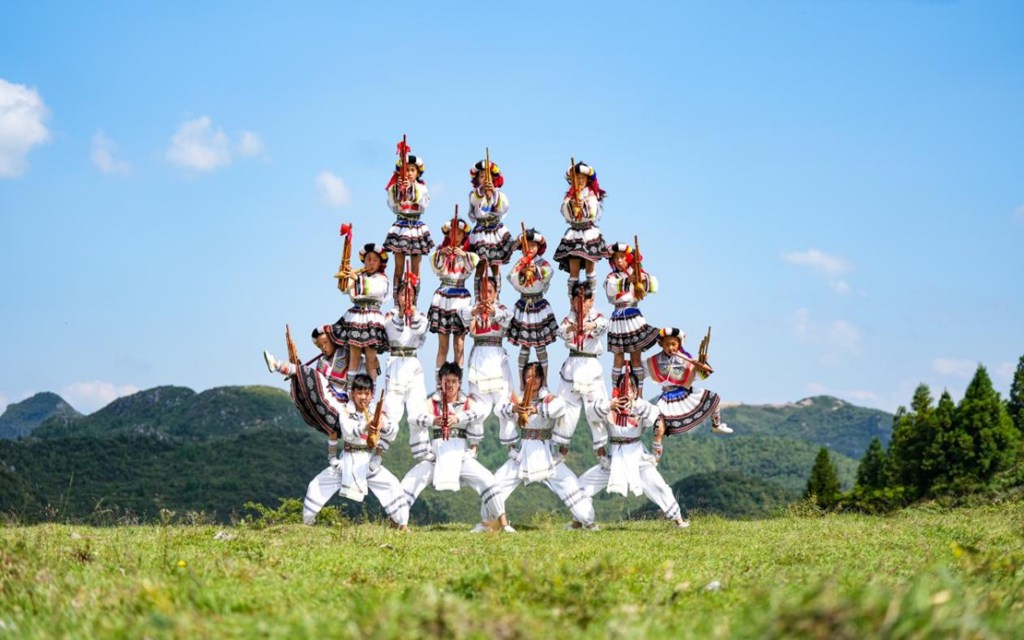
Gunshanzhu trainees in Zhuchang Township, Nayong County, Bijie City, Guizhou Province, perform the traditional climbing formation.

BIJIE, China, Aug. 5, 2026 /Xinhua-AsiaNet/–

Deep in the mountains of Zhuchang Township, Nayong County, Bijie City, Guizhou Province, a unique Miao ethnic dance has been passed down for generations. Known as gunshanzhu, or the “Pearl of the Guizhou Plateau,” this remarkable art form is more than a performance. It carries the memories of Miao migration, rich cultural traditions, and the enduring spirit of the Miao people.

According to legend, during the ancient migration of the Miao people, their journey was filled with rugged mountains and thorny paths. To help their people pass through the wilderness, brave Miao youths used their own bodies to roll through the thorn bushes, creating a path for their community. To honor this courage and hardship, later generations recreated these rolling movements and developed them into a unique lusheng dance. Every roll is a tribute to their ancestors. Every leap reflects the resilience of the Miao people.

Gunshanzhu is one of the most challenging forms of Miao ethnic dance. Performers wear embroidered white jackets and pheasant-feathered hats while playing six-pipe lusheng instruments. The greatest challenge is that the melody must never stop. Even while performing extremely difficult movements, dancers must continue playing the lusheng without interruption.

During performances, dancers roll and spin between bowls filled with water, balancing their bodies with remarkable precision. They perform breathtaking movements such as the Flying Swallows, Human Pyramid, and Rolling Dragon. The seamless combination of music, movement, breath, and strength creates the unique beauty of this ancient art.

Since the 1990s, gunshanzhu has earned recognition both at home and internationally for its unique artistic value and cultural significance. In 2006, it was included in the first batch of China’s national intangible cultural heritage list.

Behind its preservation is the decades-long dedication of Wang Jingcai, a national-level inheritor of gunshanzhu. By incorporating acrobatic elements into the traditional dance, he helped bring this art form from remote communities to the world stage. Today, local schools have introduced gunshanzhu courses, allowing younger generations to continue this cultural legacy.

Gunshanzhu is a living historical record and a symbol of the Miao people’s perseverance. When the sound of the lusheng rises and dancers begin to roll and leap, audiences witness more than extraordinary skills. They see a thousand-year-old memory, a cherished tradition, and the enduring spirit of a people.

Source: Nayong Yongkang Cultural Tourism Investment & Development Co., Ltd.

–BERNAMA