KUALA LUMPUR, Feb 26 (Bernama) — Holafly, a global eSIM provider for travellers, in its latest insights, revealed that eight in 10 professionals expect to travel internationally in 2026, while only a small minority plan to remain fully domestic.
In a statement, the company said corporate mobility is entering a more deliberate phase following the sharp rebound in 2025, with business travel increasingly centred on established cities where commercial ecosystems, infrastructure and networks support faster deal-making.
Holafly Vice President for Business, Alex Bryszkowski said business travel in 2026 will be defined by outcomes rather than frequency.
“The strongest hubs are the ones that allow people to focus on building relationships, moving projects forward and making decisions that actually matter, and where staying connected, secure and at ease is never a concern,” he said in a statement.
Holafly said more than 10,000 respondents were surveyed for its Global eSIM & Travel Report 2025–2026, which identified the United States as the top business hub for European, South American, Asian and Oceanian travellers, while Canada ranked as the leading hub for North American professionals.
The company added that business travellers are reinforcing established routes and hubs where trust, infrastructure and on-the-ground efficiency deliver measurable outcomes.
As corporate travel becomes more intentional, access to consistent digital connectivity tools is increasingly critical to ensure professionals are ready to work from day one.
During the Spring Festival holiday, Shanghai launched more than 2,570 featured cultural and tourism activities.
SHANGHAI, Feb. 26, 2026 /Xinhua-AsiaNet/–
During the nine-day Year of the Horse Spring Festival holiday, Shanghai launched more than 2,570 featured cultural and tourism activities to promote travel to the bustling city, fueling a robust boom in Spring Festival cultural and tourism consumption as both visitor numbers and consumption in the cultural and tourism market saw steady growth.
Big data from Shanghai Municipal Administration of Culture and Tourism shows the city received a total of 21.6721 million visitor arrivals, an 8.36% year-on-year increase. Total tourism consumption reached 25.614 billion yuan, surging 20.90% from the previous year.
The average room occupancy rate of local hotels and guesthouses rose to 50.60%, up 3.10 percentage points year-on-year.
The promotion campaign leveraged the outcomes of the first high-level competition to introduce Shanghai’s tourism and integrated the city’s cultural, tourism, commerce, sports and exhibition resources.
Product innovation and transformation drove Shanghai’s Spring Festival cultural and tourism development this year, spawning a new trend of spending the Chinese New Year in the city.
Shanghai’s cultural and tourism authorities rolled out over 130 in-depth Spring Festival tour routes under three themes, which became bestsellers on OTAs via live-stream sales on major platforms. Inbound tourists from niche markets like Greece and Slovenia doubled, experiencing the unique charm of Jiangnan and Shanghai culture immersively.
Shanghai also created premium IPs such as the themed tour routes. With joint efforts of multiple departments, 353 themed activities were launched on the “Hu Xiaoyou” smart travel service platform. At the same time, science popularization and industrial tourism also gained traction, making Shanghai the top choice for enjoying the Spring Festival elsewhere besides the hometown.
Key cultural and commercial landmarks, including West Bund GATE M, Panlong Ancient Town and Zhangyuan Garden, held Spring Festival fairs and garden parties, creating new urban Chinese New Year rituals. For the first time, Shanghai hosted large-scale concerts during the holiday, with Richie Jen’s and Capper’s concerts drawing numerous fans from across the country.
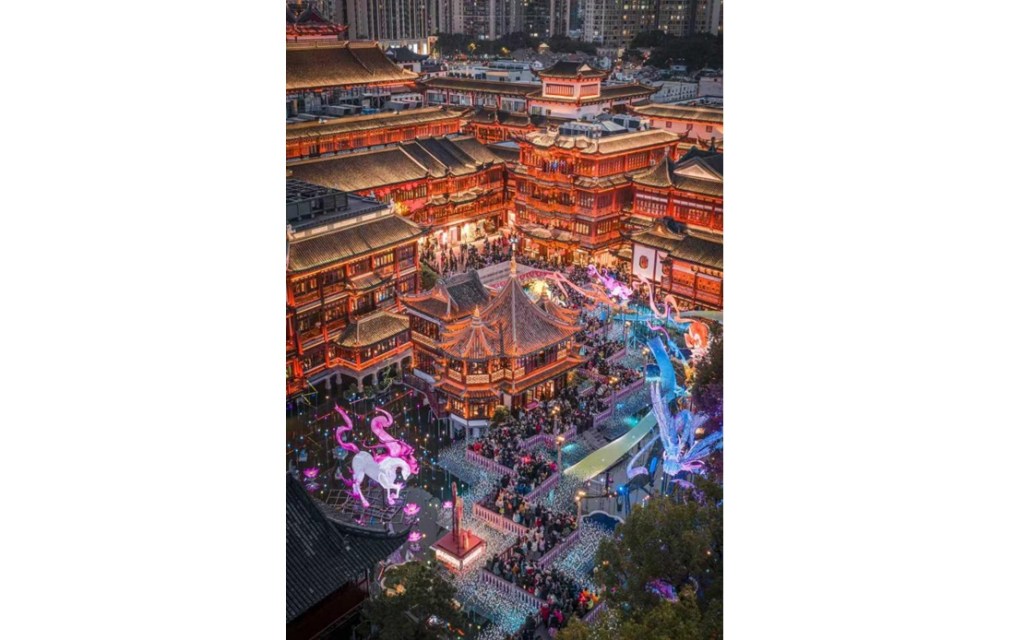
The blend of Shanghai-style Chinese New Year vibes and trendy Chinese cultural elements boosted the festive folk atmosphere in the city. Centering on experiencing the vibe of ordinary life, Shanghai launched a city-wide lantern show campaign. The lantern shows at Yuyuan Garden and the Inlet lit up the city’s nights with stunning light displays.
Intangible cultural heritage fairs and master chefs’ kitchens were set up in urban cultural and tourism complexes and suburban ancient towns. Some high-end hotels have integrated intangible cultural heritage into one-stop stays that integrate accommodation, dining, and travel experiences. Local traditional delicacies such as Shanghai cuisine and Nanxiang steamed buns offered visitors authentic Chinese New Year flavors.
Looking forward, Shanghai will further integrate cultural and tourism resources, pursue continuous product innovation, boost the upgrading of cultural and tourism consumption, and let more people feel the hospitality and vitality of Shanghai’s cultural and tourism industry.
Source: Shanghai Municipal Administration of Culture and Tourism
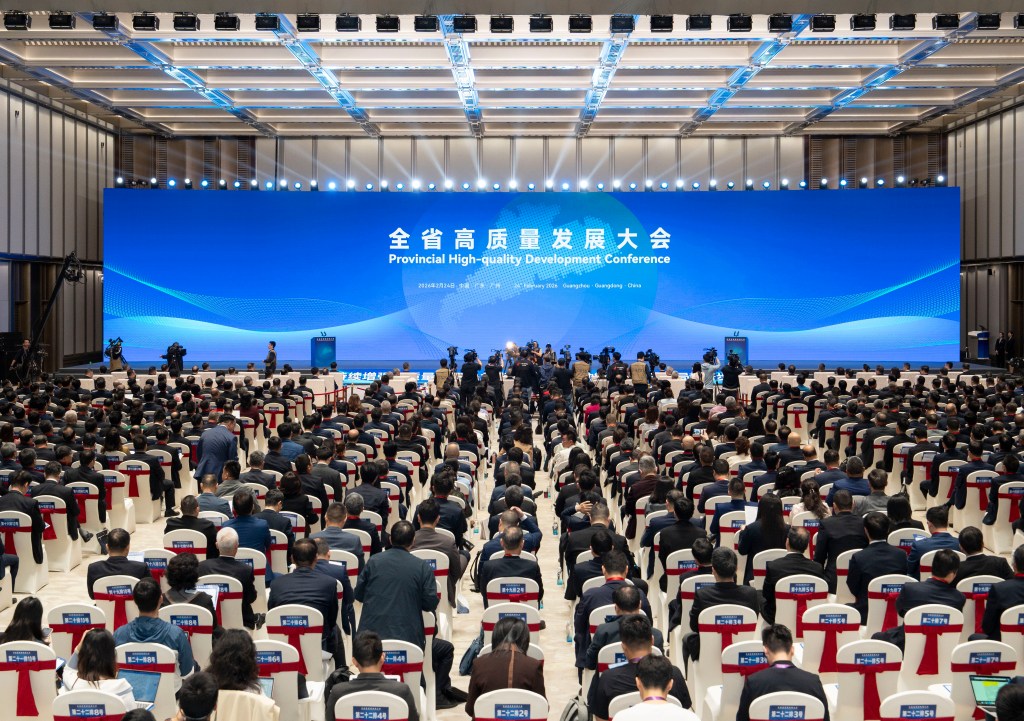
KUALA LUMPUR, Feb 25 (Bernama) — Guangdong province unveiled its 2026 economic agenda at a High-Quality Development Conference on Feb 24, outlining plans to more closely integrate its manufacturing base with its expanding services sector.
Provincial leaders said the strategy is designed to strengthen Guangdong’s role as one of China’s most dynamic economic regions by upgrading its industrial structure and building a “modern industrial system” in which advanced manufacturing and modern services reinforce each other.
Guangdong Party Secretary, Huang Kunming said closer integration is increasingly important as global industries become more digital, technology-driven and service-orientated, noting that the province is already a major manufacturing hub as well as a centre for finance, logistics, trade and technology services.
Digitalisation and artificial intelligence were identified as core drivers of the new agenda. Guangdong’s large industrial clusters, data resources and real-world application scenarios position it to lead in smart manufacturing, industrial internet platforms and integrated “manufacturing + services” solutions, while the real economy will remain the policy priority.
The province will continue to support small and medium-sized enterprises, specialised manufacturers and innovation-focused firms, including highly specialised “little giant” companies, single-product manufacturing champions and leading service providers.
Guangdong aims to strengthen industrial ecosystems by fostering platform-based companies that link supply chains, research institutions and service providers, and by extending technological innovation into traditional industries, according to a statement.
Talent development and openness were highlighted as key enablers. Guangdong plans to further develop the Guangdong-Hong Kong-Macao Greater Bay Area as a high-level talent hub and continue its programme to attract one million professionals, while drawing more international resources into both manufacturing and services and supporting local companies’ overseas expansion.
Officials said the branding of “Guangdong Manufacturing” and “Guangdong Services” will be strengthened ahead of China’s 15th Five-Year Plan (2026–2030).
KUALA LUMPUR, Feb 25 (Bernama) — The Hangzhou Municipal Government has recently approved the official names for five stations along Metro Line 10 and the Hangzhou-Deqing Intercity Railway (Yuhang Section), including two stations within the core area of the Yuhang Economic Development Zone.
Renhe South Station has been renamed “Dongshanyang Station”, while Renhe North Station is now “Qihang Road Station”, which will serve as the northern terminus of the Metro Line 10 extension and a key interchange for the intercity railway, supporting industrial projects such as BYD Hangzhou and Huaguang Advanced Materials.
According to a statement, the upgraded rail network will directly connect Hangzhou’s main urban area, the Yuhang Economic Development Zone and Deqing County, strengthening regional transport capacity and accelerating the movement of industrial resources and skilled talent.
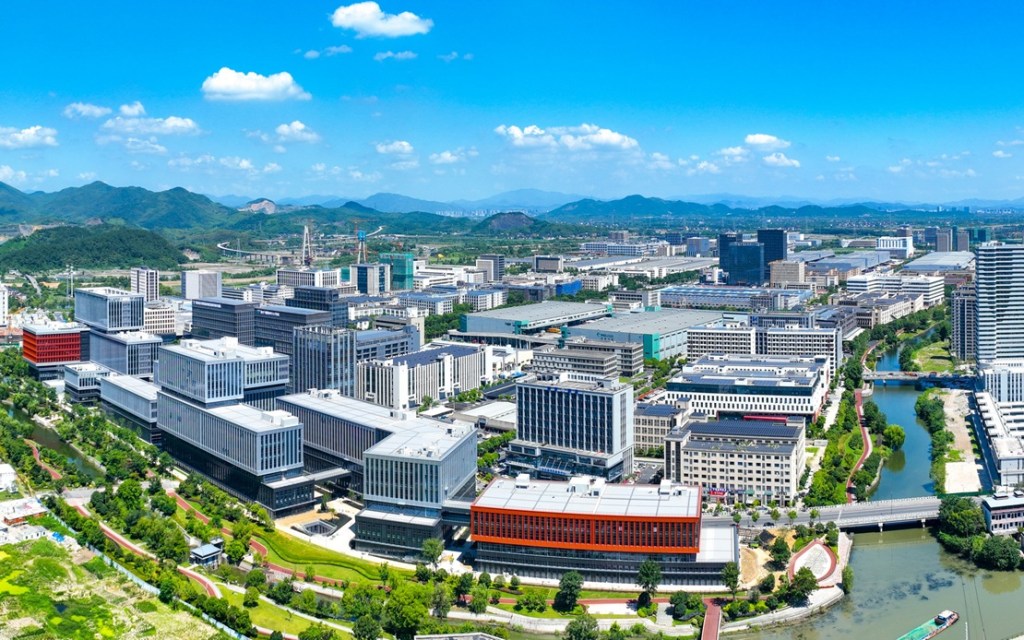
The Yuhang Economic Development Zone is positioned as Hangzhou’s nearest large-scale smart manufacturing cluster to the city’s administrative centre, focusing on new equipment, new materials and new energy, while nurturing emerging sectors such as integrated circuits, robotics and digital energy.
In addition, the zone benefits from a strategic location at the heart of the Yangtze River Delta, serving as Hangzhou’s key gateway linking Shanghai, Jiangsu and Anhui.
Bordering the Beijing-Hangzhou Grand Canal and within easy reach of the Hangzhou Xiaoshan International Airport, the area also enjoys fast connections to major rail hubs and expressways, underlining its role as one of the best-connected smart manufacturing clusters in the city.
Through cooperation with Zhejiang University, Yuhang has established the Advanced Electrical Equipment Innovation Center, led by a Chinese Academy of Engineering academician, supporting national- and provincial-level research in areas such as new-energy vehicle drive systems and intelligent robotics.
Backed by more than 570,000 square metres of incubation space and targeted incentives for sectors including integrated circuits, robotics and the “low-altitude economy”, the zone is building a full life-cycle development environment for companies such as Nanfang Pump and other high-end manufacturing players.
KUALA LUMPUR, Feb 23 (Bernama) — Sumitomo Fudosan Villa Fontaine Co Ltd, a member of the Sumitomo Realty & Development Group, has introduced a new all-inclusive experience at Villa Fontaine Premier Haneda Airport.
Directly connected to Haneda Airport Terminal 3, the curated “Wonderful Japan” itinerary is designed to simplify travel by combining multiple services into a single stay, starting this April.
As a primary entry and exit point for Japan, Haneda Airport Garden Complex provides a convenient setting for travellers, and this plan combines traditional culture with modern hotel amenities, allowing guests to transition smoothly between their flight and their stay.
Services include private transport, cultural activities, dining, and wellness offerings, all integrated into one seamless itinerary. This approach reduces the effort of coordinating separate bookings and navigating language barriers, enabling guests to focus on enjoying their journey.
According to a statement, a 20 per cent discount early-bird coupon is available for bookings made via the official website by March 31, in conjunction with the launch.
The hotel features river-view rooms, 24-hour room service, and diverse dining options, providing a quiet and convenient environment for travellers. With this offering, Villa Fontaine Premier Haneda Airport combines Japanese hospitality and modern convenience to enhance the airport experience.

 wonderland