SPEAKING ‘TEA LANGUAGE’ WHILE SIPPING WITH THE WORLD IN SHIHE, CHINA

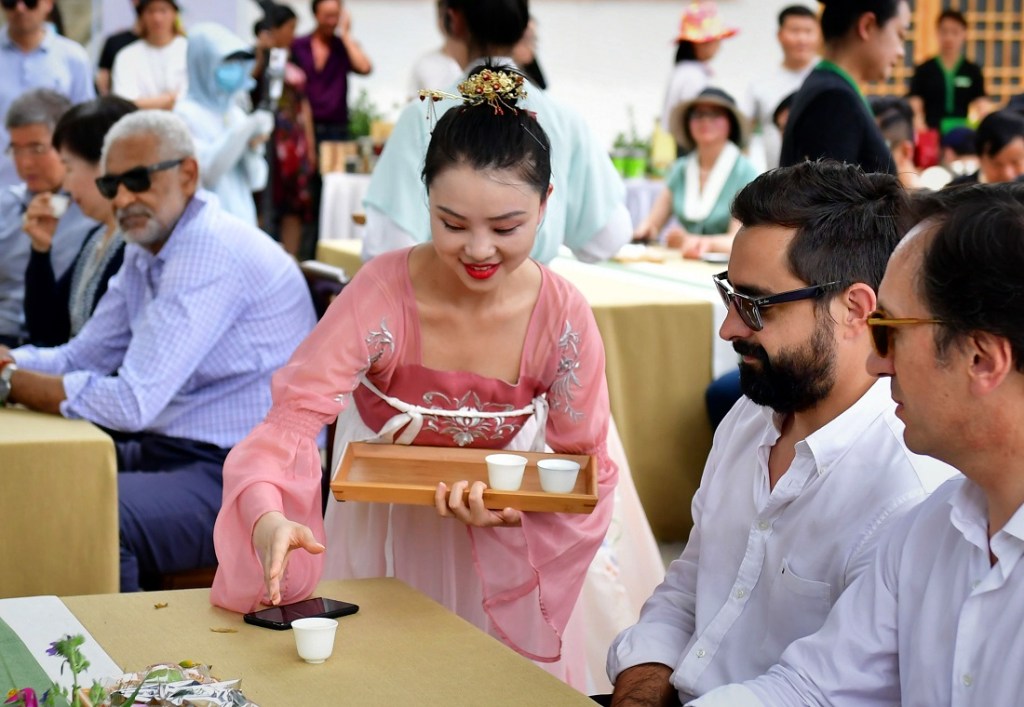
KUALA LUMPUR, June 14 (Bernama) — Diplomats and reporters from many countries recently embarked on a journey of ‘Discovering the Most Beautiful Tea Village on the Silk Road’.

They came to Shihe District, Xinyang City, Henan Province to explore the secrets of Chinese tea, according to the Shihe District Bureau of Culture, Radio & Television and Tourism, in a statement.

In the first four months of the year, three ‘China-Europe Express’ trains, loaded with Xinyang tea, travelled along the modern Silk Road to Europe and Asia.

Deputy mayor of Xinyang, Zhai Xiaobin gave a warm welcome to Chinese and foreign guests, and promoted tea exchange and cooperation.

Portuguese Ambassador to China, Jose Augusto Duarte said Portugal was the first European country to introduce Chinese tea. In the 16th century, Portuguese merchants brought Chinese tea back, and it was so expensive that only nobles could enjoy it.

Today, drinking tea is still a sophisticated lifestyle. He said the landscape was amazing, the people were beautiful, passionate, confident, and happy.

Meanwhile, Robert Quant, Ambassador of the Commonwealth of the Bahamas, who was impressed by the tea plantation said: “I will tell my friends how beautiful it is and encourage everyone to visit.”

Only lush mountains and clear rivers can produce good tea. Shihe is located on the division line of north and south, with forest coverage rate of 70 per cent.

It is in the hinterland of China, with villages dotted among the mountains and waters, displaying leisure and tranquility.

With a contiguous tea plantation of 100,000 acres, it is the origin and main producing area of Xinyang Maojian, China’s ‘Top Ten Famous Teas’.

— BERNAMA

MARY KAY JOINS CEO WATER MANDATE, UN GLOBAL COMPACT SUSTAINABLE OCEAN PRINCIPLES

KUALA LUMPUR, June 9 (Bernama) — To celebrate World Oceans Day, Mary Kay Inc announced that it has committed to two crucial causes in protecting the world’s waterways: the CEO Water Mandate and the United Nations Global Compact’s Sustainable Ocean Principles.

The news comes in the midst of a nationwide festival tour of the Mary Kay-produced Guardians of the Gulf, an eye-opening documentary, exploring the tumultuous relationship between the Gulf of Mexico and the conservationists determined to protect it.

Mary Kay, a global advocate for environmental consciousness and corporate responsibility in a statement said the CEO Water Mandate is a special initiative of the UN Secretary-General and the UN Global Compact, implemented in partnership with the Pacific Institute.

The Mandate mobilises a critical mass of business leaders to address global water challenges through corporate water stewardship, in partnership with the United Nations, governments, civil society organisations, and other stakeholders.

Meanwhile, the United Nations Global Compact’s Sustainable Oceans Principles, produced in consultation with over 300 stakeholders, provide a framework for responsible business practices in the Ocean across sectors and geographies.

Endorsing the Sustainable Ocean Principles is an aspirational pledge undertaken by companies of all sizes, sectors and levels of ocean stewardship maturity.

With this announcement, Mary Kay joins business leaders from worldwide in setting clear and shared expectations industry-wide for a healthy and productive ocean.

Filmed, directed and produced by an all-female crew, Guardians of the Gulf has been screened at nearly a dozen film festivals and was recently awarded two Telly Awards for Non-Broadcast General-Nature/Wildlife and Non-Broadcast General-Doc.

Mary Kay, which is set to announce its global sustainability strategy later this year, will work with the CEO Water Mandate and the United Nations Global Compact’s Sustainable Ocean Principles to further its commitment to water stewardship.

— BERNAMA

EVERY CLOUD HAS A SILVER LINING: THE PROSPECTS OF THE TOURISM INDUSTRY IN POST PANDEMIC

KOTA BHARU, June 4 (Bernama) — The tourism industry is currently facing a huge challenge, but with an optimistic hope that the industry will experience a recovery process soon after the approval of interstate travel permits.

Demand for the tourism sector always exists because tourism activities have been in the hearts of the community and act as a medium that can improve the community’s quality of life.

The Covid-19 pandemic has totally changed the normal landscape into becoming chaotic worldwide.

Supply chains are disrupted, the economy is in turmoil, social activities become retarded, and many more implications that we could not have imagined. One of the most affected industries in this pandemic is tourism and its related industries such as hospitality, transportation, and other service sectors. 

It is realised that this industry played a significant role in the contribution to the national GDP in 2019, which recorded approximately RM86.14 billion. 

This lavish industry has proven to have provided much to the national economic income, as well as having created and promoted employment opportunities to local communities. 

The tourism industry has become a pulse to the local economic development and a catalyst for economic growth. 

However, the prosperity of this industry did not stay long following the global pandemic which had caused the total tourist arrivals to decline sharply from 2.164 million in January 2020 to only 7546 in April 2020 due to the implementation of the Movement Control Order (MCO) and inter-stated travel ban. 

However, in July 2020, when the restrictions eased, the number of tourists gradually increased from 6585 in June up to 18660. 

The situations has caused a huge loss to the industry’s key players. The unemployment rate increased from 772.9 thousand in December 2020 to 782.5 thousand in January 2021, resulting from the drastic reduction of business operations in tourism-related industries, which consist of accommodation and food services, passenger transportation, entertainment, and recreational activities (Department of Statistics Malaysia).

Figures from statistical data have certainly caused concern and anxiety to various parties, especially to those who have been severely affected and have suffered losses. 

Many hotels and tour operators have reduced or closed their business activities because they cannot afford the fixed cost of operations. 

On the part of the community, there are those who have lost their source of income due to retrenchment, while those who look forward to tourism cannot continue this activity. 

For this group, tourism activities can increase the level of individual utility that can improve the quality of life with the family.

However, the impact of the Covid-19 pandemic is expected to be temporary. The government has introduced initiatives to revive domestic tourism activities. 

Among the latest is the National Tourism Policy (DPN) 2020–2030, which focuses on the effective recovery of the tourism industry based on new norms, strengthened competitiveness, sustainable and inclusive tourism sector development, and awareness of future disasters.

In addition, the PENJANA Tourism Financing Scheme worth RM 1 billion has been provided to fund transformation initiatives by Small and Medium Enterprises (SMEs) in the tourism sector to remain competitive in the new era of normality.

It remains unsure as to when this crisis will end, but of course, optimism is needed in hoping that the situation will improve and recover so that tourism activities can be resumed, even if only at the domestic level.

The desire to travel undoubtedly exists among members of the community, especially after a long period of interstate movement ban due to the daily increase of Covid-19 cases. 

According to the data on income and visitor receipts each year before the pandemic, it proves that tourism activities have become part of the society’s routine. 

The desire to travel after the Covid-19 pandemic is also further strengthened in the findings from the Survey on Domestic Travel in Malaysia After MCO 2020, reporting that respondents still want to travel domestically, although 97.4 percent of respondents consider hygiene and safety before traveling.

Thus, the issue of demand for tourism activities is not the main issue to worry about; the main question that needs to be given attention is whether the industry is ready to receive a demand surge when travel restrictions are eventually eased. Can the industry players meet the local demands after operations in this industry have been severely affected?

In the meantime, tour operators should formulate a strategy to deal with the surge in future demands. This is also the best time for industry players to organise, plan, restructure, build, and restore their operations in facing the recovery process. 

Tourism industry players need to focus more on matters related to new packages and approaches, safety and health issues, and the identification of market segments and target groups for the purpose of facing a new era of tourism after the pandemic. 

By Dr. Naziatul Aziah Mohd Radzi a
Senior Lecturer, Faculty of Hospitality, Tourism and Wellness (FHPK)

Source: Universiti Malaysia Kelantan (UMK)

FOR MORE INFORMATION, PLEASE CONTACT:
Name: Encik Mohd Adzwan Bin Kamaruzaman
Tel: 0199811719
Email: adzwan@umk.edu.my

–BERNAMA

Arts in Hong Kong campaign gathers super fans for ‘Sip Back & Sketch’ event


KUALA LUMPUR, May 31 — In celebration of the ‘Arts in Hong Kong’ campaign, the Hong Kong Tourism Board (HKTB) invited hundreds of media and Hong Kong Super Fans to explore Hong Kong’s thriving art scene and participate in relaxing creative activities.

According to a statement, Hong Kong Super Fans referred to socially influential people with an authentic connection to Hong Kong.

The innovative ‘Sip Back and Sketch’ event saw Hong Kong and overseas participants try their hand at Zentangle — a form of meditative drawing that produces kaleidoscopic patterns — between artistic tours from on-the-ground Super Fans envoys.

The event took place both in person at the West Kowloon Cultural District and online.

Working off a template of Hong Kong’s world-famous skyline, participants brought to life their own vision of the city’s vibrant spirit by adorning local landmarks like the Hong Kong Observation Wheel and the Hong Kong Convention and Exhibition Centre with patterns inspired by Hong Kong’s cultural heritage.

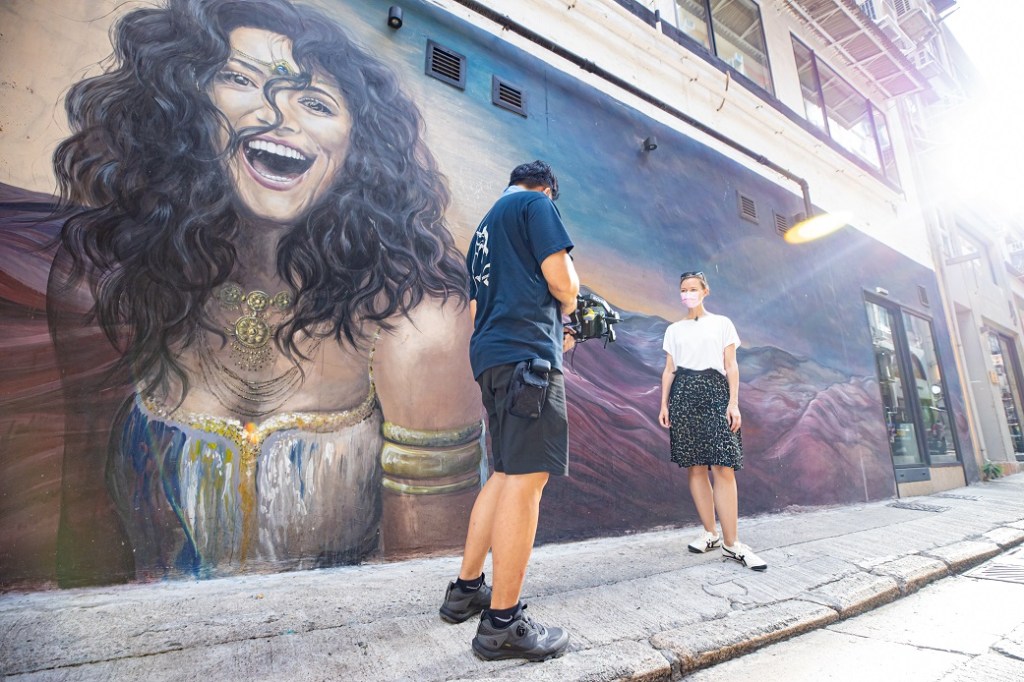
The participants were treated to a live virtual tour of the first Art Basel Hong Kong fair in two years, as well as a fun and informative street art tour of Old Town Central.

Despite the unprecedented international travel restrictions, the HKTB has been adapting to the times with a creative hybrid approach to global media and fan engagement to maintain top-of-mind awareness of Hong Kong as a travel destination in key markets.

In anticipation of international borders reopening, the HKTB has recruited hundreds of Super Fans to partake in events to show off what Hong Kong has to offer, and reignite international travellers’ passion for the city.

— BERNAMA

3-DAY INTERNATIONAL BIG DATA EXPO ENDS IN GUIYANG, CHINA

KUALA LUMPUR, May 28 (Bernama) — The 2021 China International Big Data Industry Expo, the country’s leading big data expo, recently kicked off in Guiyang, capital city of southwest China’s Guizhou Province.

Based on a statement, the expo which was founded has become an international and professional platform for the development of big data as well as an industrial bellwether.

The three-day event, ending today, is jointly held by the local government as well as the country’s top economic planner, industrial and information watchdogs. 

With support from China’s commerce ministry, the expo features domestic, global, industrial and business perspectives.

Themed ‘Embrace digital intelligence, Deliver new development’, the event includes conferences, exhibitions, new product launches, contests and other activities.

This year’s expo is conducted both online and offline, seeking open cooperation and joint development of different stakeholders. 

The online expo offers services like online communication, online exhibition, business negotiation, online forum and guest promotion, presenting a variety of exhibition functions.

The activities of the expo includes exhibitions to display new technologies, products, schemes and applications in big data as well as meetings and exchanges, talent introductions, night talks, salons and dialogues.

Guiyang City and Gui’an New District, as the core areas of the national big data (Guizhou) integrated pilot zone, have always been pioneers in big data development, posting leapfrogging progresses in industrial growth. 

— BERNAMA