KUALA LUMPUR, May 8 (Bernama) — AmBank’s Rezeki Bazar Ramadan recognised micro traders who demonstrated the highest number of transactions via QR code payments at their respective bazaar stalls using their AmBank current accounts. The initiative underscored AmBank’s commitment to empowering small businesses with digital tools that enhance efficiency, convenience, and customer experience.
Taking top honours was Rusman Sudirman from the Putrajaya branch, who emerged as the first prize winner and walked away with RM1,000 in cash. The second prize was shared by Ahmad Amalsyah Bin Ahmad and Shalila Binti Jamil, both also from the Putrajaya branch, who each received RM500.
Meanwhile, 13 additional winners – comprising micro traders from the Putrajaya, Yap Kwan Seng, and Wangsa Maju branches – were each awarded RM200 in recognition of their strong adoption of cashless transactions.
Prizes were presented by Shazman Shahid, Head of GCCM, alongside Lim Sze Ghee, Head of Deposits, Retail Banking, AmBank in a ceremony that promotes AmBank’s commitment to empowering small businesses with digital tools that enhance efficiency, convenience, and customer experience.
Source: AmBank Group
FOR MORE INFORMATION, PLEASE CONTACT: Name: Ashiqin Anuar Tel: 012 9176266
MOVE-IT met the primary endpoint with statistically significant improvement in gastroparesis symptoms in 20 mg and 40 mg TID doses vs placebo
Improvements observed across key symptoms, including nausea, early satiety, post-prandial fullness and upper abdominal pain
Favorable safety and tolerability profiles
Late-breaking oral presentation delivered at Digestive Disease Week (DDW) 2026 in Chicago, IL
FREIBURG, Germany and ROSCREA, Ireland, May 5 (Bernama-GLOBE NEWSWIRE) — Dr. Falk Pharma GmbH (“Dr. Falk Pharma”), a research-based pharmaceutical company specializing in digestive and metabolic medicine, and Renexxion Ireland Limited (“Renexxion”), a clinical-stage biopharmaceutical company, today announced positive results from MOVE-IT (NCT05621811), a global Phase 2b, randomized placebo-controlled trial evaluating the efficacy, safety, and tolerability of naronapride in adults with gastroparesis.
The double-blind, multicenter, 12-week study enrolled 328 adults with moderate-to-severe idiopathic or diabetic gastroparesis symptoms and objective evidence of delayed gastric emptying. Eligible patients received either 10 mg, 20 mg, 40 mg naronapride, or placebo, administered orally three times a day (TID) for 12 weeks.
MOVE-IT met the primary endpoint, demonstrating statistically significant improvement versus placebo in the American Neurogastroenterology and Motility Society Gastroparesis Cardinal Symptom Index Daily Diary (ANMS GCSI-DD) Core Symptom Score in the 20 mg TID (p=0.0046) and 40 mg TID (p=0.0156) groups. The ANMS GCSI-DD is a content-validated, patient-reported outcome instrument that assesses the five cardinal gastroparesis symptoms: nausea, vomiting, early satiety, postprandial fullness and upper abdominal pain.
Table 1. Primary endpoint – Change from baseline to Week 12 in the average weekly ANMS GCSI-DD Core Symptom Score
Naronapride 10 mg TID
Naronapride 20 mg TID
Naronapride 40 mg TID
Placebo TID
Total Population
N=83
N=80
N=80
N=85
Baseline (BSL)
Week 12
Mean (SD)
Mean (SD)
2.450 (0.388)
1.155 (0.797)
2.429 (0.341)
0.883 (0.759)
2.462 (0.450)
0.907 (0.780)
2.402 (0.396)
1.280 (0.911)
Change to Week 12
LS Mean (SE) +/- 95% CI
-1.244 (0.100) [-1.440, -1.048]
-1.512 (0.102) [-1.712, -1.311]
-1.452 (0.100) [-1.649, -1.256]
-1.106 (0.095) [-1.293, -0.920]
Difference to Placebo
LS Mean (SE)
-0.138 (0.136)
-0.405 (0.137)
-0.346 (0.136)
Dunnett-Hsu Adjusted
97.5%-CI p-value†
[-∞, 0.183] 0.3112
[-∞, -0.081] 0.0046
[-∞, -0.024] 0.0156
CI = Confidence interval; LS Means = Least square means; N = Number of participants in analysis population; SD = Standard deviation; SE = Standard error. † One-sided
Naronapride also demonstrated statistically significant improvements versus placebo from baseline to Week 12 across key secondary and exploratory endpoints in the total population:
ANMS GCSI-DD Composite Score (core score excluding vomiting): Statistically significant improvements observed in 20 mg (p=0.0024) and 40 mg (p=0.0117) TID dose groups versus placebo.
Responder Analyses: Approximately 15-20% more participants achieved clinically meaningful improvement (defined as >1.0 decrease in ANMS GCSI-DD Composite Score) with naronapride 20 mg or 40 mg TID vs. placebo, with no added benefit of 40 mg over 20 mg.
Patient-Reported Quality of Life (QoL): Global improvements reflecting meaningful benefit beyond core symptom reduction and supporting consistency of treatment effect across validated symptom assessment instruments.
Improvement in gastric emptying breath test (GEBT): All active doses achieved greater gastric emptying versus placebo. Maximum improvement with 20 mg (mean -21.95 minutes) and 40 mg (mean –14.92 minutes) versus placebo (mean –10.96 minutes).
Consistent with previous studies, the safety and tolerability profiles were favorable, with no new safety signals identified versus placebo, including cardiac, neuropsychiatric, or prolactin-related signals. To date, naronapride has been studied in over 1200 subjects, with a safety profile reflecting its minimal systemic absorption.
Dr. Kai Pinkernell, M.D., Managing Director Science & Innovation at Dr. Falk Pharma, commented: “We are excited about the outcomes showing a significant and clinically meaningful impact on gastroparesis symptoms, all combined with a favorable safety profile. This is an important step towards providing physicians and patients with a treatment option where few effective choices exist. We look forward to sharing these results with the scientific community, engaging with regulatory authorities, and moving decisively toward registration studies later this year and eventual commercialization.”
Dr. Peter Milner, M.D., FACC, Chairman and CEO of Renexxion, commented: “These Phase 2b results represent a significant milestone for the naronapride program, demonstrating statistically significant improvement in gastroparesis symptoms with a favorable safety and tolerability profile. We believe naronapride’s locally acting, dual mechanism pharmacology and safety-by-design profile position it as a potential best-in-class therapy for gastroparesis, a disease with significant unmet medical need and limited, safe, effective long-term treatment options. Together with our partner Dr. Falk Pharma, we are now focused on advancing naronapride into late-stage development with the goal of bringing an important new treatment option to physicians and patients.”
About Naronapride Naronapride is a potential best-in-class oral, locally acting pan-GI prokinetic designed to enhance coordinated motility across the digestive tract. Naronapride works through a differentiated dual mechanism of action- 5-HT4 receptor agonism and dopamine D2 receptor antagonism- modulating two validated targets on the luminal surface of the intestinal wall that regulate GI motility and nausea signaling. Naronapride’s dual pharmacology, minimal systemic bioavailability, and differentiated pharmaceutical and pharmacokinetic profile are designed to deliver targeted activity within the GI tract while limiting systemic exposure. To date, naronapride has demonstrated a favorable safety and tolerability profile across nine Phase 1 clinical trials and five Phase 2 clinical trials conducted in multiple indications including gastroesophageal reflux disease, erosive esophagitis and chronic idiopathic constipation.
About Gastroparesis Gastroparesis is a chronic gastrointestinal disorder characterized by delayed gastric emptying and debilitating symptoms including nausea, vomiting, early satiety, upper abdominal pain and postprandial fullness. Approximately 22 per 100,000 individuals across US and Europe are formally diagnosed with gastroparesis, while up to 12-times more experience symptoms consistent with the disease. Despite the substantial disease burden, the availability of safe and effective long‑term treatment options remains limited.
About Renexxion Renexxion Ireland Limited, a wholly-owned Irish subsidiary of California-based Renexxion, Inc., is a privately held biopharmaceutical company committed to developing new therapies for patients with gastrointestinal disorders. Renexxion’s lead program is naronapride, a late-stage drug candidate being developed for multiple unmet indications in the upper and lower GI tract.
About Dr. Falk Pharma GmbH Dr. Falk Pharma GmbH has been developing and marketing innovative medicines to treat a wide range of gastrointestinal disorders like inflammatory bowel disease or eosinophilic esophagitis as well as hepatobiliary disorders such as primary biliary cholangitis for over 60 years. As the international experts in digestive and metabolic medicine, the company brings together physicians, scientists, and patients to devise new and powerful approaches to patient care. Dr. Falk Pharma engages in pre-clinical and clinical stage research that aims to meaningfully improve therapeutic practice as well as patient health and well-being. A family-owned business with a global presence, Dr. Falk Pharma has ten affiliates in Europe and Australia and is continuously growing. The company has its headquarters and R&D facilities in Freiburg, Germany, its pharmaceutical products are manufactured in Europe, mainly at sites in Germany, France, Italy, and Switzerland. Falk employs approximately 1,550 individuals globally and 450 in Freiburg.
KUALA LUMPUR, May 5 (Bernama) — Holafly for Business noted that companies are increasingly adopting more integrated connectivity solutions for employees travelling abroad, as reliance on public WiFi and traditional roaming networks raises operational and security risks.
The company said one of the key challenges for information technology (IT) teams is ensuring employees remain connected upon arrival, enabling access to critical tools and real-time information without exposure to unsecured networks.
Holafly for Business Head of Sales, Ricardo Rodriguez in a statement said companies are increasingly focused on ensuring employees can operate securely and reliably from anywhere, rather than simply maintaining connectivity while travelling.
As global workforces become more distributed, organisations are shifting away from fragmented solutions towards centralised connectivity management platforms.
In this context, Holafly for Business is positioning its services as a tool for IT departments to manage mobile data access for employees across markets.
The shift comes as business travel continues to expand. According to the Global Business Travel Association (GBTA), global business travel spend is expected to reach US$1.69 trillion in 2026. (US$1 = RM3.95)
GBTA data also shows business travellers lose an average of 5.2 productive hours per trip due to connectivity-related issues.
Separately, IBM Security estimates the average cost of a corporate data breach at US$4.88 million, underscoring risks associated with unsecured network usage during travel.
The company said its Business Center platform allows IT teams to centralise eSIM management, monitor usage in real time and automate billing processes to improve operational visibility.
MHTC hosted 30–40 senior Chinese healthcare leaders for hospital familiarisation programme under Malaysia Year of Medical Tourism 2026 (MYMT 2026) initiative
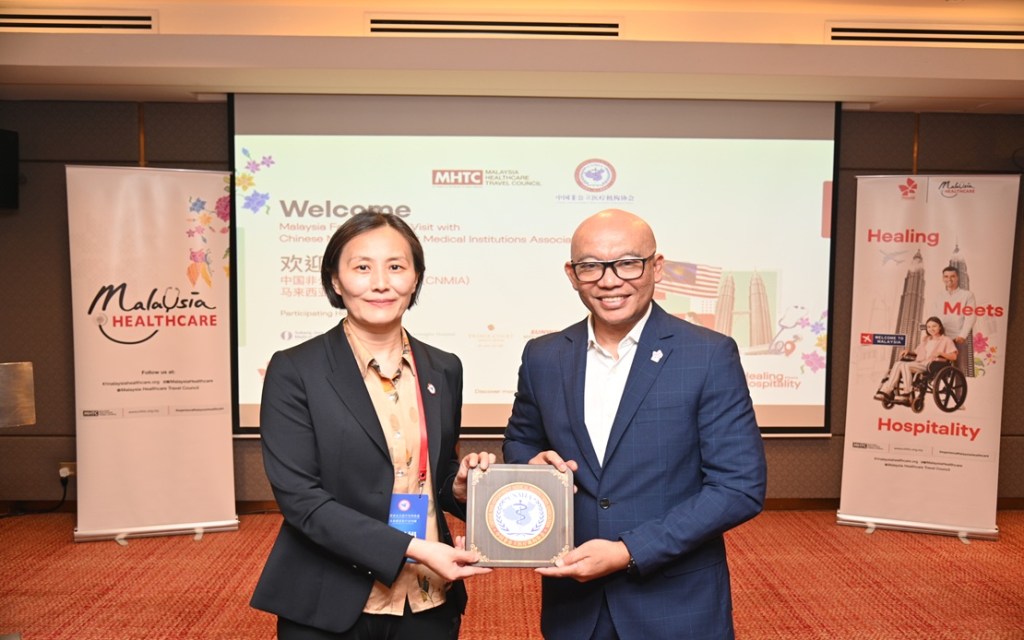
KUALA LUMPUR, April 29 (Bernama) — The Malaysia Healthcare Travel Council (MHTC) hosted a delegation of 30 to 40 senior healthcare decision-makers from the Chinese Non-government Medical Institutions Association (CNMIA) for a hospital familiarisation (FAM) visit from 26 to 30 April 2026. The visit, organised under the Malaysia Year of Medical Tourism 2026 (MYMT 2026) initiative, introduced China’s largest private healthcare coordinating body to Malaysia’s medical tourism ecosystem through curated hospital tours and strategic discussions.
The visit took place amid accelerating demand from China. Healthcare traveller volume from China grew from 50,000 in 2021 to 121,000 in 2025, while revenue more than tripled, from RM54.4 million to RM200.4 million over the same period. The sharpest growth was recorded between 2023 and 2025, reflecting renewed confidence and stronger patient movement following the pandemic.
Commenting on the visit, MHTC Chief Executive Officer Suriaghandi Suppiah said: “We have seen remarkable growth in the trust and confidence that Chinese patients place in Malaysia’s healthcare system, and this visit reflects the depth of that relationship. CNMIA represents over 500,000 medical institutions across China, and their decision to bring senior decision-makers to Malaysia is a strong signal of mutual confidence. Our goal is to build enduring partnerships that benefit patients on both sides connecting China’s healthcare leaders with the clinical excellence and patient-centred care that define the Malaysia Healthcare experience.”
Approved by the State Council of China, CNMIA represents over 500,000 medical institutions, including approximately 27,000 hospitals. It serves as a key coordinating body within China’s private healthcare sector, connecting providers, investors, and policymakers while facilitating service standards and international collaboration.
For MHTC, engaging CNMIA signals a shift from broad market outreach to targeted institutional partnerships that directly influence referral pathways and cross-border collaboration. Chinese institutions are increasingly seeking stable, regionally accessible destinations for medical partnerships, and Malaysia’s combination of geographical proximity, competitive costs, multilingual support, and hospitality-driven care positions it as a compelling alternative within Asia.
The delegation comprised investors, hospital chairpersons, presidents, clinical leaders, and specialists in international medical tourism from leading non-government medical groups and specialty centres across China. As part of the programme, the delegation undertook a series of curated visits to several of Malaysia’s leading private healthcare institutions, including Alpha IVF & Women’s Specialists, Prince Court Medical Centre, Gleneagles Hospital Kuala Lumpur, Cengild G.I Medical Centre as well as our Flagship Medical Tourism Hospital Accolades Winner, Subang Jaya Medical Centre. These engagements provided first-hand exposure to Malaysia’s healthcare capabilities while creating opportunities for deeper institutional engagement and future collaboration.
Suriaghandi added: “MYMT 2026 is our invitation to the world to experience what Malaysia’s healthcare system has to offer. When CNMIA’s delegation visits our hospitals and meets our clinicians, they will see first-hand what Healing Meets Hospitality means in practice—clinical excellence delivered within an experience built around the patient. We look forward to welcoming them and to exploring how Malaysia and China can work more closely together in healthcare.”
About Malaysia Healthcare Travel Council
Malaysia Healthcare Travel Council (MHTC), established in 2009 under the purview of the Ministry of Health (MOH) Malaysia, is entrusted with developing and nurturing the “Malaysia Healthcare” brand. MHTC enhances, coordinates, and promotes Malaysia’s healthcare travel industry by fostering industry collaborations and building valuable public-private partnerships both domestically and internationally. With 80 member hospitals nationwide, MHTC continues to elevate the healthcare travel ecosystem through strong branding, seamless patient experiences, and strategic market initiatives. In line with these efforts, MHTC is spearheading the Malaysia Year of Medical Tourism (MYMT) 2026, the nation’s first dedicated year to celebrate and advance healthcare travel. MYMT 2026 serves as a milestone initiative to showcase Malaysia’s world-class healthcare offerings, strengthen its position as the premier global healthcare destination, and highlight the industry’s significant contribution to the national economy.
KUALA LUMPUR, April 28 (Bernama) — Singapore’s top 100 brands rose seven per cent year-on-year to a combined value of US$84.1 billion in 2026, driven by growth across the banking, engineering, food and real estate sectors, according to the Brand Finance Singapore 100 2026 report. (US$1 = RM3.95)
DBS Bank retained its position as Singapore’s most valuable brand for the 14th consecutive year, with brand value rising eight per cent to US$18.6 billion, supported by regional expansion and diversification efforts.
Marina Bay Sands ranked second in brand value at US$8 billion, rising 35 per cent, supported by strong revenue performance and ongoing upgrade investments that enhanced its premium positioning in the tourism sector, while OCBC Bank ranked third at US$6.8 billion, reflecting steady performance in wealth management and regional expansion initiatives.
The report highlighted strong performance across sectors, with engineering benefiting from aerospace and defence demand, food and agriculture supported by commodity trends, and real estate remaining stable on steady transaction activity, according to a statement.
Meanwhile, Changi Airport was named Singapore’s strongest brand, with a Brand Strength Index score of 91.2 out of 100 and an AAA+ rating, driven by record passenger traffic, expanded connectivity and continued service investment.
TeleChoice International was the fastest-growing brand in the ranking, with brand value surging 288 per cent to US$52.7 million, driven by strong demand in semiconductor-related segments and product expansion.
Millennium Hotels and Resorts was the top hotel brand, ranking 27th overall, supported by digital transformation initiatives, loyalty programme growth and expansion of its global property portfolio.
Separately, Singapore Airlines led sustainability perceptions among Singaporean respondents, particularly for its decarbonisation strategy, including its net zero emissions target by 2050 and investment in sustainable aviation fuel.
Other brands showing strong sustainability perceptions included Ascott and Banyan Tree for environmental sustainability, CapitaLand, Singapore Land and FairPrice in social sustainability, and DBS in governance, reflecting strong domestic recognition across environmental, social, and governance (ESG) pillars.