KUALA LUMPUR, Sept 18 (Bernama) — The Taiwan External Trade Development Council (TAITRA) in collaboration with the Taiwanese Embassy have organised the 2023 Taiwan Expo held in St Kitts and Nevis, marking a pivotal moment in the diplomatic history of both nations.
Held recently at the Visitor Centre, Malcolm Guishard Recreational Park in Nevis, the expo solidified the deep-rooted bond between these two countries, through a myriad of exhibitions and cultural experiences, according to a statement.
The expo featured 26 Taiwanese companies representing diverse industries, whereby visitors had the privilege of exploring a wide array of cutting-edge products as it also offered an immersive journey into Taiwanese culture beyond trade and technology.
In a bid to foster inclusive bilateral cooperation, the expo extended invitations to local businesses, enabling them to showcase their products alongside Taiwanese exhibitors.
It served as a powerful platform to underscore significant trade opportunities between St Kitts and Nevis with Taiwan. Last year, bilateral trade between the two nations reached an impressive US$1.56 million. (US$1=RM4.68)
As both nations look ahead, they remain committed to deepening their ties, nurturing their friendship, and exploring new avenues for collaboration, in which the Expo was a testament to the enduring partnership between St Kitts and Nevis and Taiwan, setting the stage for a future marked by shared success and prosperity.
Furthermore, the “Commemorative Stamp Competition” was unveiled not only to underscore the remarkable rapport shared between the Federation and Taiwan but also invites participants to visually capture the essence of this enduring partnership.
The competition will feature an engaging online voting mechanism, scheduled to run from Sept 15 to 30, and the results will be unveiled on Oct 9.
This enduring diplomatic relationship has manifested itself in their partnership in various sectors, including renewable energy; health; training and education; people empowerment; diplomacy; climate change and cultural exchange.
KUALA LUMPUR, Sept 18 (Bernama) — The ASEAN-Japan Centre (AJC) will hold the ASEAN-Japan Young Environmental Leaders’ Network (AJYELN) launch ceremony on Sept 21 via zoom online webinar.
The launch will officially introduce the 37 young fellows who were competitively selected among hundreds of applicants from all ASEAN Member States and Japan.
According to AJC in a statement, the AJYELN fellows will present their respective projects that address plastic pollution issues in their local communities.
AJYELN is the first of a multi-year programme of the AJC that aims to recruit and train young environmental leaders aged 15 to 25 years old, which unites belief in youth-driven environmental advocacy and leadership for a sustainable future.
The project is part of the AJC’s larger programme, Sustainable Blue Seas and Green Planet, aiming to support the implementation of the ASEAN Outlook on the Indo-Pacific (AOIP) and particularly the ASEAN Regional Action Plan for Combating Marine Debris in ASEAN (2021-2025).
Since 2020, the AJC has launched programmes addressing marine plastic waste and greenhouse gas emissions in ASEAN and Japan, which create and enhance movements to raise awareness among children and young people.
Additionally, the AJC collaborated with 22 ASEAN and Japanese students, or “fellows”, to create the “Future Leaders’ Declaration on ASEAN-Japan Cooperation for International Marine Plastic Waste”.
Following this, the “ASEAN-Hiroshima Eco-School for Marine Plastic Waste Education” and “ASEAN-Japan Eco-School for Marine Plastic Waste” were conducted, implementing the fellows’ recommendations in the Declaration.
By 2022, the Eco-School programme reached over 12,500 elementary and high school students in ASEAN Member States and Japan. These online lectures, delivered in local languages, covered proper plastic use and disposal, as well as behavioural practices to reduce the volume of plastics in the ocean.
Registration for the webinar is now open and free of charge but limited to 1,000 slots on a first-come, first-served basis.
KUALA LUMPUR, Sept 18 (Bernama) — The Caribbean nation of St Kitts and Nevis has topped in this year’s CBI Index rankings for offering one of the best citizenship by investment (CBI) programmes in the world, beating 11 other nations.
In the seventh edition of the CBI Index published in partnership with the Financial Times’ Private Wealth Magazine, St Kitts and Nevis took first place at 86 per cent and scored top marks in almost all pillars, cementing itself once again as a leader in the industry.
The twin federation retained its top position in the due diligence category as it is the country leading the way in strengthening the legislative framework for its programme, closing all loopholes relating to real estate investment and development projects.
Dominica took second place, at 83 per cent and attained full marks for Minimum Investment Outlay, Mandatory Travel or Residence and Ease of Processing.
Meanwhile, Grenada and Saint Lucia shared third place at 80 per cent, while Antigua and Barbuda took fifth place, at 73 per cent.
The CBI Index provides captivating insights into the world’s top investment migration programmes and it has been comprehensively ranking operational CBI programmes for almost a decade, making it the ultimate cross-jurisdictional investment tool for global investors, according to a statement.
The index assesses the performance and appeal of CBI programmes across a diverse range of indicators and measures by isolating factors, or ‘pillars’, that measure programme features and the desirability of different jurisdictions.
The nine pillars include Standard of Living; Freedom of Movement; Minimum Investment Outlay and Mandatory Travel or Residence.
The CBI Index has been published annually for seven years and remains as the most trusted source for global investors looking to expand their portfolios through CBI.
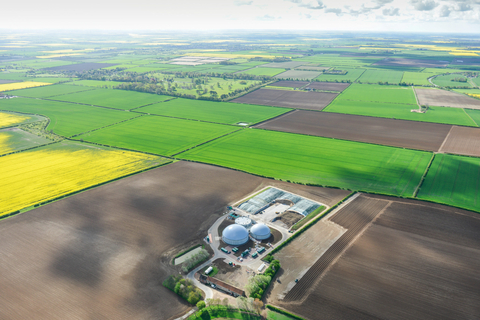
A Future Biogas biomethane plant (Photo: Business Wire)
15-year agreement with Future Biogas will provide 100 GWh of green gas (biomethane) annually, equivalent to meet the heat demands of over 8,000 homes
Initiative will provide additional renewable capacity to the national gas grid, representing the UK’s first fully commercial biomethane system
Significant boost to energy efficiency at UK’s largest medicines manufacturing site in Macclesfield, through upgrade of combined heat and power plant
CAMBRIDGE, United Kingdom, Sept 14 (Bernama-BUSINESS WIRE) — Powering AstraZeneca’s transition to net zero, the Company has agreed a 15-year partnership with Future Biogas to establish the UK’s first unsubsidised industrial-scale supply of biomethane gas, and is investing in major energy efficiencies in its operations, totalling a commitment of £100m.
Energy from the biomethane facility will supply AstraZeneca’s sites in Macclesfield, Cambridge, Luton and Speke with 100 gigawatt hours (GWh) per year, equivalent to the heat demands of over 8,000 homes.i Once operational in early 2025, the partnership will reduce emissions by an estimated 20,000 tonnes CO2 equivalent (CO2e), adding renewable energy capacity to the national gas grid.
The anaerobic digestion facility and long-term partnership with Future Biogas provide a blueprint for the commercial adoption of renewable gas in the UK. A competitive biomethane market can play a key role in the transition to net zero.ii
To support the transition to clean heat in the UK, energy efficiency improvements will be made at AstraZeneca’s Macclesfield campus, the largest medicines development and manufacturing site in the UK. This includes a major refit of the site’s combined heat and power plant (CHP) which will save a further 16,000 tonnes CO2e per year, in addition to upgrading buildings and improving the footprint for the production and packing of medicines to enable further greenhouse gas (GHG) reductions. These efficiency projects will support the long-term sustainable operations of the Macclesfield campus, which delivers more than 90 million packs of medicines to more than 130 countries.
The transition to 100% renewable energy is a key element of AstraZeneca’s flagship Ambition Zero Carbon programme, which is focused on delivering deep decarbonisation by halving the company’s entire value chain footprint (Scopes 1 to 3) by 2030 and becoming science-based net zero by 2045 at the latest. AstraZeneca is on track to reduce GHG emissions from its global operations (Scope 1 and 2) by 98% by 2026.
Juliette White, Vice President, Global Sustainability & Safety, Health & Environment, at AstraZeneca, said: “Today’s commitment of £100 million shows we are serious about decarbonising the discovery, development and manufacture of medicines and securing a sustainable future for our sites across the UK and globally. In leading from the front on the commercial adoption of clean heat, we are innovating to expand the usage of renewable energy, contributing to the circular economy and accelerating our progress towards net zero.”
Philipp Lukas, CEO of Future Biogas, said: “AstraZeneca’s ground-breaking investment in green gas affirms its status as a global leader in the transition to net zero. The opportunity to combine unsubsidised biomethane production with regenerative farming benefits local farms and supports the growing focus on soil health and sustainable food production. Future Biogas expects this model to be adopted by many other innovative organisations with strong net zero ambitions.”
The site will utilise locally-grown crops as feedstock and support farms with sustainable land management practices, enabling the development of a circular agricultural economy. Bioenergy crops will be grown as part of diverse crop rotations and will follow regenerative agriculture practices, promoting nutrient cycling and improving soil health.
Renewable Gas Guarantee of Origin (RGGO) certificates will be transferred to AstraZeneca, to ensure there is no double counting of emissions savings.
The new plant will be fitted with bioenergy carbon capture and storage capability (BECCS) which has the potential to enable the carbon negative operation of the plant. AstraZeneca aims to sequester the carbon through the ‘Northern Lights’ project in Norway, a joint venture involving industry and supported by the Norwegian Government.
This latest commitment to renewable energy in the UK follows other innovative partnerships announced earlier this year. In the US, AstraZeneca is partnering with Vanguard Renewables to enable the delivery of biomethane to all its US sites by the end of 2026. The Company has also entered into an agreement with Statkraft, Europe’s largest renewable energy producer, to increase the supply of renewable electricity in Sweden.
Notes
Biogas and biomethaneiii
Biogas is produced by the fermentation of organic matter in anaerobic digestion tanks. Biomethane is biogas from which the by-product carbon dioxide has been removed, giving the biomethane the same properties as natural gas, and enabling it to be injected into the national gas grid. In Future Biogas’ plants the feedstocks will have a zero or negative carbon footprint meaning the biomethane is 100% renewable energy, allowing a significant reduction in greenhouse gas emissions.
Energy crops grown for Future Biogas absorb carbon dioxide (CO2) from the atmosphere during their growth. Once harvested and stored, the energy crops are fed into anaerobic digestion tanks where bacteria break down the organic matter in the absence of oxygen, releasing biogas. The residue is an organic fertiliser (digestate) which in conjunction with changes to the farming rotation helps accelerate soil carbon capture.
Bioenergy with Carbon Capture and Storage (BECCS)iv
Bioenergy with carbon capture and storage (BECCS) is a carbon removal technique to remove carbon dioxide from the atmosphere. Biomass (organic material) is converted into heat, electricity, or liquid or gas fuels, and the carbon dioxide emissions from this bioenergy conversion are captured and stored in geological formations or embedded in long-lasting products. It does not utilise the injected CO2 for enhanced oil recovery.
About Future Biogas
Future Biogas is at the forefront of the anaerobic digestion (AD) industry. The company is a highly experienced developer and operator of AD plants across the UK, and able to provide full-service capabilities of development, construction, operations, ongoing compliance and asset management, both to owned projects and to those of third parties. Future Biogas plants convert a wide range of feedstocks into clean, renewable energy, through a process of anaerobic digestion, which produces biogas. Biogas can either be used to generate green electricity or upgraded into biomethane and injected into the UK’s national gas network.
Northern Lights is developing an open and flexible infrastructure to transport CO2 from industrial emitters by ship to a receiving terminal in western Norway for intermediate storage, before being transported by pipeline for permanent storage in a geological reservoir 2,600 metres under the seabed. Operations are scheduled to start in 2024. The facilities are under construction and will enable Northern Lights to offer a safe and reliable shipping and storage service to industrial emitters from across Europe. With increased interest from industrial sectors in Europe, additional shipping and storage capacity will be developed as demand grows.
AstraZeneca is a global, science-led biopharmaceutical company that focuses on the discovery, development, and commercialisation of prescription medicines in Oncology, Rare Diseases, and BioPharmaceuticals, including Cardiovascular, Renal & Metabolism, and Respiratory & Immunology. AstraZeneca operates in over 100 countries and its medicines are used by millions of patients worldwide.
With a proud 100-year heritage in advancing UK science, today AstraZeneca is the UK’s leading biopharmaceutical company. AstraZeneca is based in five different locations across the UK, with its global headquarters in Cambridge. In the UK, around 8,700 employees work in research and development, manufacturing, supply, sales, and marketing. We supply around 35 different medicines to the NHS.
For more information, please visit www.astrazeneca.co.uk and follow us on Twitter @AstraZenecaUK.
References
News Release
1:
Ofgem’s Typical Domestic Consumption Values (TDCVs) of 12,000 kWh for a medium property
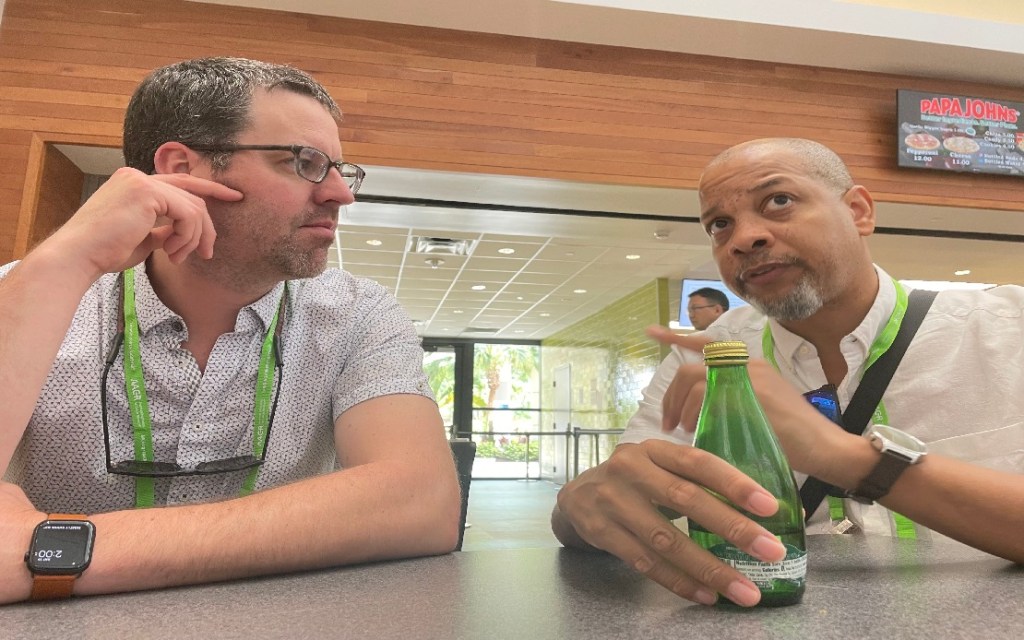
“Sarcomatoid tumors are highly resistant to anti-cancer therapies, and many patients run out of available treatment options. Our findings here might have unveiled a druggable ‘Achilles Heel’ against this terrible disease,” said Dr. Fennell, presenting author on the study. Dr. Fennell and Dr. Cunniff shown at lunch during AACR conference 2023. (Photo courtesy of George Naumov)
Data presented by Dr. Dean Fennell in an oral presentation at the IASLC 2023 World Conference on Lung Cancer in Singapore
RS Oncology’s novel therapy RSO-021, a first-in-class inhibitor of the antioxidant protein PRX3, was shown to reverse many of the features associated with aggressive mesothelioma tumor growth
CAMBRIDGE, Mass., Sept 14 (Bernama-BUSINESS WIRE) — RS Oncology, a clinical stage biotechnology company developing innovative therapies to eradicate mesothelioma and other diseases, was part of a collaboration that recently shared new preclinical data at the IASLC 2023 World Conference on Lung Cancer in Singapore. The data, presented by Dr. Dean Fennell, represented a partnership between RS Oncology and other lead research institutions, including the University of Leicester and the Cunniff Laboratory at the University of Vermont Cancer Center.
Mesotheliomas can transform from a less aggressive epithelioid malignancy to a more aggressive sarcomatoid form. Using biphasic mesotheliomas as a model containing both epithelioid and sarcomatoid features, investigators at the University of Leicester, led by Dr. Fennell, conducted a geospatial analysis of patient tissues to explore the molecular signatures associated with the histological regions.
Using sophisticated spatial analysis tools coupled with machine learning approaches, the group found that the more aggressive sarcomatoid regions had distinct molecular signatures driving pro-tumor pathways, drug resistance, and increased metastatic potential. These findings were validated across an independent cohort of 150 mesothelioma patient tissues. Notably, tumor regions containing sarcomatoid tissue showed features of increased resistance to oxidative stress – a critical tumor cell adaptation for survival.
In collaboration with Dr. Brian Cunniff’s laboratory, the team then evaluated molecular signatures of human biphasic mesothelioma tumor cells following treatment with the irreversible PRX3 inhibitor RSO-021, which is currently being evaluated in a Phase 1/2 clinical trial in patients with malignant pleural effusion caused by advanced/metastatic solid tumors (NCT05278975). RSO-021 treatment reversed the gene signatures associated with epithelial-to-sarcomatoid transition, including downregulation of hypoxia, glycolysis, and epithelial-to-mesenchymal transition (EMT)-associated genes. These results suggest that this transition, thought to be unidirectional in nature, may be PRX3-dependent, druggable, and now reversible.
“Sarcomatoid tumors are highly resistant to anti-cancer therapies, and many patients run out of available treatment options. Our findings might have unveiled a druggable ‘Achilles Heel’ against this terrible disease,” said Dr. Fennell, presenting author on the study. “The ability to treat such tumors with RSO-021 and revert them to epithelioid malignancies could delay or even prevent emergence of the most aggressive features associated with mesothelioma. Further, RSO-021 could potentially sensitize them to other treatments.”
Presentation Details Abstract Number: MA17.11 Session: MA17 – Current Standards and Future Directions in Mesothelioma Title: Spatial Transformation in Mesothelioma Involves a Hypoxia-TGF Beta-EMT Axis that is Reversible via PRX3 Inhibition Date: Tuesday, September 12, 10:45 AM UTC +8
About RS Oncology RS Oncology (RSO) is a clinical stage biotechnology company based in Cambridge, Massachusetts with a mission to eradicate mesothelioma and other diseases worldwide through novel science and an innovative business model.


 wonderland