
GEN Z EMPLOYEES GENERALLY ADHERE TO CODES OF CONDUCT, EVEN MORE INCLINED TO BEND THE RULES

KUALA LUMPUR, Sept 11 (Bernama) — LRN Corporation in its new report revealed striking generational differences in how employees engage with their organisation’s code of conduct and approach ethical decision-making in the workplace.

More specifically, Gen Z employees say they are more likely to consult their employer’s code of conduct compared to their older counterparts (63 per cent versus 49 per cent of Boomers, for example), but are paradoxically 2.5 times more likely to agree that bending the rules is acceptable to “get the job done”.

This generational divide poses unique, and significant, challenges for ethics and compliance (E&C) professionals aiming to build a consistent ethical culture across their multi-generational workforces.

A leader in E&C solutions, LRN Corporation in a statement said its 2024 Code of Conduct Report highlights a range of insights that reflect the evolving challenges in promoting and enforcing ethical behaviour in the workplace.

The research also found that employees in India and China, where code of conduct training was most prevalent among respondents (97 per cent and 91 per cent of employees respectively), are the most likely to engage “very often” with their code of conduct (47 per cent and 40 per cent, respectively).

Meanwhile, in the Netherlands, 64 per cent respondents were least likely to have had training and 35 per cent are the most likely to say they “never” engage with it.

The findings showed that a notable gap continues to exist between how senior leaders, middle managers and front-line employees perceive the importance and use of the code of conduct, with 90 per cent of senior leaders believe that the code is followed, yet this confidence drops to 81 per cent among middle managers and just 69 per cent among front-line employees.

Despite organisations increasingly rolling out web-based or interactive codes of conduct, employees are 1.7 times more likely to prefer viewing the code in a traditional PDF format. This suggests that organisations need to communicate the benefits of digital tools more effectively to encourage adoption.

The report also uncovered employees in hybrid work arrangements show the highest levels of code engagement, indicating that a balanced approach between remote and in-office work is likely to play an important role in ensuring more effective E&C programmes.

— BERNAMA
ARCEOS’ CONFERENCE 2024 WRAPS UP WITH SUCCESS, ACHIEVING SUSTAINABILITY VIA DIGITAL INNOVATION

KUALA LUMPUR, Sept 6 (Bernama) — Themed “Driving Sustainability with Digital Innovation”, the 44th ASEAN Railway CEOs’ (ARCEOs’) Conference wrapped up successfully in Bandung, Indonesia, from Sept 2 to 5.

This year’s ARCEOs’ Conference focused on sustainable and eco-friendly railway development supported by digital transformation in safety and service aspects, with PT Kereta Api Indonesia (Persero) (KAI) appointed as the organising committee for the conference.

Seven other ASEAN railway operators that were also present are Keretapi Tanah Melayu (Malaysia), Vietnam Railways (Vietnam), Ministry of Public Works and Transport (Cambodia), Lao National Railways (Laos), Philippine National Railways (Philippines), Myanma Railways (Myanmar), and State Railway of Thailand (Thailand).

KAI Chief Executive Officer, Didiek Hartantyo stated that the goal of the 44th ARCEOs’ Conference is to strengthen relationships and cooperation among railway operators and industry stakeholders in ASEAN.

He emphasised that working together allows for achieving greater accomplishments and truly realising the ASEAN spirit of mutual benefit, shared success, and resilience in facing various challenges.

Explaining this year’s theme, he believed the theme stems from the global challenges faced, including the urgent need to address climate change, improve operational efficiency, and meet the growing demand for more sustainable transportation options.

“Additionally, advancements in technology and changes in customer demands play a significant role in shaping our focus,” he said in a statement.

The event included several working group sessions to share best practices and discuss various issues ranging from the implementation of digital technology, railway human resource development, digital marketing, service transformation, to the application of high-tech railways such as high-speed trains.

Delegates had the opportunity to experience the first high-speed train ASEAN region, Whoosh train from Padalarang Station in Bandung, West Java, to Halim Station in Jakarta, followed by a tree planting activity, as well as the chance to ride the Panoramic Train, designed to offer panoramic views along the journey with large windows on both sides.

Furthermore, to support environmental sustainability and digital innovation, KAI deployed electric vehicles during the ARCEOs’ Conference, provided eco-friendly souvenirs, and used an app as an information platform throughout the event.

— BERNAMA

Saudi Fund for Development Marks Five Decades Of Global Impact, Financing Over US$20 Bln Projects


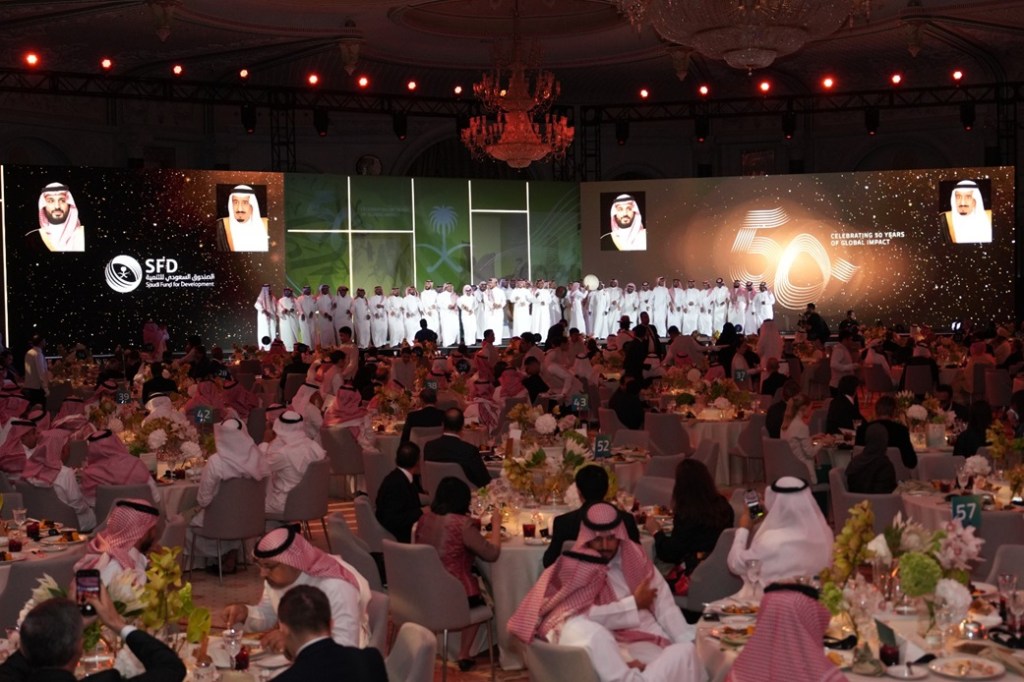
KUALA LUMPUR, Sept 4 (Bernama) — The Saudi Fund for Development (SFD) has celebrated its 50th anniversary in Riyadh, bringing together key development partners to reflect its significant contributions to sustainable development worldwide.

Over the past five decades, SFD has allocated over US$20 billion, financing more than 800 development projects and programmes in vital sectors, including social infrastructure communication and transportation, energy, agriculture, as well as mining and industry. (US$1=RM4.36)

During the event, SFD Chairman, Ahmed Al-Khateeb emphasised the importance of collaboration in driving global development and highlighted that SFD’s success is deeply rooted in its partnerships, with 27 development projects and programmes in 23 developing countries in 2023 co-financed with other funders.

In a statement, he also underscored the need to forge new partnerships and strengthen existing ones to create a world where every individual has the opportunity to reach their full potential.

Meanwhile, its Chief Executive Officer, Sultan bin Abdulrahman Al-Marshad said: “As we celebrate five decades of impactful work, we are committed, now more than ever, to supporting developing countries on their journey to economic self-reliance and resilience.

“This work is not just about financing; it is about tangibly improving lives, creating opportunities, empowering communities, and building a more prosperous future.”

On the sidelines of the 50th Anniversary Gala, SFD and the Asian Development Bank (ADB) signed a new US$25 million agreement to co-finance a renewable energy development project in the Solomon Islands, with aims to develop renewable energy infrastructure, reduce dependency on fossil fuels, and promote sustainable development in the region.

This agreement builds on SFD 50 years of transformative impact through development projects that have spanned Africa, Asia and the Pacific, Latin America and the Caribbean, and Eastern Europe.

As the SFD looks to the future, it reaffirms its mission and pledge to drive international development efforts, on behalf of the Kingdom of Saudi Arabia, and to contribute to global stability, social progress, and economic prosperity for future generations.

— BERNAMA

NORTH CHINA COUNTY LITTER ENSURES BETTER LIVING QUALITY FOR CATS

HOHHOT, China, Sept. 3, 2024 /Xinhua-AsiaNet/–

In recent years, raising a cat has become a choice for many people worldwide. There is a growing preference for these kitties to enjoy a healthy living environment. Firms in a north China county have been making continuous progress in the market niche of cat litter products, to meet customers’ demand.

In a laboratory, Wang Xiaoli and his colleagues have been developing low-dust mineral and lightweight products, utilizing bentonite. In the workshop, by inputting the mineral ore into a green production line, and through a series of automatic manufacturing processes, a bunch of cat litter, as small as millet, can be produced.

These scenes offer a glimpse of the research and production of Chifeng Menghong New Materials Co., Ltd., a cat litter producer based in Ningcheng County, north China’s Inner Mongolia Autonomous Region.

“We introduced new technology and functional materials to increase bentonite litter’s clumping and odor absorption function so that cats can live healthily in a low-dust environment,” said Wang, a technician at the company.

The county has an annual cat litter production output of 1.5 million tonnes with some 1,100 people engaged in the industry in 2023, with an output value of 900 million yuan (about 126 million U.S. dollars) and a tax revenue of 70 million yuan, according to local authorities.

Over the past two decades, Ningcheng has seen rapid and innovative development in the cat litter industry.

Zhang Yongsheng, general manager of Ningcheng County Chongai Pet Products Co., Ltd. said it used to make chemical fertilizer, while a Japanese client reached out to the former factory manager in 2002, looking to utilize locally-sourced bentonite for cat litter production. The experiment proved successful, leading to the establishment of the county’s first cat litter production line.

“It is a good business as bentonite here is of high quality. It forms solid clumps and is easy for scooping and cleaning,” said Zhang. “Since then we have made efforts to research and develop more cat litter products.”

Now cat litter with fruit fragrance fills the air in his lab, and many products have been exported to Japan, the Republic of Korea and other countries and regions.

There are 32 cat litter companies in the county at present. These companies are active in research and have enlarged sales channels, improved manufacturing quality, and complied with international standards, among others.

“These companies are able to produce tailor-made cat litter of different varieties and odors,” said Zhang Haixuan, head of Ningcheng County. “Bentonite products including cat litter manufactured in the county have been exported to 106 countries such as Finland, Russia and Malaysia.”

Dong Wenjun, a professor at the School of Materials Science and Engineering, University of Science and Technology Beijing, said: “Cat litter produced in Ningcheng has been transforming to products with higher added value, with features such as lighter weight, water resolution and diverse scents.”

According to an industry report, the urban pet (dogs and cats) consumption market in China grew to 279.3 billion yuan in 2023, up 3.2 percent year-on-year. The cat market scale and the number of pet cats saw 6 percent and 6.8 percent growth, respectively.

Zhang Yongsheng said more and more young people have become pet owners, and they pay more attention to their pets’ health and comfort.

“We are trying to provide our customers greener and healthier products and ensure their cats have a better life quality,” he said.

Source: The Inner Mongolia branch of Xinhua News Agency’s News & Information Center

–BERNAMA

QIANHAI ACHIEVED TANGIBLE RESULTS IN INSTITUTIONAL INNOVATION AT THE THIRD ANNIVERSARY OF THE QIANHAI PLAN

SHENZHEN, China, Sept. 3, 2024 /Xinhua-AsiaNet/–

In September 2021, the Plan for Comprehensively Deepening Reform and Opening-up of the Qianhai Shenzhen-Hong Kong Modern Service Industry Cooperation Zone (Qianhai Plan) was released to outline the future development of Qianhai. Over the past three years, Qianhai, a hub for high-level opening-up, has been forging ahead with reform and innovation and delivering tangible results, noted by the Authority of Qianhai Shenzhen-Hong Kong Modern Service Industry Cooperation Zone recently.

Through reform and opening-up, Qianhai aims to become a new engine for the construction of the Guangdong-Hong Kong-Macao Greater Bay Area (GBA) and the Shenzhen Pilot Demonstration Zone. Institutional innovation is one of Qianhai’s distinctive features. To date, Qianhai has gradually established the “Qianhai Model” for institutional innovation in key areas such as investment facilitation, trade facilitation, financial openness and innovation, and legal innovation.

A string of innovative measures have been launched, such as the administrative confirmation system for business registration, one integrated license, a suspension registration system for businesses, and the Qianhai e-Services Hong Kong-Macao Station. Latest statistics show that Qianhai has launched 241 new institutional innovation achievements since 2021, bringing the total to 835, with 36 of these being promoted nationwide, making a cumulative total of 94. According to the institutional innovation index of China’s free trade pilot zones released by Sun Yat-sen University, Qianhai has ranked first for three consecutive years.

Innovations in the financial field are viewed as one of the institutional innovations with the most typical Qianhai characteristics. In recent years, a series of financial innovation policies have been implemented here, covering aspects such as finance for people’s livelihood, the interconnectivity of the financial market, the development of modern finance industries, the facilitation of cross-border trade and investment, and enhanced cooperation in financial regulation.

“The deep atmosphere of financial businesses in Qianhai enables us to seek cooperation opportunities and achieve win-win success,” said Pan Rui, President of WeLab Group in China. “With the successful implementation of numerous financial innovation cases, Qianhai has become a preferred destination for Hong Kong residents and enterprises going north. A growing number of Hong Kong residents and enterprises have gathered in Shenzhen for development. More financial talents from Hong Kong have chosen to stay in Qianhai, contributing to its future development,” she added.

“The new Hong Kong Enterprise Loan policy provides a new cross-border financing channel for small and micro enterprises (SMEs) like us to seek development in Qianhai. In the past, the operational and credit records of the headquarters in Hong Kong could not be used to support our Qianhai branch in applying for bank loans. With the implementation of the Hong Kong Enterprise Loan policy and the Shenzhen-Hong Kong cross-border credit investigation cooperation, it has opened up new channels for bank loans,” said You Zunni, the head of Gangshun (Shenzhen) International Trade Co., Ltd.

LAiPIC is also one of the beneficiaries of the institutional innovations in Qianhai. In response to the Homecoming Action Plan launched by Qianhai, the company moved its office back to Qianhai in 2019. However, LAiPIC encountered some difficulties on the way back home. At that time, digital and creative companies like LAiPIC could not be listed under the cultural industry or the technological industry. As a result, the company was not entitled to any form of policy support. To address this problem, relevant authorities in Qianhai conducted on-site research at the company and innovatively formulated a wide range of policies for digital and creative industries.

“As the industry evolves rapidly, LAiPIC may not be where it is today without the valuable support or the timely release of support policies,” said Quan Xinghui, co-founder of LAiPIC. When the company encountered a bottleneck during its rapid development, the rapid and efficient implementation of these policies enabled it to set a benchmark, significantly advancing the industry’s growth.

Qianhai’s institutional innovation achievements in key areas such as law, finance, and government affairs have demonstrated its advantages in institutional innovation. This innovation not only helps Qianhai accelerate its comprehensive deepening of reforms but also provides new momentum for Qianhai to advance the comprehensive deepening of reforms in the Greater Bay Area and even China. “Qianhai has unparalleled policy advantages, and we also hope enterprises in Qianhai will continue to benefit from it and embrace greater opportunities,” said Pan Rui during the interview.

Source: The Authority of Qianhai Shenzhen-Hong Kong Modern Service Industry Cooperation Zone

–BERNAMA