"UPIN & IPIN MUSICAL THEATRE TO JAZZ UP PEKAN RAYA JAKARTA 2020"

JAKARTA, March 12 (Bernama) —  “Betul, Betul, Betul!”, a jargon that is very well known within Indonesian entertainment audiences. It’s none other than the cutie twins, Upin & Ipin. Along with Pekan Raya Jakarta 2020, the twins will greet their Indonesian fans with the newest format, a musical theatre titled “Upin & Ipin PIN PIN POM!”. The show will be held on May 30th-31st and June 1st 2020.

Upin & Ipin became the most favored animation by Indonesian kids. The real story contains great learning for kids, making Indonesian parents keen to serve this show as an entertainment for their kids.

Les’ Copaque Production, the production house of Upin & Ipin has won more than 50 national and international awards. “Upin & Ipin: The Lone Gibbon Kris” even became the first Malaysian movie to be shortlisted in the Animated Feature category for The Academy Awards 2020.

This performance brings the twins’ story where they find a magic scarlet stone in their village. This scarlet stone belongs to the wicked Nenek Kebayan. The journey of Upin & Ipin starts to save their village by defeating Nenek Kebayan with their magic power.

This is the first time Upin & Ipin hold their musical in Indonesia. Indonesia being the world premiere of this brand new musical, will visit various parts of the country such as Bandung and Surabaya. Upin, Ipin and friends will be presented LIVE to dance and sing during this musical, promises a great fun and entertainment for everyone.

Biz Trends Media Pte Ltd, Singapore-based entertainment company, licensed to stage this musical, partnering with several parties such as BookMyShow as the exclusive ticketing partner and Jakarta Fair Kemayoran 2020 to bring this musical to Indonesia.

Ticket price starts from Rp 350,000 and can be purchased starting from March 13th 2020 only at id.bookmyshow.com or BookMyShow Indonesia mobile app.

SOURCE: Les’ Copaque Production Sdn. Bhd.
 
FOR MORE INFORMATION, PLEASE CONTACT:
Indonesia 
Name: Martina Solya
Marketing Manager
Tel: 0878-9768-3698
Email: martina.solya@bookmyshow.com

Malaysia
Name: Mohd Zarin Abdul Karim
Tel: 012- 239 9327
Email: zarin@lescopaque.com

http://mrem.bernama.com/viewsm.php?idm=36939

ARMENIA’S ELECTRONIC HEALTH RECORD JOURNEY IS STRENGTHENED THROUGH MEMBERSHIP IN SNOMED INTERNATIONAL AND COMMITMENT TO SNOMED CT’S CLINICAL TERMINOLOGY

London, United Kingdom, March 11 (Bernama-GLOBE NEWSWIRE) — As 2019 drew to a close, the Republic of Armenia’s Ministry of Health signed on as a Member of the SNOMED International community. 

The Ministry of Health of the Republic of Armenia elaborates and implements the policies of the Republic in the healthcare sector.  The Republic holds authority for the implementation of Armenia’s e-Health system, a single information platform supporting stakeholders of the country’s medical institutions, citizens, and the state healthcare providers.  The goal of the system is the usage of modern information and communication technologies, providing high-quality, safe, accessible and cost-effective medical services to the public; Tenets of which SNOMED CT supports in full. 

With a roadmap introduced by the Minister of Health at the end of 2017, SNOMED CT is well positioned to support the implementation of Armenia’s unified electronic information system approach through the provision of clinical terminology.  Through the contribution of a structured clinical terminology, Armenia can leverage SNOMED CT to support delivery of projected system outcomes including the accuracy and relevancy of clinical information, a reduction in clinical miscommunication, and the ability to effectively use data to drive system-wide care decisions. 

SNOMED CT is the world’s most comprehensive health terminology.  Founded in 2007 by nine charter nations, SNOMED International is a not-for-profit, member-owned and driven international organization.  The addition of Armenia as a Member has grown the organization’s membership reaching further into Eurasia, now representing nine countries in the Asia Pacific region.

“We are exceedingly pleased to be able to play a role in the Republic of Armenia’s national electronic information system implementation”, offers SNOMED International CEO, Don Sweete. “Through Protocol Decision no 43 and a definitive roadmap, Armenia sets its sights to improve the effectiveness, transparency and accuracy of health care interactions for their citizens, something that SNOMED International is proud to take part in progressing.”

Since 2017, the Government of Armenia has dynamically installed e-health system in all hospitals throughout the country.  In this ongoing process to achieve great results, the Ministry of Health of Armenia adopted a policy of integration of the data to be accurate, reliable and complete.  For this reason, Armenia joined SNOMED International as a member country in 2019 to promote health information coding, health research and health records. Future integration and sharing of data will enhance and support clinical decisions and planning health policy.

The Government of Armenia strongly has a belief that integration of SNOMED CT will not only support more accurate clinical decisions, but will also enhance productivity and patient safety.  This is one step forward to unifying different local health systems. 

Armenia’s membership heightens the capability for clinical interoperability within the Asia Pacific region as well as leverages knowledge sharing among regional and international counterparts.  SNOMED CT is part of the national infrastructure to ensure the exchange of accurate, relevant and timely information across all the information systems to support direct care, self-care and secondary uses of health information.

To learn more about SNOMED International, SNOMED CT and new Member Armenia, visit www.snomed.org

About SNOMED International:

SNOMED International is a not-for-profit organization that owns and develops SNOMED CT, the world’s most comprehensive healthcare terminology product. We play an essential role in improving the health of humankind by determining standards for a codified language that represents groups of clinical terms. This enables healthcare information to be exchanged globally for the benefit of patients and other stakeholders. We are committed to the rigorous evolution of our products and services, to deliver continuous innovation for the global healthcare community. SNOMED International is the trading name of the International Health Terminology Standards Development Organisation.

Attachment


Kelly Kuru
SNOMED International
1 416 566 8725
kku@snomed.org

Tamara Minasyan
Ministry of Health, Republic of Armenia
minatama@gmail.com 

SOURCE : SNOMED International

OCA: ASIAN BEACH GAMES SANYA 2020 TO GO AHEAD AS SCHEDULED

HAIKOU, China, March 10 /Xinhua-AsiaNet/ —


The 6th Asian Beach Games, due to take place from November 28 to December 6 in Sanya, China, will be held as scheduled, the Olympic Council of Asia (OCA) said on Sunday.

The OCA confirmed in an email to all of its 45 NOC members that the Olympic Council of Asia and Chinese sports authorities are preparing “full steam ahead” for the Asian Beach Games to be held in Sanya at the end of this year.

“The OCA has been in regular contact with the Chinese Olympic Committee and the organizing committee of the Sanya Asian Beach Games since the outbreak of the coronavirus (COVID-19) in Wuhan, central China,” read the OCA email.

According to local health authorities on Sunday, the last patient infected with COVID-19 in Sanya has been cured and discharged from hospital.

“This is encouraging news for the OCA, for our 45 National Olympic Committees and, of course, for the people of Sanya city and Hainan province,” said the OCA Director General, Husain Al-Musallam.

“We have been coordinating very closely for several weeks with the Chinese Olympic Committee and the local organizing committee and we are delighted to hear that Sanya is now free of the coronavirus, with no cases.”

“We would like to praise and congratulate the central government, the provincial government and the municipal government for the way they have contained and controlled COVID-19 since the outbreak.”

“As far as the OCA is concerned it is now full steam ahead. We will continue to support our partners in China and work shoulder to shoulder in the coming weeks and months,” he added.

Sanya has reported no new confirmed cases for 25 consecutive days. As of March 8, Sanya had 54 confirmed COVID-19 cases, with 1 death, and 53 discharged cases.

​Source: OCA

http://mrem.bernama.com/viewsm.php?idm=36922

SABIN VACCINE INSTITUTE STRENGTHENS EBOLA SUDAN AND MARBURG VACCINES PROGRAM WITH ADDITIONAL NIAID PARTNERSHIP

Washington, DC, March 6 (Bernama-GLOBE NEWSWIRE) — The Sabin Vaccine Institute (Sabin) today announced that it has partnered with the Vaccine Research Center (VRC), National Institute of Allergy and Infectious Diseases (NIAID), to manufacture prototype ChAd3 vectored Ebola Sudan and Marburg vaccines to be used for further clinical evaluation and outbreak preparedness and to potentially protect military, first responders, health care and laboratory workers, and other at-risk populations. Sabin will receive $5.3 million to manufacture Ebola Sudan and Marburg vaccines for the VRC.  

“We are committed to preventing unnecessary loss of life by bringing vaccines to those that need them most,” said Amy Finan, Sabin’s chief executive officer. “We are pleased to be working with our colleagues at the VRC, who have conducted significant non-clinical studies and early-stage clinical trials with both vaccines.”

Under an existing Research Collaboration Agreement with NIAID VRC, Sabin plans to continue the development of two individual vaccines against Ebola Sudan and Marburg viruses, building on VRC’s work to date. In September, Sabin announced an initial award of $20.5 million with options for an additional $107 million from the Biomedical Advanced Research and Development Authority (BARDA) to further support the two vaccine development programs. The BARDA contract followed an August agreement between Sabin and GSK, under which Sabin exclusively licensed the technology for candidate vaccines against Ebola Zaire, Ebola Sudan, and Marburg viruses and acquired certain patent rights specific to these vaccines.

Life-saving vaccines against these viruses are overdue. From 2014-2016, an outbreak of the closely-related Ebola Zaire virus spread to 10 countries and took the lives of more than 11,000 people. The ongoing Ebola Zaire outbreak in the Democratic Republic of Congo has already claimed the lives of more than 2,200 people and was declared a Public Health Emergency of International Concern by the World Health Organization.

Clinical vaccine material is being manufactured for and funded by VRC under contract, for Good Manufacturing Practice (GMP)-grade Ebola Sudan and Marburg vaccines, through the Medical CBRN Defense Consortium, a consortium established for advanced development efforts to support the Department of Defense’s medical pharmaceutical and diagnostic objectives, at a level of $5.3 million with options up to $8.5 million.

Learn more about Sabin’s Ebola Sudan and Marburg program.

###

About the Sabin Vaccine Institute

The Sabin Vaccine Institute, a non-profit organization founded in 1993, is a leading advocate for expanding vaccine access and uptake globally, advancing vaccine research and development, and amplifying vaccine knowledge and innovation. Sabin’s R&D strategy focuses on continuing the development of candidate vaccines that have demonstrated early scientific value and target disease primarily impacting the world’s most vulnerable populations, but have little commercial value. Sabin’s ChAd3 Ebola program is funded by the Biomedical Advanced Research and Development Authority within the U.S. Department of Health and Human Services, as well as seed funding from Blavatnik Family Foundation and the David E.I. Pyott Foundation. In past years, Sabin received more than $110 million for vaccine R&D programs from public and philanthropic funding sources, including the Bill & Melinda Gates Foundation, European Commission, Dutch Ministry of Foreign Affairs, Global Health Innovative Technology Fund and the Michelson Medical Research Foundation.

Unlocking the potential of vaccines through partnership, Sabin has built a robust ecosystem of funders, innovators, implementers, practitioners, policy makers and public stakeholders to advance its vision of a future free from preventable diseases. Sabin is committed to finding solutions that last and extending the full benefits of vaccines to all people, regardless of who they are or where they live. At Sabin, we believe in the power of vaccines to change the world. For more information, visit www.sabin.org and follow us on Twitter, @SabinVaccine.

About the GSK-Sabin ChAd3 Filovirus Transaction

In August 2019, GSK and Sabin entered agreements for Sabin to advance the development of the prophylactic candidate vaccines against Ebola Zaire, Ebola Sudan and Marburg viruses. Under the agreements, Sabin exclusively licensed the technology for all three candidate vaccines and acquired certain patent rights specific to these vaccines. The three candidate vaccines were initially developed collaboratively by the U.S. National Institutes of Health and Okairos, which was acquired by GSK in 2013. The candidate vaccines, based on GSK’s proprietary ChAd3 platform, were further developed by GSK, including the Phase 2 development for the Ebola Zaire vaccine. The ChAd3-based vaccines have demonstrated strong safety profiles and encouraging immunogenicity results after being administered to approximately 5,000 adults and 600 children in 13 different clinical trials to date.

About Ebola Sudan and Marburg

Ebola Sudan and Marburg are members of the Filoviridae virus family and are commonly referred to as filoviruses. Both can cause severe hemorrhagic fever in humans and nonhuman primates. No therapeutic treatment of the hemorrhagic fevers caused by filoviruses has been licensed to date.

Marburg and Ebola viruses are transmitted to humans by infected animals, particularly fruit bats. Once a human is infected, the virus can spread to others through close personal contact or contact with bodily fluids. Isolation of infected people is currently the centerpiece of filovirus control.

Marburg was the first filovirus to be recognized in 1967 when a number of laboratory workers, including some in Marburg, Germany, developed hemorrhagic fever. Ebola was identified in 1976 when two simultaneous outbreaks occurred in northern Zaire (now the DRC) in a village near the Ebola River and southern Sudan. The outbreaks involved what eventually proved to be two different species of Ebola virus; both were named after the nations in which they were discovered.

Liz Powell
The Sabin Vaccine Institute
202-621-1686
press@sabin.org 

SOURCE : The Sabin Vaccine Institute

ONLY 82% OF ASEAN POTENTIAL HUMAN DEVELOPMENT INDEX (HDI) IS REALIZED DUE TO EXISTING SOCIO-POLITICAL RIGIDITIES, AJC SAYS IN A NEW STUDY ON TRADE IN HEALTH RELATED AND SOCIAL SERVICES IN ASEAN

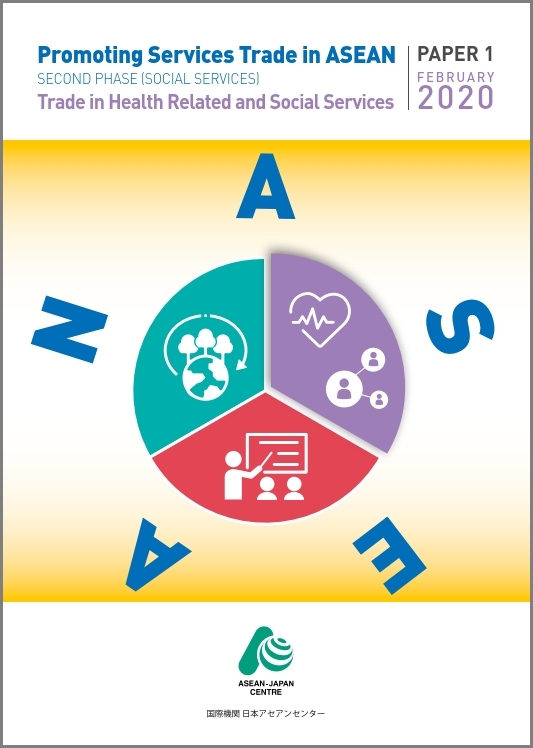
“Trade in Health Related and Social Services” issued in February, 2020 (Graphic: Business Wire)

TOKYO, March 3 (Bernama-BUSINESS WIRE) — The ASEAN-Japan Centre (AJC), an intergovernmental organization of ASEAN and Japan based in Tokyo, just issued a paper on Trade in Health Related and Social Services. The paper provides an in-depth analysis on trade in health related and social services in ASEAN and some practical advice for relevant government policymakers on how to strike a balance between promoting equitable and affordable access to a set of basic health and social services, and modernizing the health and social services sector with recent technologies through trade liberalization.

This press release features multimedia. View the full release here: https://www.businesswire.com/news/home/20200302006114/en/

AJC found that only 82% of ASEAN potential Human Development Index (HDI) is realized due to existing socio-political and institutional rigidities. In other words, ASEAN Member States (AMS) could improve their HDI by 18% without increasing their resources, but through effectively using them with the appropriate reform measures. Therefore, it is imperative first to raise the mean HDI from its current level. The study also shows that there is the need for further liberalization in trade in health related and social services.

http://mrem.bernama.com/viewsm.php?idm=36873