KUALA LUMPUR, May 31 (Bernama) — Throughout the millennia of history and the prosperous times of Chang’an, the profound cultural accumulation rooted in Xi’an, China, is a valuable historical treasure of this ancient city.
In recent years, Xi’an has been making efforts to transform its cultural resources into fashionable ‘cultural tourism IP’ based on ‘Tang cultural elements’ and modern technology, and bringing historical and cultural heritage to life in a modern context.
Recently, Xi’an Municipal Party Committee and Municipal Government held a meeting and proposed to make good use of historical and cultural heritage, promote the deep integration of cultural industry and tourism industry, in order to make Xi’an a display window of Chinese culture and civilisation.
‘Noblewomen’ and ‘ladies’, ‘literati’ and ‘warriors’, reciting poems in the streets and imitating songs and dances of the Tang Dynasty, and the moving love story performed by ‘gifted scholars and beautiful ladies of the Tang Dynasty’, etc., this is a Tang style city life neighborhood, which was derived from a historical TV drama, The Longest Day in Chang’an.
According to a statement, the beautiful scenery of Tang dynasty clothing can be seen everywhere, and with the help of ‘sound, light and electricity’ technology, it is like entering a ‘time and space feast’ interwoven with literature, history, folklore and food.
Through the integration of film and television IP and commercial IP, each visitor can realise the transformation from ‘watching the play’ to ‘getting into the play’ when entering the ‘The Longest Day in Chang’an’, which makes people ‘back to Tang Dynasty in one second’.
The immersive experience satisfies people’s new demand for experiencing Tang culture and becomes a new contact point to promote the integration of culture, tourism and business.
More than 1,400 years ago, Xi’an was known worldwide as Chang’an. It was the world’s first city of one million people, including about 100,000 envoys, merchants, foreign students and monks from other countries, so Xi’an’s image of openness and inclusiveness was also known to the world.
Despite the challenges of the epidemic, the ancient capital with thousands of years of history still exudes new vitality, driven by new leisure models such as market blocks, heritage exhibitions and immersive experiences.
All kinds of new consumption methods became the driving point for the upgrading of cultural tourism consumption. Xi’an is speeding up the integration of cultural resources and making history and culture the driving force for the development and innovation of this ancient city.
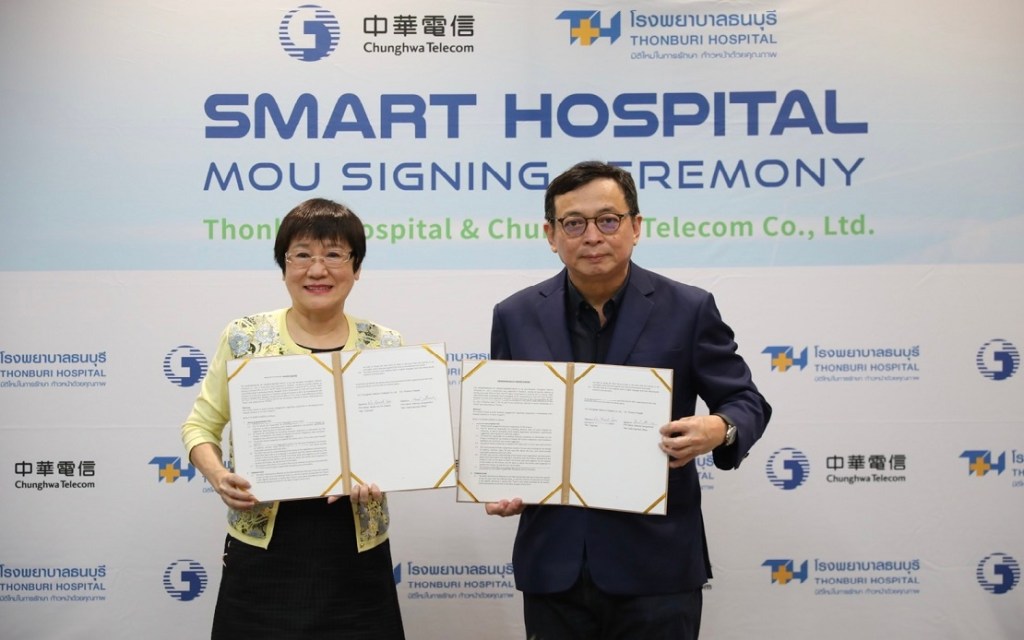
Hsueh-Lan Wu, President of Chunghwa Telecom International Business Group and Chairman of Chunghwa Telecom (Thailand) Co., Ltd, and Dr. Siripong Luengvarinkul, Chief Executive Officer of Thonburi Hospital. (Photo: Business Wire)
TAIPEI, Taiwan, June 1 (Bernama-BUSINESS WIRE) — On May 31st, 2022 Chunghwa Telecom Co., Ltd. (CHT) and Thonburi Hospital (TH) signed the “Smart Hospital” MOU. In light of the government of Thailand’s “Medical Hub of Asia” strategy in 2004, and its goal to become the leading Southeast Asian countries in providing international healthcare services, the two parties, CHT and TH, continue their smart ward POC collaboration, and achieve a new milestone of smart hospital application in Thailand.
Among Thonburi Healthcare Group’s network of hospitals in Thailand, Thonburi Hospital continuously upgrades and expands to fulfill their commitment with excellence in every aspect, with their quality driven team of more than 350 high-skilled and experienced physicians, the use of the most advanced medical technology, and a deep-rooted culture of care and compassion.
Allied with outstanding partners in the healthcare industry, including imedtac from Taiwan and MD Healthcare from Thailand, Chunghwa Telecom introduces to Thonburi Hospital the smart ward solutions, including smart nursing station, all-in-one vital sign kiosk, automated dispensing cabinet, Epaper Bedside Information Display and ToF Fall Management System. These solutions help reduce the workload of medical staff, improve the quality of medical services, and raise operational performance. Chunghwa Telecom continues to increase competitiveness using ICT technologies and applications.
Dr. Siripong, Chief Executive Officer of Thonburi Hospital emphasized “We believes that better information collection, organization, and distribution are vital to precision medicine, which ultimately enables doctors and paramedics to deliver better healthcare inside and beyond hospital grounds. We value the simplicity, friendliness, and comprehensive connectivity in our information technologies over complicated and novel systems that distract from the healthcare we bring to our patients. “
“With the post Covid-19 challenges we are facing now, and countries in South Eastern Asia looking to achieve digital transformation in healthcare industry, hospitals are in urgent need to deliver services in innovation for the ever-changing environment.” said Hsueh-Lan Wu, President of Chunghwa Telecom International Business Group and Chairman of Chunghwa Telecom (Thailand) Co., Ltd. The smart hospital solutions provided by Chunghwa Telecom include features of cloudization, digitalization, informatization and intelligentization, which truly satisfy the market needs and the innovative services development in the long run. Through collaboration with hospitals, Chunghwa Telecom is expecting to turn the new page of its smart hospital application services on the market.
【About Thonburi Hospital】
Thonburi Hospital is a tertiary care hospital that provides a wide-range of high-quality medical and surgical services. Established on May 10, 1977, it has since then been providing excellent healthcare locally and internationally. Conveniently located at the West side of Bangkok and with a 18 nationwide network of hospitals, it is now one of the most trusted private hospitals in Thailand.
【AboutChunghwa Telecom】
Chunghwa Telecom (TAIEX 2412, NYSE: CHT) (“Chunghwa” or “the Company”) is Taiwan’s largest integrated telecommunications services company that provides fixed-line, mobile, broadband, and internet services. The Company also provides information and communication technology services to corporate customers and is expanding its cloud computing services. In recent years, Chunghwa has been actively involved in corporate social responsibility and has won domestic and international awards and recognition. For more information, please visit our website at www.cht.com.tw.
KUALA LUMPUR, May 27 (Bernama) — Adagene Inc (Adagene), a company transforming the discovery and development of novel antibody-based therapies, announced the publication of data showing the potential best-in-class safety profile of its anti-CTLA-4 monoclonal antibody (mAb), ADG126.
Interim results from the Phase 1 dose escalation portion of an ongoing Phase 1b/2 trial of ADG126 are published in an abstract on the American Society of Clinical Oncology (ASCO) meeting website in conjunction with the 2022 Annual Meeting taking place in Chicago from June 3-7, 2022.
“Following these monotherapy dose escalation results, we look forward to releasing further data in coming months to confirm if the strong safety profile of ADG126 is preserved in combination with anti-PD-1 therapy, consistent with our preclinical observations,” said Peter Luo, Ph.D., Co-founder, Chief Executive Officer and Chairman of Adagene in a statement.
Key data in the abstract, titled ‘Phase 1 study of ADG126, a novel masked anti-CTLA-4 SAFEbody, that combines tumor-localized activation with strong Treg depletion and soft ligand blocking in patients with advanced solid tumors’, include, in this dose escalation of 16 patients with advanced metastatic solid tumors, approximately one third received three or more lines of prior therapies, and approximately one third had progressed from immuno-oncology (IO) therapy.
In addition, no dose-limiting toxicities or treatment-related SAEs were observed and only Grade 1 treatment related adverse events (TRAEs) were reported with repeat dosing across all dose levels; fatigue (19 per cent) and pruritis (13 per cent) were most common.
Plasma pharmacokinetics (PK) were approximately linear and the activated ADG126 accumulated steadily during repeat dosing across different dose levels.
As the first clinical data validating the SAFEbody precision masking technology, the approximately 1.7-fold increase in half-life of total ADG126 is reflective of prolonged exposures of activated ADG126 in the tumor microenvironment (TME).
ADG126 SAFEbody applies precision-masking technology to the parental anti-CTLA-4 antibody, ADG116, for conditional activation in the TME to expand the therapeutic index and further address safety concerns with existing CTLA-4 therapies.
Binding to the same unique epitope as ADG116, the masked ADG126 is designed to provide enhanced safety and efficacy profiles due to the combination of the potent Treg depletion in the TME and soft ligand blocking.
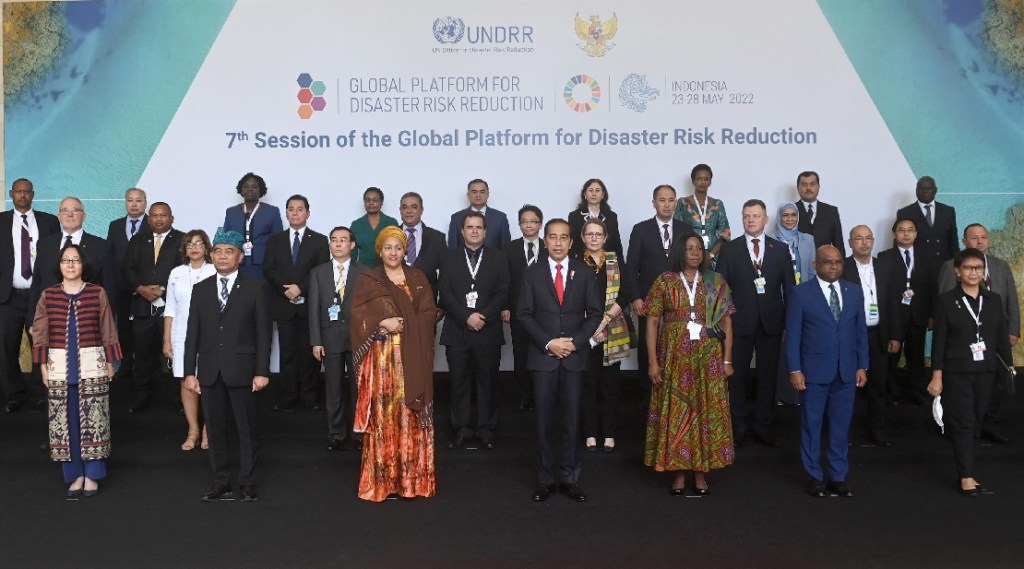
President Joko Widodo (center), UN deputy secretary-general Amina Mohammed (fourth left), vice president of Zambia W.K. Mutale Nalumango (fourth right) take a picture with the head of National Agency for Disaster Management Suharyanto (left), special representative of the secretary-general for Disaster Risk Reduction Mami Mizutori (second left), coordinating minister for Human Development and Cultural Affairs Muhadjir Effendy (third left), president of the United Nations General Assembly Abdulla Shahida (third right), foreign affairs minister Retno Marsudi (second right), Bali governor Wayan Koster (right), and several delegations ahead of the opening ceremony of the Global Platform for Disaster Risk Reduction (GPDRR) 2022 in Nusa Dua, Bali, Wednesday (May 25, 2022). The GPDRR is held in Bali, raising the theme of “From Risk to Resilience: Towards Sustainable Development for All in a COVID-19 Transformed World”. ANTARA FOTO/Akbar Nugroho Gumay/foc.
JAKARTA, Indonesia, May 26, 2022/Antara News Agency-AsiaNet/–
At the 2022 Global Platform for Disaster Risk Reduction (GPDRR) event, the Government of Indonesia offered the world the concept of sustainable resilience as a solution to address the challenges of systemic disaster risk.
Indonesian President Joko Widodo highlighted this concept at the opening ceremony of the 2022 GPDRR in Nusa Dua, here, on Wednesday.
The sustainable resilience concept is considered to be a solution to tackle all forms of disasters, including facing a pandemic and concurrently supporting the implementation of the Sustainable Development Goals (SDGs), Jokowi remarked.
He highlighted the need to apply several measures to build sustainable resilience.
“First, we should strengthen an anticipatory, responsive, and adaptive disaster preparedness culture as well as institutions in dealing with disasters,” President Jokowi stated.
According to the president, disaster mitigation education and government institutions that are synergistic and responsive to disasters must become a shared priority.
Jokowi explained that the second measure deemed necessary is for every country to invest in science, innovation, and technology, including in ensuring access to finance and technology transfer.
“Access to funding is an important issue that we must take seriously. Indonesia has developed a strategy for funding and disaster insurance by establishing a pooling fund and using development funds at local levels to support disaster mitigation and preparedness,” he stated.
The third measure is by building infrastructure that is resilient to disasters and climate change.
“(This is) in addition to mitigating (the impacts on) physical infrastructure, such as dams, breakwaters, reservoirs, and embankments; green infrastructure, such as mangrove forests, shrimp seedlings on the coast; … as well as the development of open spaces to be part of the realization of infrastructure development,” Jokowi pointed out.
“The protection of vulnerable groups living in high disaster risk areas must also get special attention,” he stressed.
Lastly, the Indonesian president invited all countries to commit to implementing global agreements at the national and local levels.
“The Sendai Framework, the Paris Agreement, and the SDGs are important international agreements in the efforts to reduce disaster risk and climate change. I invite all countries to be committed and serious about implementing it,” Jokowi stated.
He affirmed that disaster risk reduction is an effective investment to prevent future losses.
“To that end, we affirm Indonesia’s commitment to implementing the Sendai Framework as well as other international commitments,” he stressed.
The head of state also expressed Indonesia’s readiness to share experiences and knowledge in disaster mitigation.
“As a disaster-prone country, Indonesia has accumulated knowledge and experience that can be an important lesson for the world, but Indonesia is also eager to learn from international experience,” Jokowo emphasized.
“Let’s work together to mitigate (impacts and manage risks with regard to) the rise in disasters for a better life today and tomorrow,” he concluded.
Appreciation On the occasion, several United Nations (UN) officials — President of the 76th Session of the UN General Assembly Abdulla Shahid, UN Deputy Secretary General Amina Mohammed, and Special Representative of the UN Secretary General for Disaster Risk Reduction Mami Mizutori — lauded Indonesia for being successful in controlling COVID-19, so that the 2022 GPDRR forum could be held in-person in Nusa Dua, Bali.
“I would like to convey the appreciation of the UN to the president of Indonesia and the people for hosting the 2022 GPDRR,” Mohammed stated at the opening ceremony.
“I would like to congratulate and appreciate Indonesia for the measures that have been taken to address COVID (as a) response that had allowed us to meet in this conference here in-person,” she stated.
According to the UN deputy secretary general, Indonesia’s efforts to vaccinate its population of 217 million people is a major achievement.
“We applaud the leader of Indonesia for its vaccine program for keeping everyone safe and reacting and responding to the COVID pandemic,” she stated.
She also affirmed that Indonesia is a critical partner that has taught the world a lot about disaster risk reduction.
“Your willingness to host this important gathering is a testament to the leading role that you (Indonesia) play in sustaining development and climate action,” she remarked.
Meanwhile, the United Nations Office for Disaster Risk Reduction (UNDRR) Director Ricardo Mena lauded Indonesia as a country that is leading in the global efforts for disaster risk reduction.
“This is a very important (effort), and I think this is where we think that Indonesia is leading in terms of the global efforts to reduce disaster risks,” Ricardo Mena stated in a special interview with ANTARA here on Monday (May 23).
Mena remarked that Indonesia has put forth a strong message about the importance of disaster risk reduction efforts by hosting the 2022 GPDRR.
“We believe that Indonesia is giving a very strong message through the engagement and hosting of the GPDRR here in Bali. We are very thankful to the Indonesian Government for that,” he remarked.
The UNDRR director also highlighted Indonesia’s leadership in adopting the long-term disaster risk reduction plan.
“I think what I would like to highlight is that Indonesia is one of the few countries in the world that has adopted a very long term plan to reduce disaster risks,” he remarked.
“This is very important because if you want to really address the root causes, and you cannot do it in two, three, or five years. It is impossible, and we look and welcome very much the fact that Indonesia has a plan to reduce disaster risks that goes even beyond 2040,” he added.
To that end, Mena also encouraged other countries to follow Indonesia’s steps in adopting long-term plans for disaster risk reduction.
Indonesia hosts a series of meetings of the 7th Session of the Global Platform for Disaster Risk Reduction (GP2022) in Bali on May 23-28, 2022.
Source: Ministry of Communication and Informatics of Republic of Indonesia
Caption: President Joko Widodo (center), UN deputy secretary-general Amina Mohammed (fourth left), vice president of Zambia W.K. Mutale Nalumango (fourth right) take a picture with the head of National Agency for Disaster Management Suharyanto (left), special representative of the secretary-general for Disaster Risk Reduction Mami Mizutori (second left), coordinating minister for Human Development and Cultural Affairs Muhadjir Effendy (third left), president of the United Nations General Assembly Abdulla Shahida (third right), foreign affairs minister Retno Marsudi (second right), Bali governor Wayan Koster (right), and several delegations ahead of the opening ceremony of the Global Platform for Disaster Risk Reduction (GPDRR) 2022 in Nusa Dua, Bali, Wednesday (May 25, 2022). The GPDRR is held in Bali, raising the theme of “From Risk to Resilience: Towards Sustainable Development for All in a COVID-19 Transformed World”. ANTARA FOTO/Akbar Nugroho Gumay/foc.
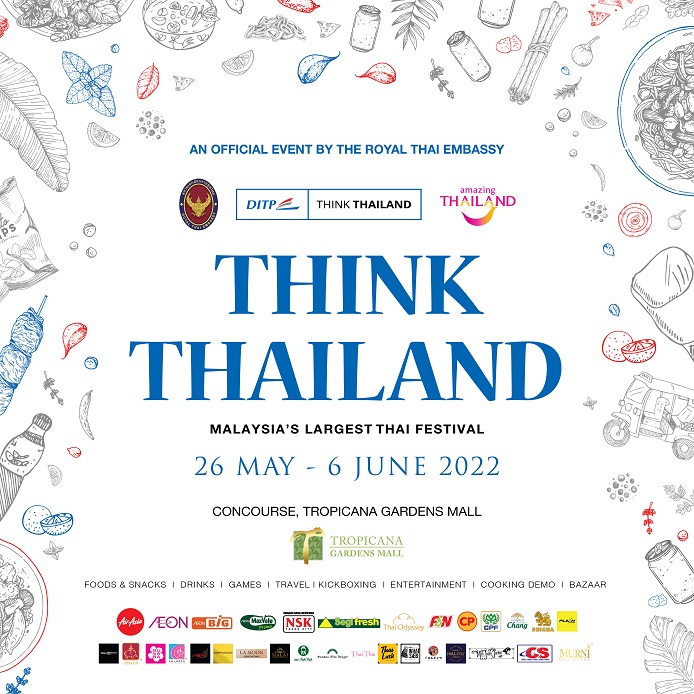
KUALA LUMPUR May 23 (Bernama) — Indulge in a wealth of Thai culture, food and many more features at “THINK THAILAND” Festival. Organized by The Royal Thai Embassy, in collaboration with the Department of International Trade Promotion, Ministry of Commerce (DITP), and Tourism Authority of Thailand, the festival will be the largest, most exceptional and eventful Thai event ever organized in Malaysia, with the aim to support both Thai exporters and Malaysian importers in boosting the sales of Thai products in Malaysia, while marking our readiness to welcome the Malaysians back to Thailand once again.
This 12-day Thai festival will take place at Tropicana Gardens Mall, with in-store promotions at Aeon, Segi Fresh and NSK outlets throughout Kuala Lumpur and Selangor from 26 May till 6 June, 2022. Many authentic, newly launched, and special priced products will be on offer during this time.
According to the Minister Counsellor and Director of DITP, Mr Worawan Wanwil: “More than 30 Thai exporters have taken the time to travel to Malaysia for this festival. They are specially flown in to showcase their Thai products. Apart from that, this event will include Thai SELECT awarded restaurants as well as exceptional massage from Thai Odyssey, and many others.
Online and on-site business matching has been arranged with more than 50 Thai qualified exporters. We now have confirmed 63 matches with an expected trade value of RM30 million within this year.
We have collaborated with Shopee to list more than 300 Thai sellers in their E-commerce platform so Malaysian shoppers can buy directly from Thailand and have their products delivered to their doorsteps.
For the past few years, we have observed an increasing demand in quality Halal Thai products from Malaysian consumers, therefore we have allocated a special section for Thailand International Halal Showcase (TIHAS) at this festival. TIHAS is a mini side-event of THAIFEX 2022 which is happening now in Bangkok from May 24-28. The highlight for TIHAS is that the Malaysian Food importers who visit this showcase will be eligible to be DITP’s special guests to visit THAIFEX 2023.
With these set-up and activities, we are confident to generate more than RM6 million sales during this festival.”
“THINK THAILAND welcomes all of you to experience these special Thai products, goods, and food with many more line-ups when you visit us! Other than the shows mentioned, we have prepared more excitement for everyone every day during the period of the festival. If you still can’t visit Thailand at the moment, it is okay, because we are bringing Thailand to you! Prepare yourselves to have an enjoyable time with us at THINK THAILAND and we look forward to welcoming you with our Thai smiles and warm hearts.”
During this festival, for every RM50 purchase of Thai products at the designated outlets, consumers are eligible to participate in a lucky draw to win very attractive prizes, which include 2 return flight tickets on Air Asia, 2 Hotel accommodation in Thailand, 1 Oppo Mobile phone, 20 Thai SELECT vouchers, 20 Thai Odyssey vouchers, 5 travel luggage, 10 Hampers worth RM300 each and 30 Hampers worth RM100 each.
About DITP
The Department of International Trade Promotion (DITP) is the Thai Ministry of Commerce’s foremost agency dedicated to the rapid and sustained expansion of international trade for both domestic achievement and global benefit. Over the last 40 years the DITP has facilitated countless multi-million-dollar trade deals, both governmental and private, to the satisfaction of international investors and entrepreneurs worldwide. And as a whole new dimension unfolds with the launch of the ASEAN Economic Community (AEC) in 2015, the DITP is ready to guide you in taking advantage of the almost unlimited possibilities presented by a free-trade system in a single market bloc of 600 million consumers. The DITP, with its vast and varied database of manufacturers, exporters and service providers in Thailand and overseas, is ready to respond directly and promptly to all requests from international entrepreneurs for any kind of product or service. Through the DITP, you will be matched with an ideal partner in order to form a business partnership that is both mutually beneficial and progressive.