
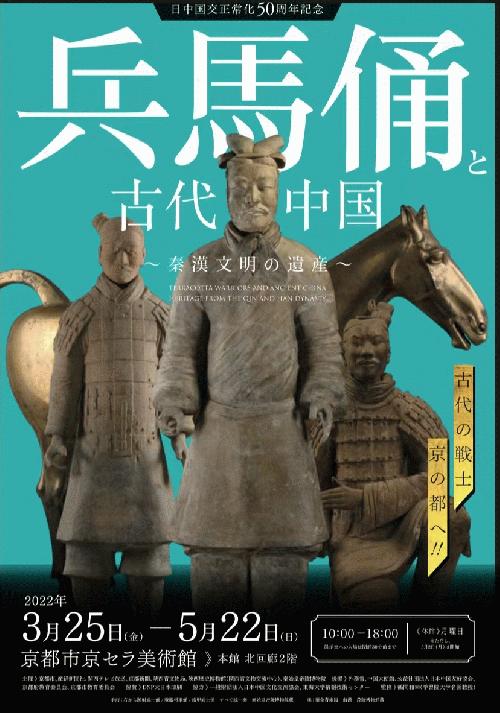
KUALA LUMPUR, March 22 — Marking the 50th anniversary of the normalisation of China-Japan diplomatic ties, a well-planned exhibition of cultural relics titled ‘Terracotta Warriors and Ancient China – Legacy of Qin and Han Civilizations’ will open in Kyoto, Japan on March 25.
This is according to the Shaanxi History Museum (Shaanxi Cultural Relics Exchange Center) in Xi’an, China, in a statement.
More than 120 pieces (groups) of cultural relics, including the Terracotta Warriors and Horses of the Qin Dynasty, have arrived in Japan by sea and will be exhibited in Japan soon, marking a new chapter in cultural exchanges between China and Japan.
The exhibits were gathered from 17 cultural and museum institutions including the Shaanxi History Museum and the Emperor Qinshihuang’s Mausoleum Site Museum of China.
There are more than 120 pieces (groups) of cultural relics, including stone artifacts, bronzes, gold vessels, jade articles, Qin bamboo slips and other precious cultural relics from the Western Zhou Dynasty, the Spring and Autumn Period and the Warring States Period, Qin and Han Dynasties, with a time span of more than 1,000 years from the Western Zhou Dynasty to the late Eastern Han Dynasty.
The exhibition Terracotta Warriors and Ancient China – Legacy of Qin and Han Civilizations will open in Kyoto City KYOCERA Museum of Art on March 25, and will then tour Shizuoka, Nagoya and Tokyo. The entire exhibition will last nearly a year.
As the first stop of the exhibition, Kyoto has deep roots with Chinese culture and the ancient capital Xi’an. Local citizens and tourists are looking forward to this feast of cultural relics from Shaanxi, a province with rich cultural resources in China.
Xi’an, the hometown of the Terracotta Warriors and known as Chang’an in ancient times, is one of the four ancient capitals of civilisation in the world. As a capital with the longest time and the most dynasties in China, Xi’an has retained its splendid ancient civilisation.
— BERNAMA
 wonderland